¡Acompáñanos a viajar por el mundo de los libros!
Añadir este libro a la estantería
Grey
Escribe un nuevo comentario Default profile 50px
Grey
Suscríbete para leer el libro completo o lee las primeras páginas gratis.
All characters reduced
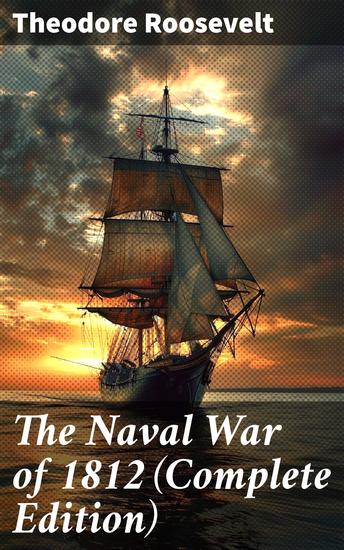
The Naval War of 1812 (Complete Edition) - Uncovering America's Naval Battles of 1812 - cover

The Naval War of 1812 (Complete Edition) - Uncovering America's Naval Battles of 1812

Theodore Roosevelt

Editorial: Good Press

  • 0
  • 0
  • 0

Sinopsis

In "The Naval War of 1812," Theodore Roosevelt delves into the pivotal maritime conflict that shaped the United States'Äô early naval identity. Through meticulous research and an engaging narrative style, Roosevelt examines the strategies, battles, and key figures involved in this multifaceted war. His prose is both accessible and scholarly, integrating primary sources to illuminate the complexities and dynamics of naval warfare in the early 19th century. The book is not just a historical account; it serves as a critical analysis of the nascent American navy, showcasing the strategic thinkers who emerged during this tumultuous period. Theodore Roosevelt, the 26th President of the United States, was a passionate advocate for naval power and expansion. His own experiences as a soldier and policymaker influenced his profound interest in military history and its implications for American greatness. Roosevelt's scholarly pursuits were marked by a belief in the importance of a strong navy, rooted in his understanding of geography, economics, and national security, thus providing a unique perspective that enriches this historical narrative. Highly recommended for history enthusiasts and scholars alike, this comprehensive edition of "The Naval War of 1812" not only offers a vivid portrayal of naval battles but also integrates Roosevelt's insights into the broader themes of national identity and power. Readers will gain a deeper appreciation for this defining conflict while recognizing its enduring impact on the United States' naval heritage.
Disponible desde: 17/01/2024.
Longitud de impresión: 359 páginas.
Otros libros que te pueden interesar

  • Off the Mark - How Grades Ratings and Rankings Undermine Learning - cover

    Off the Mark - How Grades...

    Ethan L. Hutt, Jack Schneider

    • 0
    • 0
    • 0
    Anyone who has ever crammed for a test, capitulated to a grade-grubbing student, or fretted over a child's report card knows that the way we assess student learning in American schools is freighted with unintended consequences. As experts agree, our primary assessment technologies—grading, rating, and ranking—don't actually provide an accurate picture of how students are doing in school. Worse, they distort student and educator behavior in ways that undermine learning and exacerbate inequality. Yet despite widespread dissatisfaction, grades, test scores, and transcripts remain the currency of the realm. 


    In Off the Mark, Jack Schneider and Ethan Hutt explain how we got into this predicament, why we remain beholden to outmoded forms of assessment, and what we can do to change course. They offer a range of practical reforms, like embracing multiple measures of performance and making the so-called permanent record "overwritable." As they explain, we can remake our approach in ways that better advance the three purposes that assessment currently serves: motivating students to learn, communicating meaningful information about what young people know and can do, and synchronizing an otherwise fragmented educational system. Off the Mark is a guide for everyone who wants to ensure that assessment serves the fundamental goal of education—helping students learn.
    Ver libro
  • No Haven - The Connecticut Mob and the Rise of America's Model City - cover

    No Haven - The Connecticut Mob...

    Paul Bleakley

    • 0
    • 0
    • 0
    With Boston to the north and New York City to the south, Connecticut's history of organized crime is often overlooked. This is the untold story of New Haven's illegal past. 


    One of America's most historic and enduring cities, New Haven has wrangled with a perpetual identity struggle, torn between worlds that occasionally converged in chaos and violence. In the 1930s, Connecticut became a region where Mafia families like the Genoveses, Gambinos, Colombos, and Patriarcas shared turf—working together with enough profits to go around or descending into open war to rival that experienced in any major city. Central to this conflict were three men who were, at different times, cautious allies or sworn nemeses. Representing the Genoveses, Midge Renault reigned supreme thanks to his reputation for wanton violence. Meanwhile, Colombo capo Ralph "Whitey" Tropiano maintained a lower profile, which belied his reputation as a vicious killer. But it was his lieutenant, Billy "The Wild Guy" Grasso, who ultimately rose to the top after joining the New England Patriarca Family, enjoying a short rule that ended with a murder plot that left him on the wrong end of a bullet.
    Ver libro
  • Stories Dice and Rocks That Think - How Humans Learned to See the Future–and Shape It - cover

    Stories Dice and Rocks That...

    Byron Reese

    • 0
    • 0
    • 0
    What makes the human mind so unique? And how did we get this way? 


    This fascinating tale explores the three leaps in our history that made us what we are—and will change how you think about our future. 


    Look around. Clearly, we humans are radically different from the other creatures on this planet. But why? Where are the Bronze Age beavers? The Iron Age iguanas? In Stories, Dice, and Rocks That Think, Byron Reese argues that we owe our special status to our ability to imagine the future and recall the past, escaping the perpetual present that all other living creatures are trapped in. 


    Envisioning human history as the development of a societal superorganism he names Agora, Reese shows us how this escape enabled us to share knowledge on an unprecedented scale, and predict—and eventually master—the future. 


    Thoughtful and witty, this must-listen book unravels our history as an intelligent species in three acts. A fresh new look at the history and destiny of humanity, listeners will come away from Stories, Dice, and Rocks That Think with a new understanding of what they are—not just another animal, but a creature with a mastery of time itself.
    Ver libro
  • Aliens and UFOs - cover

    Aliens and UFOs

    Raphael Terra

    • 0
    • 0
    • 0
    This audiobook has been recorded using Text to speech (TTS). 
     
    Since the dawn of human civilisation, the idea of extra-terrestrial life has captivated our imaginations. From ancient myths and legends to modern-day sightings, the concept of aliens has been a subject of fascination, speculation, and debate. We are going to examine the captivating world of aliens, exploring the rich tapestry of mythology, documented encounters, scientific research, and the profound impact these beliefs have on society. 
     
    Have they visited us? What do they want? How will aliens change society? 
     
    Join us on a journey through time and space as we unravel the mysteries surrounding extra-terrestrial life and delve into the various aspects of our fascination with the unknown.
    Ver libro
  • The Picnic - A Dream of Freedom and the Collapse of the Iron Curtain - cover

    The Picnic - A Dream of Freedom...

    Matthew Longo

    • 0
    • 0
    • 0
    In August 1989, a group of Hungarian activists organized a picnic on the border of Hungary and Austria. But this was not an ordinary picnic—it was located on the dangerous militarized frontier known as the Iron Curtain. Tacit permission from the highest state authorities could be revoked at any moment. On wisps of rumor, thousands of East German "vacationers" packed Hungarian campgrounds, awaiting an opportunity, fearing prison, surveilled by lurking Stasi agents. The Pan-European Picnic set the stage for the greatest border breach in Cold War history: hundreds crossed from the Communist East to the longed-for freedom of the West. 


    Drawing on dozens of original interviews, Matthew Longo tells a gripping and revelatory tale of the unraveling of the Iron Curtain and the birth of a new world order. Just a few months after the Picnic, the Berlin Wall fell, and the freedom for which the activists and refugees had risked imprisonment was suddenly available to everyone. But were they really free? And why, three decades since the Iron Curtain was torn down, have so many sought once again to build walls? 


    Cinematically told, The Picnic recovers a time when it seemed possible for the world to change. With insight and panache, Longo explores the opportunities taken—and the opportunities we failed to take—in that pivotal moment.
    Ver libro
  • Summary of Thomas Piketty's A Brief History of Equality - cover

    Summary of Thomas Piketty's A...

    Falcon Press

    • 0
    • 0
    • 0
    Buy now to get the main key ideas from Thomas Piketty's A Brief History of Equality 
      
    Inequality has been present through human history, but it has changed dramatically in the past couple of decades. In A Brief History of Equality (2021), Thomas Piketty, a leading French economist, lays out the history of equality in the most recent centuries. With an optimistic point of view, he especially focuses on movements and periods that achieved some form of progress towards equality. As more people are becoming aware of worldwide inequality issues, Piketty reminds us that there has been past progress, and the future is up to us.
    Ver libro