¡Acompáñanos a viajar por el mundo de los libros!
Añadir este libro a la estantería
Grey
Escribe un nuevo comentario Default profile 50px
Grey
Suscríbete para leer el libro completo o lee las primeras páginas gratis.
All characters reduced
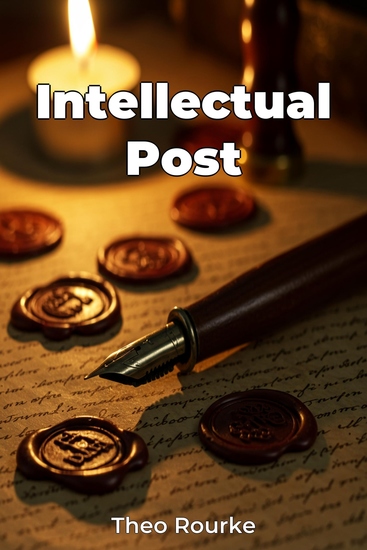
Intellectual Post - cover

Intellectual Post

Theo Rourke

Traductor A AI

Editorial: Publifye

  • 0
  • 0
  • 0

Sinopsis

"Intellectual Post" explores the fascinating role of letters as a driving force behind intellectual and artistic progress. It reveals how the exchange of ideas through correspondence profoundly shaped academic disciplines and literary movements. Far from being mere personal notes, letters fostered intellectual communities and served as vital archives of thought, allowing a unique level of intimacy and collaboration. For instance, epistolary debates refined complex concepts in ways that formal lectures often couldn't.

 
The book uniquely emphasizes the process of intellectual development, showcasing how ideas germinated and evolved through letter-writing, rather than focusing solely on finished theories. Contextualizing these themes within the history of communication, it examines specific case studies ranging from early scientific circles to literary manifestos.

 
"Intellectual Post" begins with the historical context of letters before progressing through various intellectual and literary communities, and culminates with a discussion on the legacy of letter-writing in the digital age.
Disponible desde: 05/05/2025.
Longitud de impresión: 55 páginas.

Otros libros que te pueden interesar

  • Science and Politics - cover

    Science and Politics

    Ian Boyd

    • 0
    • 0
    • 0
    The recent coronavirus pandemic proved that the time-old notion seems now truer than ever: that science and politics represent a clash of cultures. But why should scientists simply "stick to the facts" and leave politics to the politicians when the world seems to be falling down around us? 


    Drawing on his experience as both a research scientist and an expert advisor at the center of government, Ian Boyd takes an empirical approach to examining the current state of the relationship between science and politics. He argues that the way politicians and scientists work together today results in a science that is on tap for ideological (mis)use, and governance that fails to serve humanity's most fundamental needs. Justice is unlikely—perhaps impossible—while science is not a fully integrated part of the systems for collective decision-making across society. 


    In Science and Politics, Boyd presents an impassioned argument for a series of conceptual and structural innovations that could resolve this fundamental tension, revealing how a radical intermingling of these (apparently contradictory) professions might provide the world with better politics and better science.
    Ver libro
  • Christian Ethics Collection Signature Classics - A Confession by Leo Tolstoy Orthodoxy by GKChesterton The Problem of Pain by CSLewis - cover

    Christian Ethics Collection...

    Leo Tostoy, Leo Tolstoy, G.K....

    • 0
    • 0
    • 0
    What defines faith in the face of doubt? How do we reconcile human suffering with the existence of a loving God? And what is the essence of spiritual truth in a skeptical world? These timeless questions lie at the heart of Christian Ethics Collection: Signature Classics, a profound and thought-provoking audio anthology.
    Bringing together three literary giants, this collection is more than a discourse on religion; it is a journey into the human soul, wrestling with the complexities of belief and morality. In A Confession, Leo Tolstoy peels back the layers of his own existential crisis, charting a path from despair to spiritual awakening. With unflinching honesty, the great Russian author challenges conventional dogma and searches for meaning in a world often indifferent to human suffering.
    G.K. Chesterton's Orthodoxy offers a spirited defense of Christianity that dazzles with paradox, wit, and logic. Chesterton's playful yet piercing intellect transforms abstract theology into a vibrant exploration of wonder and reason, reframing skepticism as an opportunity for deeper faith.
    Finally, C.S. Lewis's The Problem of Pain confronts one of humanity's most difficult questions: why must we suffer? Combining rational analysis with profound empathy, Lewis bridges the gap between intellectual inquiry and emotional solace, offering a perspective on pain that is as challenging as it is comforting. Together, these works invite listeners into a dialogue that spans continents, centuries, and spiritual traditions. Whether you are a seeker, skeptic, or believer, this collection will ignite reflection and inspire a deeper understanding of the ethical and emotional dimensions of faith.
    Contents:
    1. A Confession by Leo Tolstoy,
    2. Orthodoxy by G. K. Chesterton, 
    3. The Problem of Pain by C. S. Lewis.
    Ver libro
  • Rise of Fascism in Europe The: The History of the Fascist Takeovers in Nazi Germany Italy and Spain during the 20th Century - cover

    Rise of Fascism in Europe The:...

    Editors Charles River

    • 0
    • 0
    • 0
    It’s easy to forget how young Italy was when Benito Mussolini was born on July 29, 1883. It is hard to conceive a territory with such a long and ancient history was once young and troubled with constant conflict and instability. Similar to Germany, Italy was unified in 1861, but contrary to its northern cousin, its previous history was one of separation. Italy had no great romantic idea of a “Great Germany,” keeping it unified even during the wars between city-states. Benito Mussolini was born and raised in a highly volatile environment where ideas already considered extreme by most contemporary observers, such as Socialism, would undergo a deep and violent transformation.	Mussolini would ride that wave to power, and he would hold it for decades as he opportunistically tried to strengthen Italy's position and empire. That would lead him to foreign interventions in Africa, and eventually an alliance with Nazi Germany's Adolf Hitler, ultimately costing him everything and devastating his country throughout World War II. 
    	It is often claimed that Adolf Hitler rose to power in Germany through democratic means, and while that is a stretch, it is true that he managed to become an absolute dictator as Chancellor of Germany in the 1930s through a mixture of politics and intimidation. Ironically, he had set such a course only because of the failure of an outright coup attempt known as the Beer Hall Putsch about a decade earlier. 
    	The Spanish Civil War has exerted a powerful impact on the historical imagination. Without question, the conflict was a key moment in the 20th century, a precursor to World War II, and an encapsulation of the rise of extremist movements in the 1930s, but it was also a complex narrative in and of itself, even as it offered a truly international theatre of war. 	Ultimately, the forces of reaction, led by General Francisco Franco, triumphed, and after his victory in 1939, Franco ruled Spain with an iron fist for 36 years.
    Ver libro
  • The Security Side of Gulf Visions - Adapting Defence to the Connectivity Age - cover

    The Security Side of Gulf...

    Eleonora Ardemagni

    • 0
    • 0
    • 0
    The GCC states are adapting defence strategies to the challenges raised by their "Visions", their post-hydrocarbon national plans. Far from being just economic programmes, the Visions are broad national transformation platforms displaying also a security dimension, and with many security implications. New cities and industrial poles, infrastructures, mega events and tourism raise unprecedented security risks, at which the GCC states are answering through a combination of economic-oriented foreign policy, multipolar international alliances, and ambitions towards "defense autonomisation". What are the Visions' security dimensions and implications, and how does the post-oil path affect and reshape foreign policies?
    This Report analyses how GCC states are adapting deterrence and defence tools to the connectivity age, navigating a troubled neighbourhood of both conventional and asymmetric threats. In a central but more vulnerable Gulf, how may the EU and NATO accommodate transformations in GCC states' defense policies, postures, and means, to support their own security?
    Ver libro
  • America’s Robber Barons: The Controversial Lives and Legacies of the Industrial Titans Who Modernized the Country in the 19th Century - cover

    America’s Robber Barons: The...

    Charles River Editors

    • 0
    • 0
    • 0
    The Gilded Age and the dawn of the 20th century are often remembered as an era full of monopolies, trusts, and economic giants in heavy industries like oil and steel. Men like Andrew Carnegie built empires like Carnegie Steel, and financiers like J.P. Morgan merged and consolidated them. The era also made names like Astor, Cooke, and Vanderbilt instantly recognizable across the globe. Over time, the unfathomable wealth generated by the businesses made the individuals on top incredibly rich, and that in turn led to immense criticism and an infamous epithet used to rail against them: robber barons.  
    	Dozens of men were called “robber barons”, but few of them were as notorious as Cornelius Vanderbilt, who also happened to be one of the nation’s first business titans. Vanderbilt was a railroad and shipping magnate at a time that the industry was almost brand new, but he rode his success to become one of the richest and most powerful men in American history.  
    	The industrial might wielded by men like Cornelius Vanderbilt, John Rockefeller, J.P. Morgan, Andrew Carnegie, and others in the later 19th century directly led to a public backlash and made President Teddy Roosevelt the “trust buster”, and there has since been countless regulations to attempt to avoid the types of monopolies found over 100 years ago. However, many 20th century historians and writers pushed back against the allegations hurled at the “robber barons” and even took issue with the name. Libertarian writer John Stossel argued, “They weren't robbers, because they didn't steal from anyone, and they weren't barons—they were born poor...” 
    Ver libro
  • A Thief and a Hero - The true story of Johnny Ramensky the daring saboteur who stole secret Nazi war plans - cover

    A Thief and a Hero - The true...

    Robert Jeffrey

    • 0
    • 0
    • 0
    When John Ramsay dropped into the Schorfheide Forest, north east of Berlin in 1944 his mission had two parts: to locate and infiltrate Goering's Headquarters, then once inside to blow the safe and steal the Nazi war plans. As a Commando, John Ramsay was trained for the first part, but it was only as Johnny Ramensky, Scotland's most infamous career thief that he was qualified to do the latter. A THIEF AND A HERO tells the extraordinary story of Gentle Johnny Ramensky: the son of Lithuanian immigrant parents who went on to become a household name as the foremost safe-blower in the country. His daring escapes from prison would further endear him to the public and eventually bring him to the attention of the British army. When the Second World War broke, he was hand-picked to join the Commandos and rechristened himself Ramsay.It was there that he used his talent and bravery for King and country, parachuting behind enemy lines to crack the safes of key people in the German High Command; Rommel and Goering among them.Thief. Commando. Saboteur. Hero. This is his story.
    Ver libro