¡Acompáñanos a viajar por el mundo de los libros!
Añadir este libro a la estantería
Grey
Escribe un nuevo comentario Default profile 50px
Grey
Suscríbete para leer el libro completo o lee las primeras páginas gratis.
All characters reduced
Forbidden Foods - cover

Forbidden Foods

Theo Rourke

Traductor A AI

Editorial: Publifye

  • 0
  • 0
  • 0

Sinopsis

Forbidden Foods explores the intriguing and often controversial world of food bans and restrictions, revealing how ethics, safety regulations, and political influence shape what we eat. The book uncovers the complex forces at play in our food systems, prompting readers to question common assumptions. For instance, many bans aren't solely based on science but are influenced by cultural biases and economic interests. The book examines ethical concerns, health and safety regulations, and political motivations behind food restrictions. It begins by establishing a historical context and then delves into specific examples, like foie gras, raw milk, and embargoed agricultural products. Forbidden Foods uses historical documents, scientific studies, and interviews to support its arguments, providing a multifaceted analysis of food policies. The book unfolds across three major sections, each exploring foods banned for different reasons: ethical considerations, safety regulations, and political motivations. It concludes by discussing the implications of these bans on food diversity and global trade, proposing strategies for more transparent food policies. This approach challenges conventional wisdom, encouraging readers to critically evaluate information about food safety and ethics.
Disponible desde: 11/03/2025.
Longitud de impresión: 65 páginas.


Otros libros que te pueden interesar

  • Magnet Ass––And The Stone Cold Truck Hunters - cover

    Magnet Ass––And The Stone Cold...

    Will Cunningham

    • 0
    • 0
    • 0
    Magnet Ass and the Stone-Cold Truck Hunters is a Vietnam war memoir about Captain Alan "Magnet Ass" Milacek, the "man who flew his plane on one wing". It is a war story. But it is also not a war story. It has everything to do with a white-hot mission over the Plain of Jars in 1970, for which 10 men earned The Mackay Trophy, one of history's most coveted aviation awards - and at the same time, it has nothing to do with any of that at all.Magnet Ass is gritty and it is holy, sometimes full of shit and shrapnel - and at other times as demure as a duck flying over a pond in the dead of winter. Flashing between 1970 Asia and present day Oklahoma, Magnet Ass is poignantly written, meticulously researched, and narratively gripping. This incredible moment in the annals of air force history becomes a story about the power of kindness, courage, and tenacity in the face of uncertainty and fear. It becomes the story of two men pondering the past and finding themselves not only in remembering, but in relationship. Magnet Ass is at once a potent war story, a lushly written memoir, and a tale of the power of the everyday impossible, which any of us can strive to achieve.
    Ver libro
  • Race to Mars The: The History of the American and Soviet Attempts to Land on the Red Planet - cover

    Race to Mars The: The History of...

    Charles River Editors

    • 0
    • 0
    • 0
    In 1960, when Eisenhower’s administration began planning and funding for the famous Apollo program that would land the first men on the Moon in 1969, the Soviet Union was already thinking further ahead, literally. In one of the worst kept secrets of the Space Race, the Soviet Union launched two probes, Korabl 4 and Korabl 5, toward Mars in October 1960. Meanwhile, throughout the 1960s, NASA would spend tens of billions on missions to the Moon, the most expensive peacetime program in American history to that point, and Apollo was only made possible by the tests conducted through earlier missions, including the historic Ranger Program.  
    	When the Soviet Union attempted to launch probes to Mars in 1960, the goals were considerably less ambitious than saying hello to little green men. Those first two probes were intended merely to fly by Mars and transmit photos of the planet. In addition to getting closer looks at the Red Planet than ever before, the true value of those 1960 missions was the propaganda victory the Soviets hoped to score, obtaining yet another notch in their Space Race belt. Though the Soviets’ missions failed that year, they were still years ahead of the United States.  
    	In November 1971, NASA’s Mariner 9 became the first spacecraft to enter Mars’ orbit, but the Soviets’ Mars 2 and Mars 3 spacecrafts were hot on its heels. Mariner 9 was designed to orbit around Mars, but the Soviets’ spacecrafts had descent modules designed to actually land on the Red Planet’s surface. The descent module aboard Mars 2 crash landed on Mars’ surface on November 27, but less than a week later, Mars 3’s descent module began its historic descent down to the surface. On December 2, 1971, after a few hours of descending, it successfully completed its “soft landing.”
    Ver libro
  • Queer City - Gay London from the Romans to the Present Day - cover

    Queer City - Gay London from the...

    Peter Ackroyd

    • 0
    • 0
    • 0
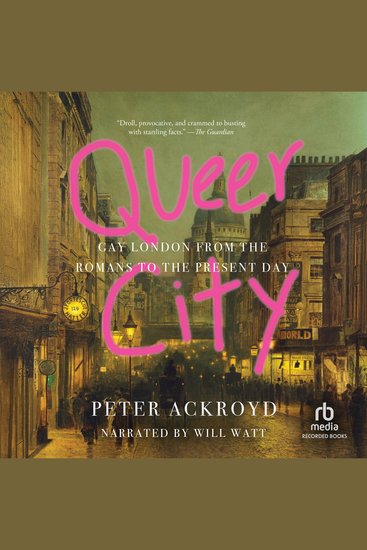
    In Queer City, the acclaimed Peter Ackroyd looks at London in a whole new way—through the complete history and experiences of its gay and lesbian population. In Roman Londinium, the city was dotted with lupanaria (“wolf dens” or public pleasure houses), fornices (brothels), and thermiae (hot baths). Then came the Emperor Constantine, with his bishops, monks, and missionaries. And so began an endless loop of alternating permissiveness and censure. Ackroyd takes us right into the hidden history of the city; from the notorious Normans to the frenzy of executions for sodomy in the early nineteenth century. He journeys through the coffee bars of sixties Soho to Gay Liberation, disco music, and the horror of AIDS. Ackroyd reveals the hidden story of London, with its diversity, thrills, and energy, as well as its terrors, dangers, and risks, and in doing so, explains the origins of all English-speaking gay culture.
    Ver libro
  • Dr Beare's Daughter - Growing Up Adopted Adored and Afraid - cover

    Dr Beare's Daughter - Growing Up...

    Janice Jones

    • 0
    • 0
    • 0
    ". . . brutally honest . . . a compelling work. GET IT" -Kirkus Reviews 
     "Moving story of an adopted daughter's search for her own voice." -Booklife 
    "Well-written and poignant . . . engaging. Feelings and experiences to which many adoptees can relate." 
    -Betsie Norris, Founder and Executive Director, Adoption Network Cleveland 
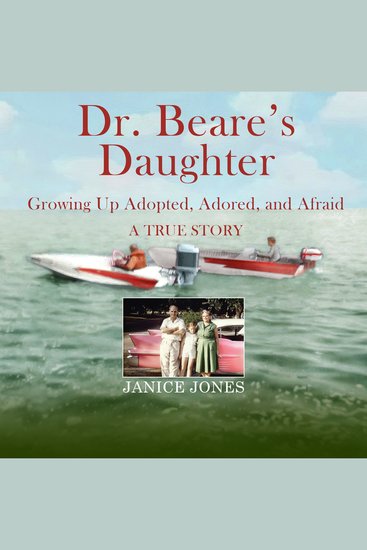
    In 1947, in Celina, Ohio, Dr. Ralph Beare and his wife, Lou, childless and in their early forties, adopted a four-and-a-half-month-old orphan. “Janice” knew she was adopted, because her mommy read her a book about how the Beare's chose her out of a Home. "We chose you, but we love you as if you were our own." However, her mother never seemed to forget she was adopted, especially on Mother’s Day, when she couldn’t look at Janice without crying. 
    Janice learned that most grown-ups in town knew her as "Dr. Beare's Daughter." Her daddy took her everywhere and people stopped to stoop down and tell her how he had saved their lives.  
    With her red hair and freckles, Janice didn't look like her dark-haired parents. Her struggle to become that elusive golden child that she imagined they really wanted came with the erasure of her own identity. Still, there was a small voice, deep inside her, that popped up at the most inconvenient times, saying, "I'm here." Try as she might to silence it, her true self often slipped out to take charge, and then there was trouble. 
    Ver libro
  • The Erich Fromm Reader - cover

    The Erich Fromm Reader

    Erich Fromm

    • 0
    • 0
    • 0
    "Fromm crossed the boundaries of traditional disciplines to expound his view on the alienation of man in an increasingly technological world." —Newsweek 


    Erich Fromm's basic idea was to look at the individual as a social being, and to look at society as an ensemble of many individuals who have not only mutual ideas and convictions based on a common practice of life, but also a shared psychic structure. With his concept of "social character," Fromm created a new interdisciplinary thinking presented in this compendium. 


    The Erich Fromm Reader exhibits the true genius of an original thinker in seeing the connections between overlapping knowledge from many different fields. Here, interdisciplinarity is not only a lip service but the impact of Erich Fromm's unique social psychological notion.
    Ver libro
  • Chasing Bandits in the Badlands - cover

    Chasing Bandits in the Badlands

    Bob Breen

    • 0
    • 0
    • 0
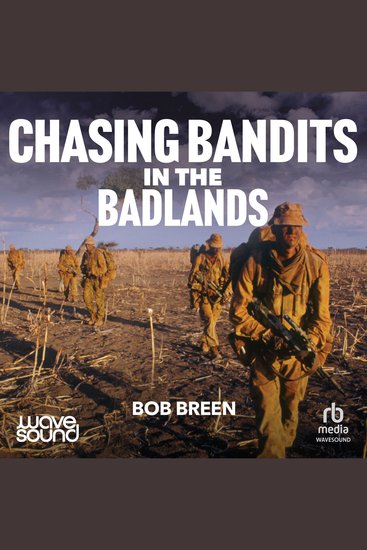
    In January 1993, the Australian government sent just under one thousand young men and women to serve under American command in a violent, impoverished, starving society. Most males over the age of twelve either carried or had access to a gun, and most Somali men had been fighting a vicious civil war for years. 
    Australian soldiers and their teams had to gain control of the streets of Baidoa and surrounding towns. This contest was not ‘find, fight and kill’ warfare. There was no decisive victory or defeat. The aim was to detect ‘the bad boys’ and deter and de-escalate their violence rather than escalate hostilities to success through ‘body count’. This mode of operation was not community policing by soldiers either. It involved adjusting attitudes forcefully and assuring uncomfortable consequences for bad behaviour and ultimately lethal responses to armed challenges. 
     
    The world looked over their shoulders. Corporals and diggers had to make split-second decisions to open or hold fire. Holding fire when provoked by punks constituted disciplined professional performance. Opening fire before understanding the situation, especially against unarmed provocateurs, constituted unprofessional conduct and possible condemnation, even criminal charges. These young Australians carried the international reputation of Australia and its army on their shoulders. Their actions would either enhance that reputation or create controversy, negative publicity and, potentially, international embarrassment and condemnation. 
     
    After adjusting their own attitudes to balance aggression and compassion, fight leaders and their diggers forcefully adjusted Somali attitudes, secured a stalemate, and then took control for the time they were in Somalia Australian soldiers individually and collectively helped a traumatised society needing a ‘fair go’ and gave ordinary Somali men, women and children trying to survive a little bit of hope.
    Ver libro