¡Acompáñanos a viajar por el mundo de los libros!
Añadir este libro a la estantería
Grey
Escribe un nuevo comentario Default profile 50px
Grey
Suscríbete para leer el libro completo o lee las primeras páginas gratis.
All characters reduced
Lava Cooked Food - cover

Lava Cooked Food

Tessa Kwan

Traductor A AI

Editorial: Publifye

  • 0
  • 0
  • 0

Sinopsis

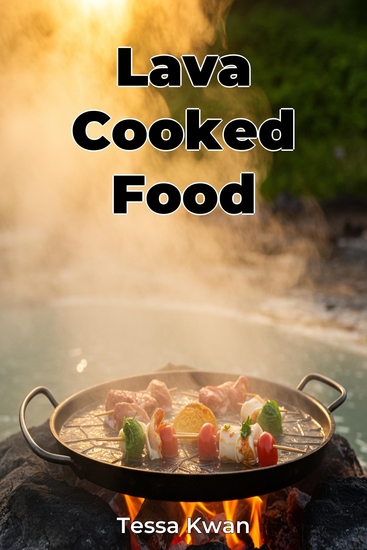
Lava Cooked Food explores the intriguing intersection of Earth Sciences, Geography, and Cooking, revealing how communities in volcanic regions utilize geothermal energy for culinary purposes. This practice demonstrates a unique cultural adaptation and a sustainable approach to food preparation. The book highlights how volcanic heat, a readily available resource, has been harnessed for generations, offering insights into human resilience.Imagine cooking food by burying it in the earth, using steam vents, or other ingenious methods developed in Iceland, New Zealand, and Italy. The book examines the geological processes that create accessible geothermal resources alongside the cultural traditions surrounding their use. By combining geological data with ethnographic research, Lava Cooked Food provides a comprehensive understanding, with perspectives from both scientists and local practitioners.It begins by introducing the science behind geothermal energy, then transitions to the cultural aspects, examining specific communities and their cooking techniques. The book progresses by assessing the potential for expanding geothermal cooking practices to other regions, promoting sustainable food systems, geothermal resources, and volcanic heat as viable alternatives.
Disponible desde: 11/03/2025.
Longitud de impresión: 64 páginas.


Otros libros que te pueden interesar

  • From Swamp to Wetland - The Creation of Everglades National Park - cover

    From Swamp to Wetland - The...

    Chris Wilhelm

    • 0
    • 0
    • 0
    This book chronicles the creation of Everglades National Park, the largest subtropical wilderness in the United States. Prior to the park's creation, the Everglades was seen as a reviled and useless swamp, unfit for typical recreational or development projects. 


    Park advocates drew on new ideas concerning the value of biota and ecology, the importance of wilderness, and the need to protect habitats, marine ecosystems, and plant life to redefine the Everglades. Using these ideas, the Everglades began to be recognized as an ecologically valuable and fragile wetland—and thus a region in need of protective status. 


    While these new ideas foreshadowed the later emergence of modern environmentalism, tourism and the economic desires of Florida's business and political elites also impacted the park's future. These groups saw the Everglades' unique biology and ecology as a foundation on which to build a tourism empire. 


    Yet, even after the park's creation, conservative landowners successfully fought to limit the park and saw it as a threat to their own economic freedoms. The battle to save the swamp's biodiversity continues, and Everglades Park stands at the center of ongoing restoration efforts.
    Ver libro
  • Camping for Kids - cover

    Camping for Kids

    Sharon Ashley

    • 0
    • 0
    • 0
    Nature is a playground of endless possibilities in "Camping for Kids," memories are made as fresh, fun, and timeless classic adventures unfold.  Fun book for kids that enjoy camping stories.
    Ver libro
  • The New World on Mars - What We Can Create on the Red Planet - cover

    The New World on Mars - What We...

    Robert Zubrin

    • 0
    • 0
    • 0
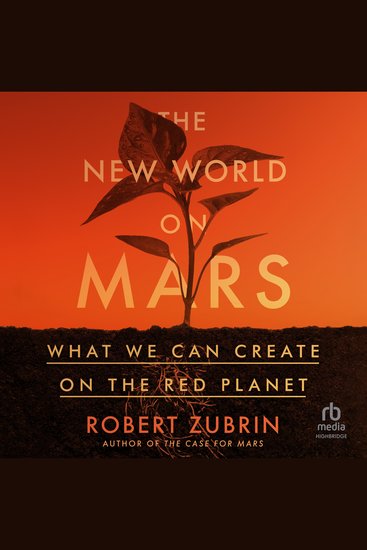
    When Robert Zubrin published his classic book The Case for Mars a quarter century ago, setting foot on the Red Planet seemed a fantasy. Today, manned exploration is certain, and as Zubrin affirms in The New World on Mars, so too is colonization. 


    We will settle on Mars, and with our knowledge of the planet, analyzed in depth by Dr. Zubrin, we will utilize the resources and tackle the challenges that await us. What we will we build? Populous Martian city-states producing air, water, food, power, and more. Zubrin's Martian economy will pay for necessary imports and generate income from varied enterprises, such as real estate sales—homes that are airtight and protect against cosmic space radiation, with fish-farm aquariums positioned overhead, letting in sunlight and blocking cosmic rays while providing fascinating views. Zubrin even predicts the Red Planet customs, social relations, and government that will overcome traditional forms of oppression to draw Earth immigrants. 


    With all of this in place, Zubrin's Red Planet will become a pressure cooker for invention, benefiting humans on Earth, Mars, and beyond. We can create this magnificent future, making life better, less fatalistic. The New World on Mars proves that there is no point killing each other over provinces and limited resources when, together, we can create planets.
    Ver libro
  • Last Sunset in the West - Britain's Vanishing West Coast Orcas - cover

    Last Sunset in the West -...

    Natalie Sanders

    • 0
    • 0
    • 0
    Britain has a single pod of orca, also known as killer whales, native to its home waters, although other orca visit from more northern regions. In 2014 Dr Natalie Sanders joined the crew of the HV Silurian to seek them out and study them before we lose them forever. In The Last Sunset in the West she discusses them one by one, and the many issues surrounding their lives in a captivating account that will take the reader deep into the history of our relations with the sentient and beautiful creatures.
    Ver libro
  • Moving Target: The Art of Online Camoflauge - cover

    Moving Target: The Art of Online...

    Dean Mauro

    • 0
    • 0
    • 0
    You reuse passwords. You click links without thinking. You accepted a connection request last week from someone you don't quite remember meeting. You have done at least one of these things in the past thirty days, and so has almost every person you know. 
     
    This book is about what happens next. 
     
    Moving Target: The Art of Online Camouflage follows Stevie Parker, a composite character built from the real experiences of people whose lives collided with cybercrime. Across twelve chapters, Stevie makes the same small, ordinary mistakes most of us make every day while real crime stories play out alongside her, sourced from FBI briefings, ransomware negotiators, fraud victims, and the criminals themselves. 
     
    This is not an IT book. This is a crime book. 
     
    The criminals in these pages are not mysterious hackers in hoodies. They are organized crime syndicates running businesses with quotas, shift changes, HR departments, and performance reviews. They have studied you longer than you have studied them. 
     
    Dean Mauro, host of Cyber Crime Junkies on YouTube, FBI InfraGard member, and VP of Growth at NetGain Technologies, has spent years sitting across from people who just found out. This book is everything he wished someone had told them before that conversation happened. 
     
    You do not need to become a cybersecurity expert. You do not need to build Fort Knox. You just need to stop being the easiest target on the street. The basics work. Camouflage works. And by the end of this book, Stevie Parker is out of range. 
     
    Now it is your turn. 
     
    Book One of The Moving Target Trilogy. Narrated by the author.
    Ver libro
  • The Field Guide to Dumb Birds of the Whole Stupid World - cover

    The Field Guide to Dumb Birds of...

    Matt Kracht

    • 0
    • 0
    • 0
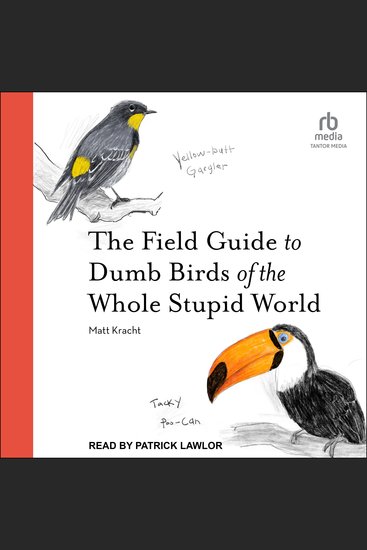
    This must-listen sequel to the bestselling parody book The Field Guide to Dumb Birds of North America proves that all birds are fascinating, wonderful, idiotic jerks—no matter where in the world they reside. 


    "Full of NSFW names and descriptions for different species that'll have you LOL-ing even if you never actually go looking for said birds IRL."—Buzzfeed 


    Following in the tracks of the first uproarious and beloved bird book in the series, this hilarious sequel ventures beyond to identify the stupidest birds around the world. Featuring birds from North and South America, Africa, Asia, Europe, and Oceania, author Matt Kracht identifies the dumb birds that manage to live all over the freaking place with snarky yet accurate names. Offering a balance of fact and wit, this uproarious profanity-laden handbook will appeal to hardcore birders and casual bird lovers (and haters) alike.
    Ver libro