


Junte-se a nós em uma viagem ao mundo dos livros!
Adicionar este livro à prateleira
Grey
Deixe um novo comentário Default profile 50px
Grey
Assine para ler o livro completo ou leia as primeiras páginas de graça!
All characters reduced
Fungi In Food - cover
LER

Fungi In Food

Tessa Kwan

Tradutor A AI

Editora: Publifye

  • 0
  • 0
  • 0

Sinopse

Fungi In Food unveils the hidden world of fungi and their transformative role in our cuisine. From the earthy notes of mushrooms to the tangy zest of fermented delights, fungi are more than mere ingredients; they are active agents shaping the flavors, textures, and nutritional profiles of countless foods. Did you know that the unique flavors in cheese, beer, and soy sauce all depend on the activity of specific fungi? This book explores the biological processes that underpin these culinary transformations, offering insights into food production, preservation, and innovation.

 
The book begins with an introduction to fungal biology, covering life cycles, metabolic processes, and ecological roles, then progresses to explore major categories of fungi used in food production, including mushrooms, molds, and yeasts.

 
Fermentation takes center stage, illuminating the creation of foods like bread, wine, and cheese, detailing the specific fungal species involved and the biochemical reactions they catalyze. By combining scientific rigor with culinary appreciation, Fungi In Food provides a holistic understanding of how fungi transform food at a molecular level.

 
Fungi In Food emphasizes the scientific foundation of cooking techniques. The book examines the cultural significance of fermented foods across diverse societies and considers the potential of fungi in addressing global food security challenges through mycoprotein and other fungal-derived foods.
Disponível desde: 11/03/2025.
Comprimento de impressão: 80 páginas.
Outros livros que poderiam interessá-lo

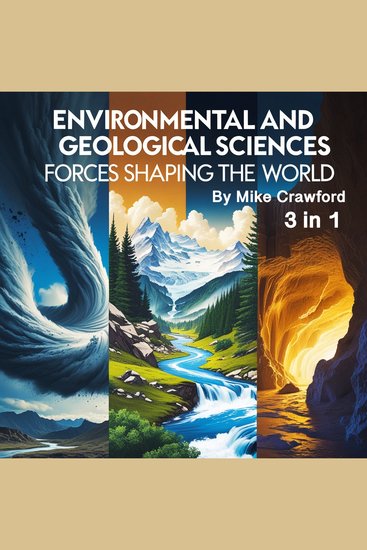
  • Environmental and Geological Sciences - Forces Shaping the World (3 in 1) - cover

    Environmental and Geological...

    Mike Crawford

    • 0
    • 0
    • 0
    Environmental and Geological Sciences: Forces Shaping the World is a comprehensive guide that examines the dynamic processes and forces responsible for shaping our planet. This 3-in-1 volume delves into the study of Seismology, Volcanology, and Limnology, providing readers with essential knowledge of how natural forces affect the Earth’s surface and its ecosystems. 
    In the first section, Seismology, readers will explore the science of earthquakes, the forces that generate seismic waves, and the tools used to measure and understand these powerful events. This section discusses the Earth’s internal structure, plate tectonics, and how seismic activity is monitored to predict and mitigate the impact of earthquakes, ultimately highlighting the influence of seismic forces on the environment. 
    Next, Volcanology offers an in-depth look at the study of volcanoes and volcanic activity. This section covers the geological processes that lead to the formation and eruption of volcanoes, as well as the environmental and societal consequences of volcanic events. Readers will gain insight into the types of volcanic eruptions, lava flows, and the role of volcanoes in shaping the Earth's landscapes over time. 
    The final section, Limnology, focuses on the study of inland aquatic environments, particularly lakes and rivers. Limnology explores the physical, chemical, and biological characteristics of freshwater ecosystems, as well as the human impact on these vital resources. From the study of water quality to the management of freshwater habitats, this section offers essential insights into how freshwater environments are influenced by natural processes and human activities.
    Ver livro
  • Epic Disruptions - 11 Innovations That Shaped Our Modern World - cover

    Epic Disruptions - 11...

    Scott D. Anthony

    • 0
    • 0
    • 0
    From gunpowder to generative AI, the forces of disruption are repeatedly rewriting the rules of business, society, and human possibility. But what drives these revolutionary changes? In Epic Disruptions, innovation expert Scott Anthony weaves together the stories behind history's most transformative disruptions. Through eleven pivotal innovations, Anthony reveals the hidden patterns behind world-changing breakthroughs. But Epic Disruptions goes beyond just celebrating invention. Through storytelling and analysis, Anthony introduces the iconoclasts who dared to think differently—the Renaissance-era scientists, French-cooking enthusiasts, and corporate visionaries who saw opportunities others missed. He decodes how genuine disruption actually happens, stripping away the mythology. As artificial intelligence and other technologies promise to unleash another wave of transformation, Epic Disruptions arrives at the perfect moment—offering innovators and curious listeners a fascinating exploration of how radical change reshapes industries, launches new powers, and occasionally changes everything. 
     
    This audiobook includes a bonus afterword not included in the print edition.
    Ver livro
  • Born of Ice and Fire - How Glaciers and Volcanoes (with a Pinch of Salt) Drove Animal Evolution - cover

    Born of Ice and Fire - How...

    Graham Shields

    • 0
    • 0
    • 0
    An exploration of how the Cryogenian Period, when our planet was covered in ice for millions of years, created today's remarkable biodiversity 


    More than half a billion years ago, our world was completely covered by glaciers, a "Snowball Earth" that persisted for millions of years. Incredibly, this unimaginable cold led to the remarkable diversification of life on earth known as the Cambrian explosion. With a geologist's eye and a knack for storytelling, Graham Shields explores when and how such inhospitable conditions enabled animals to evolve, radiate, and diversify into our earliest ancestors. 


    This journey navigates the wild swings between hot and cold climates, oxygenation and asphyxiation, biological radiations and extinctions, asking how such instability relates to grander forces that brought our planet to its modern state. Shields guides listeners through evidence found in the Australian outback, Mongolia, Scotland, and other locales, revealing how geologists can trace glaciation, the atmosphere, oceans, mountain building, and more through the earth's rocks, providing a comprehensive theory of how life evolved and diversified.
    Ver livro
  • The Next Supercontinent - Solving the Puzzle of a Future Pangea - cover

    The Next Supercontinent -...

    Ross Mitchell

    • 0
    • 0
    • 0
    You've heard of Pangea, the single landmass that broke apart some 175 million years ago to give us our current continents, but what about its predecessors, Rodinia or Columbia? These "supercontinents" from Earth's past provide evidence that land repeatedly joins and separates. While scientists debate what that next supercontinent will look like—and what to name it—they all agree: one is coming. 


    In this engaging work, geophysicist Ross Mitchell invites listeners to remote (and sometimes treacherous) lands for evidence of past supercontinents, delves into the phenomena that will birth the next, and presents the case for the future supercontinent of Amasia, defined by the merging of North America and Asia. Introducing listeners to plate tectonic theory through fieldwork adventures and accessible scientific descriptions, Mitchell considers flows deep in the Earth's mantle to explain Amasia's future formation and shows how this developing theory can illuminate other planetary mysteries. He then poses the inevitable question: how can humanity survive the intervening 200 million years necessary to see Amasia? 


    An expert on the supercontinent cycle, Mitchell offers listeners a front-row seat to a slow-motion mystery and an ongoing scientific debate.
    Ver livro
  • How Far the Light Reaches - A Life in Ten Sea Creatures - cover

    How Far the Light Reaches - A...

    Sabrina Imbler

    • 0
    • 0
    • 0
    A fascinating tour of creatures from the surface to the deepest ocean floor: this "miraculous, transcendental book" invites us to envision wilder, grander, and more abundant possibilities for the way we live (Ed Yong, author of An Immense World). A queer, mixed race writer working in a largely white, male field, science and conservation journalist Sabrina Imbler has always been drawn to the mystery of life in the sea, and particularly to creatures living in hostile or remote environments. Each essay in their debut collection profiles one such creature, including:     ·the mother octopus who starves herself while watching over her eggs,     ·the Chinese sturgeon whose migration route has been decimated by pollution and dams,     ·the bizarre, predatory Bobbitt worm (named after Lorena),     ·the common goldfish that flourishes in the wild,     ·and more.  Imbler discovers that some of the most radical models of family, community, and care can be found in the sea, from gelatinous chains that are both individual organisms and colonies of clones to deep-sea crabs that have no need for the sun, nourished instead by the chemicals and heat throbbing from the core of the Earth. Exploring themes of adaptation, survival, sexuality, and care, and weaving the wonders of marine biology with stories of their own family, relationships, and coming of age, How Far the Light Reaches is a shimmering, otherworldly debut that attunes us to new visions of our world and its miracles.    WINNER OF THE LOS ANGELES TIMES BOOK PRIZE in SCIENCE & TECHNOLOGY  Finalist for the Lambda Literary Award One of TIME’s 10 Best Nonfiction Books of the Year •  A PEOPLE Best New Book  •  A Barnes & Noble and SHELF AWARENESS Best Book of 2022  •  An Indie Next Pick  •  One of Winter’s Most Eagerly Anticipated Books: VANITY FAIR, VULTURE, BOOKRIOT
    Ver livro
  • Bright Galaxies Dark Matter and Beyond - The Life of Astronomer Vera Rubin - cover

    Bright Galaxies Dark Matter and...

    Ashley Jean Yeager

    • 0
    • 0
    • 0
    We now know that the universe is mostly dark, made up of particles and forces that are undetectable even by our most powerful telescopes. The discovery of the possible existence of dark matter and dark energy signaled a Copernican-like revolution in astronomy: not only are we not the center of the universe, neither is the stuff of which we're made. Astronomer Vera Rubin (1928–2016) played a pivotal role in this discovery. By showing that some astronomical objects seem to defy gravity's grip, Rubin helped convince the scientific community of the possibility of dark matter. In Bright Galaxies, Dark Matter, and Beyond, Ashley Jean Yeager tells the story of Rubin's life and work, recounting her persistence despite early dismissals of her work and widespread sexism in science. 


    Yeager describes Rubin's childhood fascination with stars, her education at Vassar and Cornell, and her marriage to a fellow scientist. At first, Rubin wasn't taken seriously; she was a rarity, a woman in science, and her findings seemed almost incredible. Still, she continued her groundbreaking work, driving a scientific revolution. She received the National Medal of Science in 1993, and has since been memorialized with a ridge on Mars, an asteroid, a galaxy, and most recently, the Vera C. Rubin Observatory—the first national observatory named after a woman.
    Ver livro
