Join us on a literary world trip!
Add this book to bookshelf
Grey
Write a new comment Default profile 50px
Grey
Subscribe to read the full book or read the first pages for free!
All characters reduced
Binge Drinking - cover

Binge Drinking

Tessa Kwan

Translator A AI

Publisher: Publifye

  • 0
  • 0
  • 0

Summary

"Binge Drinking" offers a comprehensive look into the dangers of excessive alcohol consumption, highlighting its impact on individual health and societal well-being. It addresses the misconception that binge drinking is merely a college issue, revealing it as a widespread public health concern affecting people of all ages. The book explores the physiological effects, detailing how repeated episodes of binge drinking can subtly yet significantly damage the brain, liver, and cardiovascular system. It also examines the psychological dimensions, including the links between binge drinking and mental health disorders like depression and anxiety. The book takes a bio-psycho-social approach, emphasizing the interplay between biological, psychological, and social factors that contribute to binge drinking behaviors. Beginning with a clear definition of binge drinking based on scientific standards, the book progresses through the physiological consequences, effects on mental health, and culminates in a review of prevention and treatment strategies. This structure allows for a deep dive into the multifaceted aspects of binge drinking, supported by research from peer-reviewed scientific literature, including epidemiological studies and neuroimaging research.
Available since: 03/12/2025.
Print length: 87 pages.

Other books that might interest you

  • Joshua Chamberlain - A Hero's Life and Legacy - cover

    Joshua Chamberlain - A Hero's...

    John J Pullen

    • 0
    • 0
    • 0
    From a National Book Award finalist, an “entertaining and inspiring” biography of the heroic Gettysburg commander, college president, and governor of Maine (Senator George J. Mitchell).   This is a vivid account of the life of Joshua Chamberlain, whose is best known for leading a successful bayonet charge against a Confederate assault that was memorialized in the film Gettysburg—and earned Chamberlain the Medal of Honor. But his life was long and his military, political, and academic careers were filled with numerous notable accomplishments as well, among them the governorship of Maine and presidency of Bowdoin College, before his Civil War wounds finally caught up with him in 1914. This account, with illustrations included, tells his absorbing, wide-ranging story, explores his continuing mystique, and paints a vivid picture of late nineteenth-century New England.   “A worthy tribute to Chamberlain’s lasting legacy.” —Civil War Book Review “Joshua Chamberlain was much more than a war hero, and Pullen’s thoughtful book fills out the picture of his remarkable life.” —Senator George J. Mitchell   “Reveal[s] a complicated character, without diminishing the almost mythic status he has assumed.” —The Washington Times
    Show book
  • BANI World - A Guide to Leadership Excellence - cover

    BANI World - A Guide to...

    Rosarii Mannion

    • 0
    • 0
    • 0
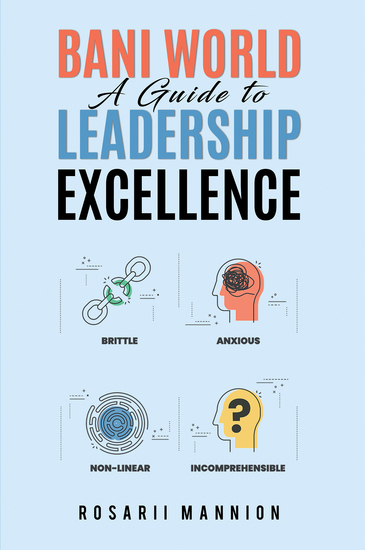
    In today's workplace, traditional leadership models offer little guidance. Rosarii explores what can lead us to excellence in a BANI world: Brittle, Anxious, Non-linear, and Incomprehensible. This invaluable guide equips leaders, managers, and staff with the tools they need to navigate the complexities of the modern work environment. Compelling and practical, BANI World is a must-read for leaders navigating these challenging times. This book will be the foundation for your success and the success of your team.
    Show book
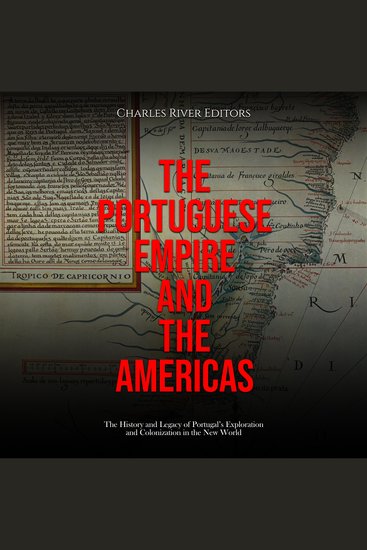
  • Portuguese Empire and the Americas The: The History and Legacy of Portugal’s Exploration and Colonization in the New World - cover

    Portuguese Empire and the...

    Editors Charles River

    • 0
    • 0
    • 0
    By the start of the 15th century, ships were now much larger and able to support long distance travel with a minimum number of crew aboard. With that, the Portuguese started exploring the west coast of Africa and the Atlantic under orders from Prince Henry the Navigator. At this point, Europeans had not yet been capable of navigating completely around Africa since the ships being built were not yet fully capable of being able to sail very far from the coast and navigation in open waters was difficult, but the Portuguese continued pushing down the western African coast looking for ways to bypass the Ottomans and Muslims of Africa who had been making overland trade routes difficult. In 1451, Prince Henry the Navigator helped fund and develop a new type of ship, the caravel, that featured triangular lateen sails and would be able to travel in the open ocean and sail against the wind. In 1488, Bartholomew Diaz rounded the southern tip of Africa, named the Cape of Good Hope by King John of Portugal, and entered the Indian Ocean from the Atlantic.  
    	One explorer, Christopher Columbus, sought funding from the Portuguese to search for a passage to Asia by sailing westwards, but he was rejected. At this time in the late 15th century, Portugal’s domination of the western African sea routes prompted the neighboring Crown of Castile and the Catholic monarchs in modern Spain to search for an alternative route to south and east Asia (termed Indies), so they provided Columbus with the funding he required. Ultimately, Columbus discovered the Americas in 1492, and European settlements would soon follow. At the same time, when it became clear Columbus hadn’t landed in Asia, it was understood by everyone that this was not necessarily the route the Europeans were searching for, the Portuguese continued to send explorers around the world in several directions in an attempt to reach the East Indies. 
    Show book
  • Unraveling the Knot - The Palestine-Israeli Conflict Explained And The Possible Solutions - cover

    Unraveling the Knot - The...

    Davis Truman

    • 0
    • 0
    • 0
    The Israel-Palestine conflict has captured global attention and stirred passionate debates for decades. "Unraveling the Knot" offers a comprehensive and accessible exploration of the conflict's historical roots, evolution, and the intricate web of factors contributing to its intractability. Whether you are a newcomer seeking to grasp the basics or a seasoned observer looking for fresh insights, this book provides a balanced and insightful perspective. 
    Key highlights of "Unraveling the Knot" include: 
    ü Historical Context: Gain a deep understanding of the conflict's origins from the early 20th century. Explore the critical events, personalities, and decisions that have shaped the region's destiny. 
    ü Multifaceted Analysis: A deep analysis of the complex socio-political, religious, and geopolitical factors that have fueled the conflict, providing a nuanced view of its many dimensions. 
    ü Possible Solutions: "Unraveling the Knot" examines various proposed solutions and peace initiatives, shedding light on the challenges and opportunities for a lasting resolution. It presents a forward-looking perspective, emphasizing the importance of dialogue and cooperation. 
    "Unraveling the Knot" is an indispensable resource for students, academics, policymakers, and anyone seeking deeper insight into the Palestine-Israeli conflict. It is a timely and enlightening read that bridges the gap between history and hope, providing a roadmap toward a more peaceful and just future for all involved.
    Show book
  • The Power of Stoicism - cover

    The Power of Stoicism

    Marnel Park

    • 0
    • 0
    • 0
    The Power of Stoicism: Learn About this Ancient Wisdom and How It Can be Applied to Modern LivingStoicism is a philosophical system that originated in ancient Greece and was founded by philosopher Zeno of Citium. It is a way of life that focuses on the development of self-control, reason, and virtue, and teaches that the path to happiness and peace lies in accepting the things we cannot change and focusing on what we can control. Stoicism has influenced many great minds throughout history, including Emperor Marcus Aurelius.This audiobook will teach you about the principles and practices of Stoicism and how you can apply it to modern life to help you find inner peace and happiness. This audiobook will cover the following topics:- Stoicism and Inner Peace- Stoicism’s Four Virtues- The Stoic philosophy of Acceptance- Advice From the Great Stoic Philo- Stoicism and the Art of Happiness- How you can find opportunity in any challenge- How Plato’s view will transform the way you see the world- And many more!If you want to learn more, scroll up and click “add to cart” now!
    Show book
  • Crusade of Varna The: The History of the Unsuccessful Attempt to Prevent the Ottoman Empire’s Expansion into Central Europe - cover

    Crusade of Varna The: The...

    Editors Charles River

    • 0
    • 0
    • 0
    In terms of geopolitics, perhaps the most seminal event of the Middle Ages was the successful Ottoman siege of Constantinople in 1453. The city had been an imperial capital as far back as the 4th century, when Constantine the Great shifted the power center of the Roman Empire there, effectively establishing two almost equally powerful halves of antiquity’s greatest empire.  The fall of Constantinople is still well-known today, but the Ottoman Empire was already pushing into Europe beforehand, and it would take repeated efforts by various European coalitions to prevent a complete Ottoman takeover of the continent. At the time, the most powerful European countries in Eastern Europe and the Balkans were Poland and Hungary. Russia was still throwing off the Mongol yoke, France and England were fighting an interminable war, Germany was broken into hundreds of entities, and the Holy Roman Empire was fighting the rise of Protestantism. The Italian merchant city-states of Venice and Genoa were intimately tied to the Balkans, the Byzantine Empire, the Black Sea, and the Ottomans. Genoa had been something of an Ottoman ally since the 1300s, even while the Ottomans were looming as a grave threat to Europe. 
    	The Ottoman Sultan Murad II became known as the Ghazi Sultan and was seen as not only defending Islam against the Christians but also as a defender of other, less powerful Muslim beys. Thus, he gained support from Muslims both far and near before he turned his armies towards Venice, the Karamids, Serbia, and finally Hungary, which would get the Europeans’ attention. In the historic tradition that already dated back over 300 years, a crusade was called to stop the Ottomans, and the main battle would be fought near Varna, a fortified city on the Black Sea coast of what is now Bulgaria. The result would set into motion the Ottomans’ far more famous forays into Europe. 
    Show book