Rejoignez-nous pour un voyage dans le monde des livres!
Ajouter ce livre à l'électronique
Grey
Ecrivez un nouveau commentaire Default profile 50px
Grey
Abonnez-vous pour lire le livre complet ou lisez les premières pages gratuitement!
All characters reduced
Lyric Forms - cover

Lyric Forms

Talia Mercer

Traducteur A Ai

Maison d'édition: Publifye

  • 0
  • 0
  • 0

Synopsis

Lyric Forms explores the captivating world of lyric poetry, tracing its evolution and cultural significance across history. This book argues that lyric poetry is not a static art form but a dynamic reflection of social, political, and intellectual landscapes. Lyric poetry, with examples like sonnets, odes, ballads, and haikus, has origins in ancient Greece, Rome and the Near East, evolving through medieval Europe and Renaissance Italy. The book examines how these forms reflect cultural identities, express social commentary, and preserve cultural memory, providing insights into the human condition across time and cultures.

 
By adopting an interdisciplinary approach, the book connects literary analysis with history, anthropology, and sociology. Lyric Forms begins with an introduction to the fundamentals of lyric poetry, then delves into its historical development and structural characteristics, culminating in an exploration of its cultural significance.

 
This book is unique in its emphasis on the interconnectedness of lyric poetry across cultures and historical periods. It's a valuable resource for students, scholars, and general readers interested in poetry, literature, and cultural studies, offering a comprehensive and engaging introduction to this rich art form.
Disponible depuis: 06/05/2025.
Longueur d'impression: 75 pages.

D'autres livres qui pourraient vous intéresser

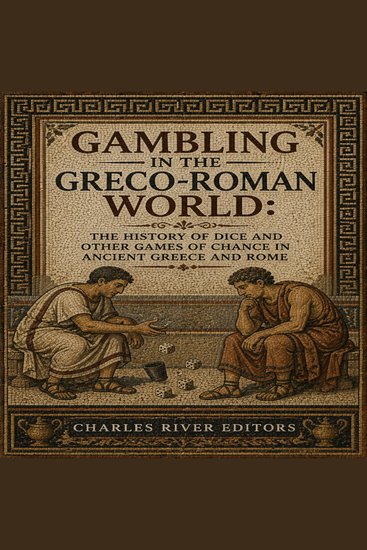
  • Gambling in the Greco-Roman World: The History of Dice and Other Games of Chance in Ancient Greece and Rome - cover

    Gambling in the Greco-Roman...

    Charles River Editors

    • 0
    • 0
    • 0
    A cup rattles, three small cubes of bone or ivory spill across a wooden board, and for one held breath the whole room leans in. A soldier's monthly pay, a merchant's profit, and occasionally a man's own freedom was riding on which faces land upward. That scene played out countless times a day throughout the ancient world, in army camps on the frozen Rhine, in the back rooms of Pompeian wine shops, in the tiled gaming chambers of senatorial villas, and in the palace itself, where more than one emperor kept a set close at hand. 
    	Dice were everywhere in antiquity, and that ubiquity is exactly what makes them worthy of historical interest thousands of years later. Kings and slaves cast the same bones, a game that cost a laborer a copper coin could cost a nobleman an estate, and both men prayed to the same gods for a lucky throw. Few objects cut so cleanly across the social lines the ancient world drew between people, and few pastimes left such a broad trail through the sources, from the letters of emperors and the verses of poets to the sermons of moralists, the statutes of lawmakers, and the painted walls of taverns where the players are depicted arguing over a bad roll. 
    	There is a paradox at the heart of the story. Romans threw dice constantly, and yet for most of Rome’s history, the law forbade it. Gambling with dice was formally banned outside the winter festival of the Saturnalia, yet the ban was ignored so completely that the emperors who signed such laws were themselves famous for breaking them. Of course, the story of dice and games of chance began long before Rome, in the knucklebones of a sheep and the tall tales the Greeks told about who first thought to throw them.
    Voir livre
  • Million Dollar Drive to Easy Wealth - "Unlock your journey to easy wealth! Engage with transformative audio lessons for financial mastery" - cover

    Million Dollar Drive to Easy...

    Fintan Marwood

    • 0
    • 0
    • 0
    Million Dollar Drive to Easy Wealth 
    ⭐⭐ A Simplified Guide ⭐⭐ 
    Are you eager to advance your career while solidifying your knowledge to turn dreams into real wealth?  
    Searching for an all-inclusive guide that contains everything you need to unlock your potential?  
    Your search ends here! 
    This audiobook is your essential companion for enhancing your understanding, honing your skills, and engaging in practical exercises. With this resource, you’re on the path to success. 
    Now updated to align with the latest examination structure. 
    Key features of this comprehensive guide: 
    - In-depth insights into achieving financial goals and transforming aspirations into reality 
    - A thorough explanation of how to unlock your potential 
    - Effective strategies for preparation and tackling challenges 
    Our guide stands out with its extensive coverage, crucial for your attainment of success. Concepts are not just lightly covered; they are explored with accuracy and detail. 
    Please note that this guide operates independently and is not associated with any official entity, serving solely as a resource for your advantage. 
    Structured for clarity with easy-to-understand language, our guide ensures seamless transitions between topics. Bid farewell to convoluted jargon and embrace content that is clear, precise, and technically accurate. 
    So, why hesitate? Click the BUY NOW button, grab your guide, and embark on your journey to achieving tangible wealth! 
    Start your journey to prosperity today!
    Voir livre
  • Day of Reckoning - How the Far Right Declared War on Democracy - cover

    Day of Reckoning - How the Far...

    Mike Wendling

    • 0
    • 0
    • 0
    The United States has become an almost unrecognizable country—with millions in thrall to conspiracy theories, toxic populism, and the far right edging closer to total power—a dire threat to civil society and democratic institutions. While the MAGA movement was in remission due to Donald Trump's defeat in 2020, the fascist fringes have not just survived but have continued to thrive and burrow into the mainstream. The January 6th Capitol Riot prosecutions have done little to curb their enthusiasm for mayhem. 


    Trump's base in the Republican Party is committed to their candidate like never before. The institutionalization of racist voter suppression and the outdated logic behind the Electoral College means he could take back the White House. Apocalyptic messaging ensures the alt-right, anti-government, anti-LGBT, and white nationalist groups see the next election as a life-or-death struggle and are uniting to back the one person they can all agree on—guaranteeing another chaotic election. 


    In this chilling exposé, Wendling encounters Capital rioters, Covid deniers, QAnon supporters, and Proud Boys and uncovers the roots of a movement that threatens to shatter the foundations of democracy.
    Voir livre
  • The End of the Roman Republic - cover

    The End of the Roman Republic

    Editors Charles River

    • 0
    • 0
    • 0
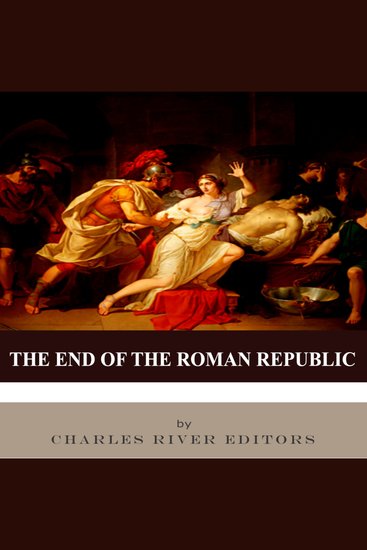
    Possibly the most important man of antiquity, and even all of history, was Julius Caesar. Alexander Hamilton, the famous American patriot, once remarked that “the greatest man who ever lived was Julius Caesar”. Such a tribute, coming from one of the Founding Fathers of the quintessential modern democracy in reference to a man who destroyed the Roman Republic, is testament to the enduring mark that Caesar left upon the world. The ultimate conqueror, statesman, dictator, visionary, and opportunist, during his time in power Caesar expanded the borders of Rome to almost twice their previous size, revolutionized the infrastructure of the Roman state, and destroyed the Roman Republic for good, leaving a line of emperors in its place. His legacy is so strong that his name has become, in many languages, synonymous with power. 
    	During one of the most turbulent periods in the history of Rome, men like Julius Caesar, Mark Antony, and Octavian participated in two civil wars that would spell the end of the Roman Republic and determine who would become the Roman emperor. In the middle of it all was history’s most famous woman, the Egyptian pharaoh Cleopatra, who famously seduced both Caesar and Antony and thereby positioned herself as one of the most influential people in a world of powerful men. Cleopatra was a legendary figure even to contemporary Romans and the ancient world, and she was a controversial figure who was equally reviled and praised through the years, depicted as a benevolent ruler and an evil seductress.  
    Octavian was the first true Roman Emperor, and the first man since the Tarquinus, five centuries earlier, to establish a successful hereditary ruling dynasty in what had been a proud Republic for over half a millennium. He was a canny strategist, an excellent orator, a fine writer, a generous patron of the arts and enthusiastic promoter of public works, but above all he was a master politician.
    Voir livre
  • End Times for Trump: Imagining a World Without Him - cover

    End Times for Trump: Imagining a...

    Brenda Peterson

    • 0
    • 0
    • 0
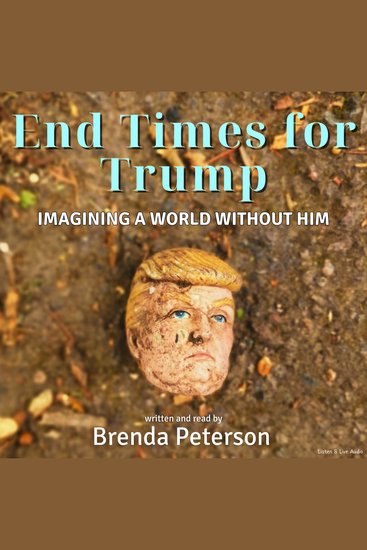
    Is this country finally leaving Trump behind? Critically acclaimed author, Brenda Peterson explores the End Times for Trump. She imagines a future beyond this divisive president—and a possible dialogue to restore our faith in ourselves and our shared country. Trump’s presidencies are a tribulation for many. Now, Trump faces his own tribulations. This unholy man launched a holy war, crashed the global economy, alienated allies, and finally his Religious Right faithful by posing as Christ. Drawing from her darkly comic memoir, I Want to Be Left Behind: Finding Rapture Here on Earth, nature writer and novelist, Peterson, tells inspiring stories of the spiritual side of politics. She asks for a deeper discussion of the “God on our side” warrior ethic. With tender humor, she engages with Rapture believers who eagerly anticipate Armageddon, and she holds out hope for healing from a chaotic and polarizing decade too long shadowed by Trump.
    Voir livre
  • The Future of Egyptology - cover

    The Future of Egyptology

    Monica Hanna

    • 0
    • 0
    • 0
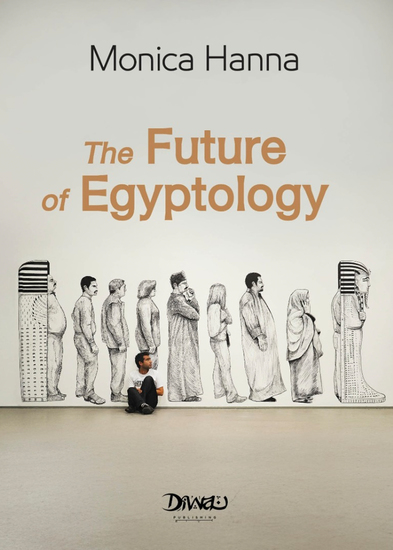
    When ancient Egypt is mentioned, images often come to mind of tombs covered in hieroglyphs being opened by Victorian-era explorers, revealing "wonderful things"—as Howard Carter famously described upon first glimpsing the treasures of Tutankhamun. But how did Egyptology become the preserve of wealthy Europeans? And what can be done today to restore agency and rightful ownership to the country where this field was born?
    Voir livre