Junte-se a nós em uma viagem ao mundo dos livros!
Adicionar este livro à prateleira
Grey
Deixe um novo comentário Default profile 50px
Grey
Assine para ler o livro completo ou leia as primeiras páginas de graça!
All characters reduced
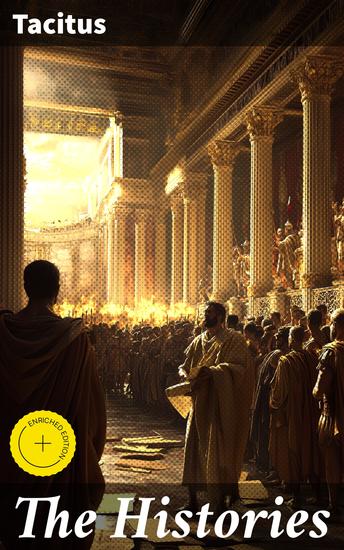
The Histories - Enriched edition Power Struggles and Political Intrigues in Ancient Rome - cover
LER

The Histories - Enriched edition Power Struggles and Political Intrigues in Ancient Rome

Tacitus Tacitus

Tradutor Alfred John Church, William Jackson Brodribb

Editora: Good Press

  • 0
  • 0
  • 0

Sinopse

In "The Histories," Tacitus provides a compelling chronicle of the Year of the Four Emperors (AD 69), a tumultuous period that followed the death of Nero. Written in a terse and incisive style that reflects Tacitus' penchant for brevity and psychological depth, this work employs a mixed narrative approach, blending historical account with poignant political analysis. The text not only documents the power struggles intrinsic to imperial Rome but also offers profound insights into the decay of civic virtue and the nature of tyranny, elucidating the dynamics of autocracy versus democracy. Tacitus' incorporation of speeches imbues the narrative with dramatic tension, rendering the past vividly alive for contemporary audiences, while his critical stance on corruption and moral decline invites reflection on the cyclical nature of history. Tacitus, born around AD 56 into a prominent Roman family, navigated the complexities of political life during the Julio-Claudian and Flavian dynasties, experiences which fueled his disillusionment with the imperial regime. His career as a senator and a governor of provinces provided him with a firsthand perspective on the moral ambivalence of power and the fragility of governance, themes poignantly explored in "The Histories." Tacitus' writings are often regarded as a reflection of his struggle with loyalty to the Empire and his commitment to historical truth, making his perspectives invaluable for scholars of Roman history. Readers seeking to understand the intricacies of imperial Rome and its leaders will find "The Histories" essential. This work not only enriches our understanding of a critical historical juncture but also resonates with contemporary concerns about power, corruption, and human nature. Tacitus' masterful exploration of these themes makes this text a vital read for anyone interested in the legacy of Rome and the lessons it imparts for modern governance.

In this enriched edition, we have carefully created added value for your reading experience:
- A succinct Introduction situates the work's timeless appeal and themes.
- The Synopsis outlines the central plot, highlighting key developments without spoiling critical twists.
- A detailed Historical Context immerses you in the era's events and influences that shaped the writing.
- An Author Biography reveals milestones in the author's life, illuminating the personal insights behind the text.
- A thorough Analysis dissects symbols, motifs, and character arcs to unearth underlying meanings.
- Reflection questions prompt you to engage personally with the work's messages, connecting them to modern life.
- Hand‐picked Memorable Quotes shine a spotlight on moments of literary brilliance.
- Interactive footnotes clarify unusual references, historical allusions, and archaic phrases for an effortless, more informed read.
Disponível desde: 18/11/2023.
Comprimento de impressão: 217 páginas.

Outros livros que poderiam interessá-lo

  • Summary: The Power of Habit by Charles Duhigg - Why We Do What We Do in Life and Business - cover

    Summary: The Power of Habit by...

    FlashBooks, Dean Bokhari

    • 0
    • 0
    • 0
    Summary of The Power of Habit by Charles Duhigg  
    by FlashBooks Book Summaries, Narrated by Dean Bokhari 
    About 
    In The Power of Habit, Charles Duhigg, award-winning business reporter for The New York Times, takes us to the thrilling edge of scientific discoveries that explain why habits exist and how they can be changed. By distilling vast amounts of information into engrossing narratives, Duhigg brings to light a whole new understanding of human nature and its potential for transformation. 
     
    Along the way, we learn why some people and companies struggle to change, despite years of trying, while others seem to remake themselves overnight. We discover the neuroscience behind how habits work and precisely which parts of the brain they develop and reside within. We discover how the right habits were crucial to the successful promotion of Pepsodent; to Tony Dungy who led his team to a Super Bowl win by changing one step in his players’ habit loop; and we learn how a large corporation managed to turned itself around by changing just one routine within the organization. 
     
    At its core, The Power of Habit contains an exhilarating argument: The key to exercising regularly, losing weight, raising exceptional children, becoming more productive, building revolutionary companies and social movements, and achieving success is about understanding how habits work. By harnessing this new science, we can transform our businesses, our communities and our lives. 
     
    Here’s what you’ll learn about in this summary: 
    Why the brain tries to make routines into habits.How cravings create and power new habits.How to apply the golden rule of habit change.What “keystone habits” are and the importance of them in creating a new routine.
    Ver livro
  • How to Stop a Conspiracy - An Ancient Guide to Saving a Republic - cover

    How to Stop a Conspiracy - An...

    Sallust, Josiah Osgood

    • 0
    • 0
    • 0
    In 63 BC, frustrated by his failure to be elected leader of the Roman Republic, the aristocrat Catiline tried to topple its elected government. Backed by corrupt elites and poor, alienated Romans, he fled Rome while his associates plotted to burn the city and murder its leading politicians. The attempted coup culminated with the unmasking of the conspirators in the Senate, a stormy debate that led to their execution, and the defeat of Catiline and his legions in battle. In How to Stop a Conspiracy, Josiah Osgood presents a brisk, modern new translation of the definitive account of these events, Sallust's The War with Catiline. 


    In a taut, jaw-dropping narrative, Sallust combines juicy details about Catiline and his louche associates with highly quotable moral judgments and a wrenching description of the widespread social misery they exploited. Along the way, we get unforgettable portraits of the bitter and haunted Catiline, who was sympathetic to the plight of Romans yet willing to destroy Rome; his archenemy Cicero, who thwarts the conspiracy; and Julius Caesar, who defends the conspirators and is accused of being one of them. Complete with an introduction that discusses how The War with Catiline has shaped and continues to shape our understanding of how republics live and die, this volume makes Sallust's gripping history more accessible than ever before.
    Ver livro
  • Dissonant Landscapes - Music Nature and the Performance of Iceland - cover

    Dissonant Landscapes - Music...

    Tore Størvold

    • 0
    • 0
    • 0
    During the past three decades, Iceland has attained a strong presence in the world through its musical culture, with images of the nation being packaged and shipped out in melodies, harmonies, and rhythms. What 'Iceland' means for people, both at home and abroad, is conditioned by music and its ability to animate notions of nature and nationality. In six chapters that range from discussions of indie rock ballads to 'Nordic noir' television music, Dissonant Landscapes describes the capacity of musical expression to transform ideas about nature and nationality on the northern edges of Europe.
    Ver livro
  • Silenced: The shocking true story of a young girl too afraid to speak - cover

    Silenced: The shocking true...

    Rosie Lewis

    • 0
    • 0
    • 0
    A family with a dark secret. 
    A child who refuses to speak. 
    Rosie must help her before it’s too late. 
    Nine-year-old Caitlin has a secret, but she cannot tell anyone about it. When her mother is sectioned under the Mental Health Act she and her three siblings have to go and live with her grandmother Julie and grandad Ryan. 
    Caitlin finds her new living conditions challenging: cat poo on the carpet, rubbish everywhere and the constant stare of her grandad – she retreats more and more into herself. 
    When foster carer Rosie Lewis meets Caitlin she knows something is deeply wrong with this little girl, who is withdrawn, afraid and refuses to speak. Rosie decides to take her in, but Caitlin’s silence continues, and Rosie knows she must act. 
    Why is Caitlin so afraid to speak? 
    Could it be that the family has a dark secret? 
    One that is so shocking it can no longer be hidden? 
    Rosie Lewis, the Sunday Times bestselling author, delves deep into the psychology of a child suffering from abuse, painting a vivid picture of the struggle within. The memoirs of her work with Caitlin, a child on the autism spectrum, are both personal and heart-wrenching, making this autobiography a bestseller. 
    For fans of Maggie Hartley (Battered, Broken, Healed), Linda Watson-Brown (Don't Say A Word), Veronica Clark (Snatched), Torey L. Hayden (The Invisible Girl), and Katy Weitz (The Girl for the Job). 
    HarperCollins 2022
    Ver livro
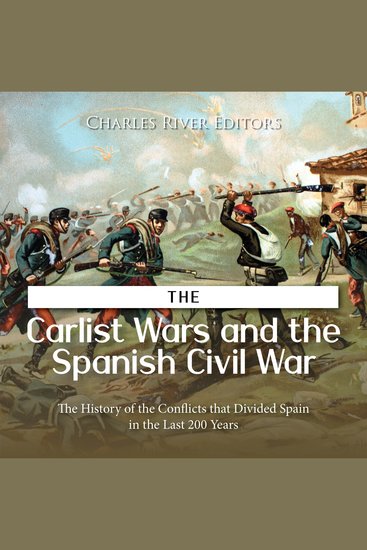
  • Carlist Wars and the Spanish Civil War The: The History of the Conflicts that Divided Spain in the Last 200 Years - cover

    Carlist Wars and the Spanish...

    Editors Charles River

    • 0
    • 0
    • 0
    Thinking of Spain as a modern nation state today distorts the complicated reality that the Iberian Peninsula faced in the past. Spain was a nation in progress, consisting of regions united under the Spanish crown, but with strong regional identities based on different historical and cultural experiences. The largest entities were the kingdoms of León and Castile, but Spain also included the kingdoms of Navarre, Andalusia, Granada, Jaén, Aragon, and Valencia. There were also the principalities of Asturias and Catalonia, the lordship of Vizcaya, and both Guipúzcoa and Alava were “exempted provinces.” Navarre, Aragon, and Catalonia had separate Cortes, which were versions of parliaments (Parker 18-19). This complex system of entities granted privilege to local power structures over the concept of a unified nation and made administration difficult, because there were few standards that applied to all of Spain. Many of the regions had special laws that respected and allowed traditional institutions, administrative patterns, and cultural patterns. These local and regional rights were called fueros and were fiercely defended against centralization. 
    	The Spanish Civil War has exerted a powerful impact on the historical imagination. Without question, the conflict was a key moment in the 20th century, a precursor to World War II, and an encapsulation of the rise of extremist movements in the 1930s, but it was also a complex narrative in and of itself, even as it offered a truly international theatre of war. It marked one of the seminal moments, along with the 1929 Wall Street Crash, between the two apocalyptic wars of the early 20th century, and since it occurred between 1936 and 1939, Spain proved to be a testing ground of tactics, weaponry, and ideology ahead of World War II. 
    Ver livro
  • Critique of Interventionism - cover

    Critique of Interventionism

    Ludwig Von Mises

    • 0
    • 0
    • 0
    In "Critique of Interventionism," Ludwig von Mises delves into the economic consequences and philosophical underpinnings of government intervention in the market. Mises argues that interventionism, which involves state interference in economic affairs while maintaining private ownership, inevitably leads to unintended consequences, distortions, and economic inefficiencies. The book is a critical analysis of interventionist policies, examining their impact on individual freedom, economic coordination, and the overall functioning of a market economy.
    Ver livro