Junte-se a nós em uma viagem ao mundo dos livros!
Adicionar este livro à prateleira
Grey
Deixe um novo comentário Default profile 50px
Grey
Assine para ler o livro completo ou leia as primeiras páginas de graça!
All characters reduced
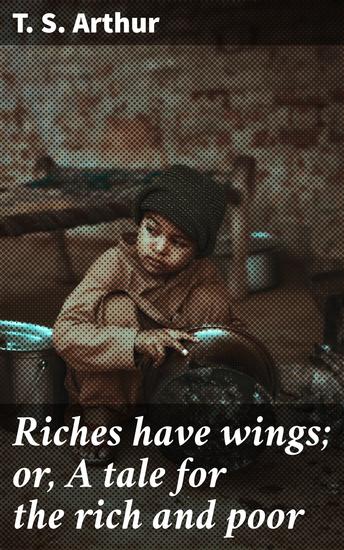
Riches have wings; or A tale for the rich and poor - Navigating the Perils of Wealth: A Moral Tale on Riches and Happiness - cover
LER

Riches have wings; or A tale for the rich and poor - Navigating the Perils of Wealth: A Moral Tale on Riches and Happiness

T. S. Arthur

Editora: Good Press

  • 0
  • 0
  • 0

Sinopse

In "Riches Have Wings; or, A Tale for the Rich and Poor," T. S. Arthur delves into the moral landscape of wealth and its transient nature through a compelling narrative that intertwines the lives of both affluent and destitute characters. Arthur employs a clear, straightforward prose style that allows for deep emotional resonance, reflecting the mid-19th century's social realism. This novel stands as a critique of materialism and a reminder of the ethical responsibilities that accompany financial success, echoing prevalent themes in Victorian literature regarding social class and personal integrity. T. S. Arthur, an influential figure in America'Äôs literary scene, was known for his didactic storytelling aimed at moral upliftment. Having witnessed the societal disparities of his time, Arthur's experiences and observations profoundly shaped his writing. His background in working-class culture and commitment to social reform inspired this tale, showcasing his belief in the importance of empathy and understanding across economic divides. I highly recommend "Riches Have Wings" to readers interested in classic literature that explores the complexities of wealth and morality. This thought-provoking narrative not only entertains but also challenges us to reflect on our own values in relation to wealth, making it a relevant read for contemporary audiences.
Disponível desde: 10/07/2023.
Comprimento de impressão: 94 páginas.
Outros livros que poderiam interessá-lo

  • Demir-Kaya - From their pens to your ears genius in every story - cover

    Demir-Kaya - From their pens to...

    Alexander Kuprin

    • 0
    • 0
    • 0
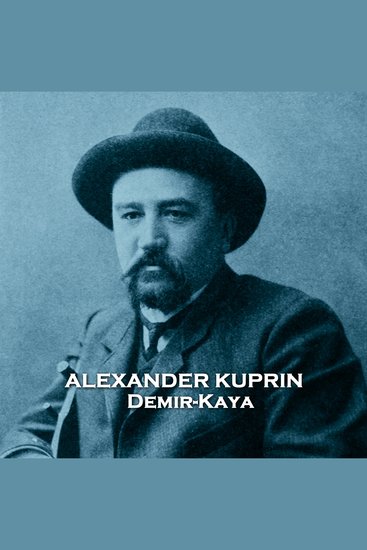
    Alexander Kuprin was born in Narovchat, Penza in Russia on 7th September 1870. 
    At 3 his Father died and he and mother moved to Moscow. By 10 he was enrolled at the Second Moscow Military High School and there his interest in literature began. The Alexander Military Academy followed and two years later he was a sub-lieutenant and posted to an Infantry Regiment for a further four years. 
    Despite his duties he was a now a keen writer and published his first short story at this time. His military duties also garnered him experiences for his breakthrough work ‘The Duel’.  Leaving the military he left for Kiev to work for local newspapers.  He continued to publish both stories and novels and by 1901 he was in St Petersburg becoming part of a group that included Chekhov, Ivan Bunin, Maxim Gorky and Leonid Andreyev.  
    In the years that followed further controversial works and acclaim followed.  His comments on the regime meant he was also put under secret police surveillance.   
    As World War I erupted, Kuprin opened a military hospital but was then given command of an infantry company in Finland. He was soon discharged on grounds of ill health.  
    The October Revolution saw him praise Lenin, but he warned that the Bolsheviks threatened Russian culture and might cause further widespread suffering to the peasants.  As Civil War raged he took his family to Helsinki and then on to Paris. 
    Exile saw his talents decline further and his succumbing to alcoholism. He became lonely and withdrawn. The family's poverty increased his malaise.   
    In May 1937, the Kuprin’s returned to Moscow.  He now saw his work published but wrote almost nothing new.  In 1938 his health rapidly deteriorated.  Already suffering from a kidney problems and sclerosis, he had now developed cancer of the oesophagus.  
    Alexander Kuprin died on 25th August 1938.
    Ver livro
  • Publicity Campaign - cover

    Publicity Campaign

    Arthur C. Clarke

    • 0
    • 0
    • 0
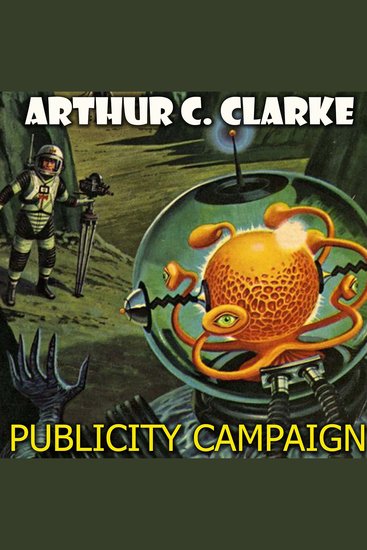
    Publicity Campaign" is a short science fiction story by Arthur C. Clarke, originally published in 1953 in the London Evening News. It explores the themes of communication and xenophobia, focusing on an alien expedition attempting to interact with Earthlings. The story depicts an alien race facing difficulties understanding and interacting with humans due to their xenophobia, ultimately leading to a drastic, though seemingly necessary, solution.
    Ver livro
  • The Trial For Murder - cover

    The Trial For Murder

    Charles Dickens

    • 0
    • 0
    • 0
    In The Trial for Murder, Charles Dickens delivers a chilling and suspenseful ghost story set in the tension-filled backdrop of a courtroom. When an ordinary man is selected to serve on a jury, he finds himself haunted by the ghost of the murder victim, who seems determined to influence the outcome of the trial. As the eerie presence grows stronger, the line between the natural and the supernatural blurs, leading to a suspenseful and eerie conclusion. 
    Narrated by N. W. Edwards, this audiobook brings the eerie atmosphere of the story to life, with rich and evocative tones that capture the suspense and unease of Dickens’ supernatural courtroom drama. Perfect for fans of classic horror and ghost stories, The Trial for Murder will leave listeners with a lingering sense of mystery and dread.
    Ver livro
  • A Haunted House - From their pens to your ears genius in every story - cover

    A Haunted House - From their...

    Virginia Woolf

    • 0
    • 0
    • 0
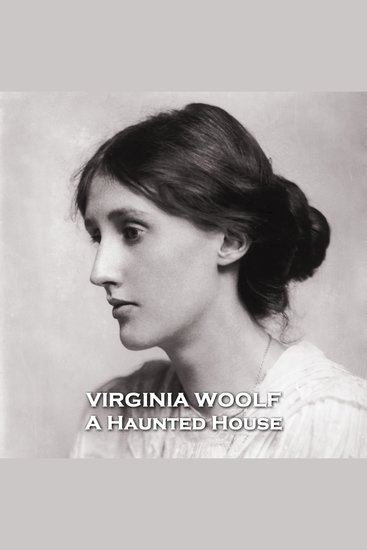
    Adeline Virginia Woolf was born on the 25th January 1882 in South Kensington in London. 
    Although lauded as a founder of modernist writing with such classics as ‘Orlando’, ‘Mrs Dalloway’ and ‘To the Lighthouse’ and, of course, many classic short stories, her background is filled with elements of tragedy that she somehow overcame to become such a revered writer.   Her mother died when she was 13, her half-sister Stella two years later and with it her first of several nervous breakdowns.  Appallingly it was later found that three of her half-brothers had sexually abused her so darkness must have seemed ever present.   
    She began writing professionally at age 20 but her father’s death two years later brought a complete mental collapse and she was briefly institutionalised.  Somehow she found within herself a literary career and with it great innovations in writing; she was a pioneer of “stream of consciousness”.    
    Her tight circle of friends were the founders of the Bloomsbury Group, a movement whose legacy still influences across the arts and society in many way to this day.   
    Whilst the dark periods continued to interrupt her emotional state her rate of work never ceased.  Until, on 28th March 1941, Woolf put on her overcoat, filled up its pockets with stones, and walked into the River Ouse, in Lewes, East Sussex and drowned herself.  Her body was not recovered until the 18th April.  She was 59. 
    She left behind a note which read in part “Dearest, I feel certain that I am going mad again.  I feel we can't go through another of those terrible times.  And I shan't recover this time.  I begin to hear voices, and I can't concentrate.  So I am doing what seems the best thing to do”.
    Ver livro
  • A Saga of the Seas - From their pens to your ears genius in every story - cover

    A Saga of the Seas - From their...

    Kenneth Grahame

    • 0
    • 0
    • 0
    Kenneth Grahame was born on 8th March 1859 in Edinburgh. 
    At age 5 his mother succumbed to puerperal fever.  His father, who had a drinking problem, now sent his 4 children to live with their grandmother at her large house in Cookham, Berkshire. Here the children lived in large open grounds next to the river.  These early experiences would in later years, be retold in his writing through a myriad of characters. 
    Grahame loved being a pupil at St Edward's School, Oxford and wanted to enroll at the university there but his guardian demurred on account of the cost. 
    Instead, a banking career was chosen for him, starting in 1879 at the Bank of England, where he rose steadily to the rank of its Secretary until retiring, with a pension, in 1908 due to ill health. 
    Alongside his commercial career Grahame had written and published various stories and essays in several periodicals. Some were anthologized as ‘Pagan Papers’ in 1893, and two years later ‘The Golden Age’ and later still ‘Dream Days’ and its masterpiece ‘The Reluctant Dragon’ became part of many home libraries.  His ability to view life through the lens of a young and curious child was superb, enabling the reader to easily identify with the character.   
    Grahame married Elspeth Thomson in 1899 and they had one child; Alastair, born semi-blind and plagued by health problems.  In a heart-rending tragedy he would later take his own life whilst attending Oxford University in 1920.   
    In 1908 Grahame reworked many of the bedtime stories he had fashioned for his son into the enduring favourite; ‘The Wind in the Willows’, describing the heart-warming adventures of Mr Toad and his friends.   
    Kenneth Grahame died in Pangbourne, Berkshire, on 6th July 1932.
    Ver livro
  • Love & Friendship - cover

    Love & Friendship

    Jane Austen

    • 0
    • 0
    • 0
    "Love and Friendship" is a novella by Jane Austen that explores the themes of love, friendship, and the societal expectations that govern relationships in the early 19th century. The narrative unfolds through the protagonist, Laura, who recounts her experiences and relationships in a series of letters. Austen's narrative is characterized by its wit and satire, as she keenly observes the manners and morals of the time. Through Laura's voice, the reader is taken on a journey that navigates the complexities of romantic entanglements and the consequences of societal pressures. 
     
    The novella delves into the consequences of impulsive decisions and the societal expectations placed on women to secure advantageous marriages. Austen uses humor and irony to expose the absurdities of the social norms and conventions that govern the characters' lives. As Laura navigates the challenges of love and friendship, Austen skillfully weaves a narrative that explores the tension between individual desires and societal expectations. The characters' flaws are exposed, highlighting the limitations placed on personal freedom in a society where social standing and financial considerations often take precedence over matters of the heart. 
     
    In "Love and Friendship," Austen's narrative mastery shines through as she crafts a tale that not only entertains but also offers a subtle commentary on the constraints of the society in which her characters live. The exploration of love and friendship serves as a lens through which Austen examines the intricacies of human relationships, making the novella a timeless and insightful exploration of the human condition.
    Ver livro