Junte-se a nós em uma viagem ao mundo dos livros!
Adicionar este livro à prateleira
Grey
Deixe um novo comentário Default profile 50px
Grey
Assine para ler o livro completo ou leia as primeiras páginas de graça!
All characters reduced
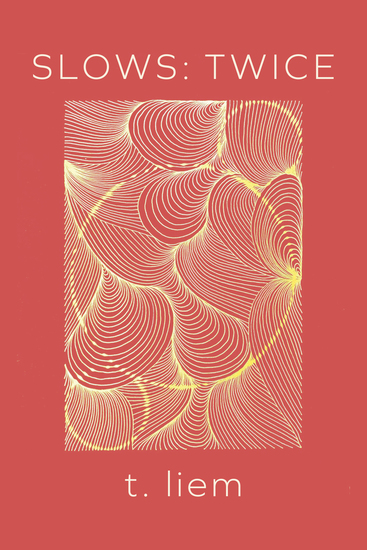
Slows: Twice - cover
LER

Slows: Twice

T. Liem

Editora: Coach House Books

  • 0
  • 0
  • 0

Sinopse

SHORTLISTED FOR THE 2023 A.M. KLEIN PRIZE FOR POETRY 
LONGLISTED FOR THE 2024 RAYMOND SOUSTER AWARD 
CBC BOOKS CANADIAN POETRY COLLECTIONS TO WATCH FOR IN SPRING 2023 
Backward and forward: a double book of mirrored poems about identity in all its forms.This is a book of slow hours, days, and years – how they can collapse into one another, how it can feel like we are living one day repeating itself. From within this collapse, the speaker seeks connection everywhere. They visit their father’s birthplace, Jogjakarta; they listen to a stranger’s phone call at the Motel 6 in Alberta; they linger in the so-called ethnic aisle of the grocery store. From all of these places the speaker is discouraged but tries to imagine a future joyously incomprehensible to the present.Slows: Twice is a collection of revisions and repetitions; every poem in one half of the book has an alternate version, or a mirror poem, in the other half. The poems are tied to themes of work and labour, consumption and waste, family and home, as shapers of identity and relationships. The act of revising and repeating – slowly – is meant to be a resistance to efficiency, a resistance to being an always-productive body under capitalism. 
 
"The poems of Slows: Twice collect in resonance, contemplate the construction of selves, with modes of repetition, sequencing, and mirroring, the way language assembles an identity or points to itself as it points away.  'The clouds // disappear the sky sometimes; or they become it.' Storied and cubistic, palindromic and cleaved, Liem’s poems reveal relationships to time, noise, and duration, and the possibility of joy given painful pasts." – Hoa Nguyen, author of A Thousand Times You Lose Your Treasure 
"T. Liem is one of my favorite poets working in Canada. I welcomed this book into my life like sudden sunlight. Slows: Twice is a book about how urgently we need to read differently. I loved its mischievous relation to form and expectation as well as its burning intelligence. I once described T. as an inheritor of the tradition of language poetry, but what Slows: Twice proves is that T. is less an inheritor and more so an innovator, an inventor in their own right. I read it in one frenzied sitting." – Billy-Ray Belcourt, author of A Minor Chorus 
"It’s breathtaking to watch words drip from a page into a silver river cutting through a canyon of time. T. Liem sculpts poetry with steady, curious fingers, pushing against the filaments we think hold us together that have been quietly collecting cracks, from buried violence and whispered histories to the fragile connections tying us together. Obits. captured my heart; Slows: Twice now affirms it." – Teta, founder of diasporic Indonesian publication Buah zine 
"'For everything I was, I am now something else.' Revision of self and world are core to this innovative, unruly book that manages somehow to be at once formally wacky and emotionally clear. These poems seem to ask: if language is a box heavy with histories and inadequacies and which we nevertheless must carry, can language also carry us somewhere, elsewhere, strangely? Rarely have I encountered a book so at home in the unresolved, in the tension between a longing for declaration and a commitment to questions. T. Liem’s work conjures the figure of Janus: god of duality and gates, one face facing an end, the other looking through a new door, right in the eye of a dream." – Chen Chen, author of Your Emergency Contact Has Experienced an Emergency 
"T. Liem's Slows: Twice is a fascinating exercise in revision and remaking, each repetition of its text accomplishing the arduous task of stretching time and geopolitical fixity. 'asking and repeating/ we are made' declares Liem, and that utterance produces the book's essential maxim, 'language is change/ changed by prosody.' In between these cracks of time, language becomes a miracle suture for love and connection where the hard reality of one's circumstances may produce infinite ruptures. This is a book that peers into the fissure, holding these moments of fracture as still and clearly as possible--a future of proximates." – Muriel Leung, author of Imagine Us, the Swarm
Disponível desde: 09/05/2023.
Comprimento de impressão: 250 páginas.
Outros livros que poderiam interessá-lo

  • I saw the Sun at Midnight rising red - cover

    I saw the Sun at Midnight rising...

    Joseph Mary Plunkett

    • 0
    • 0
    • 0
    LibriVox volunteers bring you 24 recordings of I saw the Sun at Midnight, rising red by Joseph Mary Plunkett. This was the weekly poetry project for February 8th, 2009.
    Ver livro
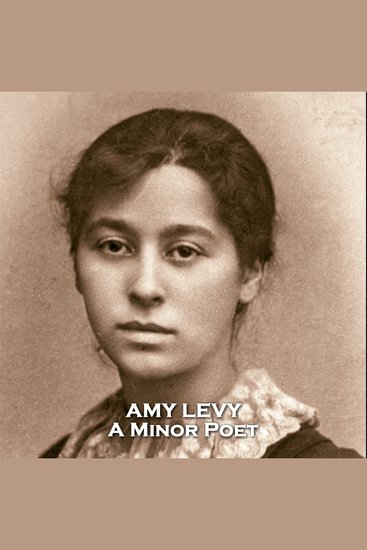
  • A Minor Poet - From their pens to your ears genius in every story - cover

    A Minor Poet - From their pens...

    Amy Levy

    • 0
    • 0
    • 0
    Amy Levy was born in London, England in 1861, the second of seven in a fairly wealthy Anglo-Jewish family. The children read and participated in secular literary activities and became firmly integrated into Victorian life. 
    Her education was at Brighton High School, Brighton, before studies at Newnham College, Cambridge; she was the first Jewish student when she arrived in 1879, but left after four terms. 
    Amy’s writing career began early; her poem ‘Ida Grey’ appeared when she was only fourteen. Her acclaimed short stories ‘Cohen of Trinity’ and ‘Wise in Their Generation,’ were published by Oscar Wilde in his magazine ‘Women's World’. 
    Her poetic writings reveal feminist concerns; ‘Xantippe and Other Verses’, from 1881 includes a poem in the voice of Socrates's wife. ‘A Minor Poet and Other Verse’ from 1884 comprises of dramatic monologues and lyric poems. 
    In 1886, Amy began a series of essays on Jewish culture and literature for the Jewish Chronicle, including ‘The Ghetto at Florence’, ‘The Jew in Fiction’, ‘Jewish Humour’ and ‘Jewish Children’. 
    That same year while travelling in Florence she met the writer Vernon Lee. It is generally assumed they fell in love and this inspired the poem ‘To Vernon Lee’.  
    Her first novel ‘Romance of a Shop’, written in 1888 is based on four sisters who experience the pleasures and hardships of running a London business during the 1880s. This was followed by Reuben Sachs (also 1888) and concerned with Jewish identity and mores in the England of her time and was somewhat controversial.  
    Her final book of poems, ‘A London Plane-Tree’ from 1889, shows the beginnings of the influence of French symbolism. 
    Despite many friendships and an active life, Amy suffered for many years with serious depressions and this, together with her growing deafness, led her to commit suicide by inhaling carbon monoxide on September 10th, 1889. She was 27.
    Ver livro
  • The Jumblies - cover

    The Jumblies

    Edward Lear

    • 0
    • 0
    • 0
    LibriVox volunteers bring you 19 recordings of The Jumblies by Edward Lear. This was the fortnightly poetry project for March 8th, 2009.
    Ver livro
  • The Hindu Bard - The Poetry of Dorothy Bonarjee - cover

    The Hindu Bard - The Poetry of...

    Andrew Whitehead, Mohini Gupta

    • 0
    • 0
    • 0
    The first print collection of Dorothy Bonarjee's verse
    
    In February 1914, Dorothy 'Dorf' Bonarjee was awarded the Bardic chair at the UCW Eisteddfod for verse. She was the first woman and first non-European to win Wales' most prestigious literary prize.
    
    In their 34th Welsh Women's Classic, Honno Welsh Women's Press presents the first publication of Dorothy Bonarjee's verse alongside a vivid account of the poet's extraordinary life in India, London, Wales and France.
    
    Poet Dorothy 'Dorf' Bonarjee was born in India in 1894 into an elite Bengali family. As a child, she moved to London and in 1912 she enrolled at the University College of Wales at Aberystwyth. Two years later, she was awarded the Bardic chair at the Eisteddfod, and went on to publish poems in Welsh journals. Bonarjee later took a law degree at the University of London and eloped with a French artist. France remained her home for the rest of her life.
    Ver livro
  • Gitanjali - cover

    Gitanjali

    Rabindranath Tagore

    • 0
    • 0
    • 0
    Gitanjali is a collection of 103 poems in English, largely translations by the Bengali poet Rabindranath Tagore. This volume became very famous in the West, and was widely translated into other languages. In England a slender volume was published in 1913, with an exhilarating preface by W. B. Yeats. In the same year, Rabindranath became the first non-European to win the Nobel prize. (summary by Hilara)"On many an idle day have I grieved over lost time. But it is never lost, my lord. Thou hast taken every moment of my life in thine own hands.Hidden in the heart of things thou art nourishing seeds into sprouts, buds into blossoms, and ripening flowers into fruitfulness.I was tired and sleeping on my idle bed and imagined all work had ceased. In the morning I woke up and found my garden full with wonders of flowers." 81, Gitanjali
    Ver livro
  • Witches' Brew (MacBeth Act IV Scene I) - cover

    Witches' Brew (MacBeth Act IV...

    William Shakespeare

    • 0
    • 0
    • 0
    Librivox volunteers bring you seven readings of The Witches' Brew from Act IV Scene I of MacBeth, by William Shakespeare. This was the weekly poetry project for October 26, 2014.
    Ver livro