¡Acompáñanos a viajar por el mundo de los libros!
Añadir este libro a la estantería
Grey
Escribe un nuevo comentario Default profile 50px
Grey
Suscríbete para leer el libro completo o lee las primeras páginas gratis.
All characters reduced
Neighbour Procedure - cover

Neighbour Procedure

Syd Zolf

Editorial: Coach House Books

  • 0
  • 0
  • 0

Sinopsis

Zolf’s powerful follow-up to the Trillium Award-winning Human Resources is a virtuoso polyvocal correspondence with the daily news, ancient scripture and contemporary theory that puts the ongoing conï¬?ict in Israel/Palestine firmly in the crosshairs. Plucked from a minefield of competing knowledges, media and public texts, Neighbour Procedure sees Zolf assemble an arsenal of poetic procedures and words borrowed froma cast of unlikely neighbours, including Mark Twain, Dadaist Marcel Janco, blogger-poet Ron Silliman and two women at the gym. The result is a dynamic constellation where humour and horror sit poised at the threshold of ethics and politics. 
'Neighbour Procedure … pack[s] an intellectual punch that reminds us, once again, of the powerhouse generations of innovative feminist poets that continually challenge and transform our understanding of what poetic texts can do.' 
– Matrix Magazine 
‘This is an extraordinary collection of poems, and yet I hesitate in saying this, since something happens to poetry in these pages, so I no longer know what precisely poetry is or can be. In fact, Rachel Zolf brings an incredible range of readings to bear on the poetic line. If there is a mixing of media within these lines, there is also a proliferation of tongues, an effort to let language collide to produce a more acute and anguished experience of war. Israel and Palestine recur in the fits and starts of meditation offered here where language follows unpredictable sequences and finds itself suddenly stuttering in its vowels. There is mourning, rage and some brave and difficult effort to speak across traditions, languages, to avow loss, to expose the colder rationalities of occupation and war, and a linguistic fathoming of the ethics of proximity. This is courageous and moving work that feels like the struggle of a lifetime condensed into potent lines.’ – Judith Butler 
‘Politics and poetry are a volatile mix. Yes, except that the voices of war and terrorism are themselves defiantly both. Zolf shows us this truth, and so her lyrics s(t)ing, acidly.’ – George Elliott Clarke, author of George and Rue 
‘Neighbour Procedure is the most realized conceptual-modular book of political poetry I’ve read to date; Zolf’s language-motion escapes several nation-states’ culture capture zones while re-threading the very notion of self-representational purposivity.’ – Rodrigo Toscano 
‘This book is a sharp, painful cry against the tyranny of the monologic.’ – Charles Bernstein 
‘There is a madness in thinking the problem of Israel and Palestine can be thought through or sorted out, a philosophical conundrum or puzzle of language; and there's a despair in thinking that reason has lost its right, leaving all to violence. In Neighbour Procedure, Zolf chooses madness, but yields to despair her suspicion that reason never had a right – only a discourse of ruins, monuments and counter-monuments to hope.’ – Benjamin Friedlander
Disponible desde: 22/02/2010.
Longitud de impresión: 96 páginas.

Otros libros que te pueden interesar

  • The Poetry of Dante Gabriel Rossetti - Renowned poet and painter who founded the Pre-Raphaelite Brotherhood and influenced the Aesthetic movement - cover

    The Poetry of Dante Gabriel...

    Dante Gabriel Rossetti

    • 0
    • 0
    • 0
    Dante Gabriel Rossetti was born on May 12th 1828 in London, England. 
    As a youth he was "self-possessed, articulate, passionate and charismatic" but also "ardent, poetic and feckless". Like his siblings, including famed poet Christina Georgina Rossetti, he most wished to be a poet but had a keen eye as a painter, having shown a great interest in Medieval Italian art.  
    Together with William Holman Hunt and John Everett Millais they developed and founded the Pre-Raphaelite Brotherhood. It’s mission; to reform English art and return to the detail, intense colours, and complex compositions of Quattrocento Italian and Flemish art.  
    The brotherhood's magazine, The Germ, was first published in 1850 with Rossetti contributing a poem, "The Blessed Damozel", and a story about a fictional Italian artist inspired by a vision of a woman who bids him combine the human and the divine in his art. 
    Rossetti first met his future wife, Elizabeth Siddal, a model, in 1849 who was later sitting for him and involved in an intense relationship.  By 1852 they withdrew from society; totally absorbed in each other. The lovers nicknamed each other; "Guggums" and "Dove".   
    In 1861, Rossetti, together with William Morris, became a founding partner in the decorative arts firm, Morris, Marshall, Faulkner & Co. Rossetti contributed designs for stained glass and other decorative objects. 
    Meanwhile his marriage to Lizzie was troubled.  The terrible hurt of Rossetti’s affairs with other women had caused her stress leading to depression and other illnesses. She now began to take, and become addicted to, laudanum. In 1861, Lizzie became pregnant but the resultant birth was a stillborn daughter.  Lizzie’s post-partum depression was followed by an overdose of laudanum the following year.  Rossetti was devastated and, at her funeral in Highgate Cemetery, he buried the bulk of his unpublished poems with her body. 
    Poetry and painting are closely entwined in Rossetti's work. He frequently wrote sonnets to accompany his pictures, while also creating art to illustrate poems such as "Goblin Market" by his sister. 
    His personal life was closely woven into his work, especially his relationships with his models and muses.  William Morris’s wife, Jane, regularly sat for him during the next few years, and it was said she "consumed and obsessed him in paint, poetry, and life".  
    During these years, Rossetti was prevailed upon by friends to exhume his poems from his wife's grave which he eventually did, collating and publishing them in 1870.  Their eroticism and sensuality caused much offence. One, "Nuptial Sleep", described a couple falling asleep after sex. It was part of the sonnet sequence The House of Life, a complex series tracing the physical and spiritual development of an intimate relationship.  Rossetti described the sonnet form as a "moment's monument" and these were his crowning literary achievement.  
    Toward the end of his life, he sank into a morbid state, shadowed by addiction to chloral hydrate and increasing mental instability. He spent his last years as a recluse at Cheyne Walk and died on Easter Sunday, April 9th, 1882. 
     This volume comes to you from Portable Poetry, a specialized imprint from Deadtree Publishing.  Our range is large and growing and covers single poets, themes, and many compilations.
    Ver libro
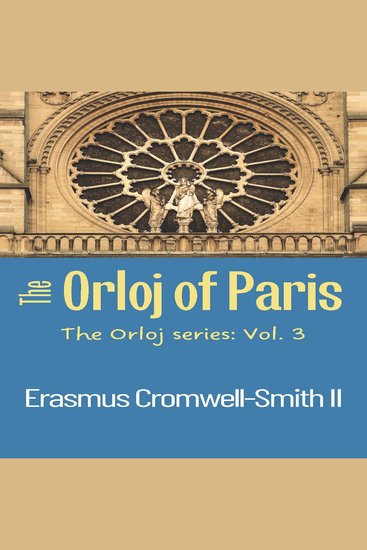
  • The Orloj of Paris - The Orloj Series: Vol 3 - cover

    The Orloj of Paris - The Orloj...

    Erasmus Cromwell-Smith II

    • 0
    • 0
    • 0
    Young Erasmus Cromwell-Smith II's adventure happens inside of Paris's Notre-Dame's Cathedral imaginary astrological clock. Exactly a year after his quest in Venice's astrological clock, together with the same band of now five young wizards, while seeking the path to the Orloj, the young wizard wanders across France, visiting the astrological clocks of Rouen, Lyon, Besançon, Strasbourg, Beauvais, Ploermel and finally Paris' Notre Dame Cathedral. Once in Paris, they experience a city filled with wizards, enchanters, witches, conjurers, and once more, the evil gnome. The youngsters seek clues in order to solve the mystery of how to fix the city of Lyon's long-broken astrological clock, and by doing so, become "Master Wizards." Once more, they are guided in their quest by The Orloj, the old clock, as well as Buggie and Thumbpee, his sons. Through the wicked streets of Paris, the young wizards must find six statues representing each of the human virtues of Respect, Selflessness, Tolerance, and the human flaws of Indifference, Arrogance, and Deafness. Only after they successfully master them, they earn the clues that will show them how to fix Lyon's astrological clock. The Orloj of Paris is a magical tale filled with non-stop action and thrills, a well as timeless wisdom through nine unforgettable fables and poems.
    Ver libro
  • Imaginari - A Collection of Fantasy and Science Fiction Poetry - cover

    Imaginari - A Collection of...

    Kristina W. Kelly

    • 0
    • 0
    • 0
    Step into lyrics of science, science fiction, and fantasy where robots fight for their autonomy, fairies wage war against goblins, and humanity reaches for what awaits them in the stars. 
    This collection of poetry holds a glimpse of the human experience disguised in fairytales and stardust. You will encounter themes that resonate with our reality, such as motherhood, growth, feminism, hope, and nature. Whether you are a fan of epic sagas, whimsical tales, or lyrical reflections, you will find something to spark the imagination in this collection. Prepare to be enchanted by an invitation to dreams of the fantastical. 
    Read by the author.
    Ver libro
  • Bacon - cover

    Bacon

    Sophie Swithinbank

    • 0
    • 0
    • 0
    'I seen you looking at me. Like that. You gonna deny it? Go on. I swear down, Mark – deny it.'
    It's Year 10's first day back at school. Mark is new and too scared to make friends. Darren is out of control and too scary to make friends. The two of them need each other – but neither would ever admit it.
    Worlds apart, but more similar than they realise, the pair form a complex and manipulative relationship. And before they know it, they're embarking on a dangerous experiment that will alter the course of their lives.
    Sophie Swithinbank's play Bacon is an unflinching and unexpectedly humorous look at masculinity, sexuality and power, through the dizzying lens of youth.
    The play was first produced at the Finborough Theatre, London, in 2022, directed by Matthew Iliffe, before touring in 2023 to Riverside Studios, London; Summerhall, as part of the Edinburgh Festival Fringe; and Bristol Old Vic. First developed on the Soho Theatre Writers' Lab, Bacon won the 2018 Tony Craze Award, three Off-West End Awards (Best Director and two Best Performance in a Play awards), and the Peggy Ramsay Foundation and Film 4 Award for 2023.
    Ver libro
  • Mysterious Collection of Poems - cover

    Mysterious Collection of Poems

    Pabitra Adhikary

    • 0
    • 0
    • 0
    Each poem in this book contains a deep sense of life. The poet has shown the light of hope in the midst of despair and pain. Realized God's true nature afresh. Shown a consciousness about the world. The world of fantasy in this book is mixed with reality. A wonderful amalgamation of spiritual and scientific knowledge. The poet asks various questions about social consciousness, religion and politics.
    Ver libro
  • Born in England – Exploring English Poetry - Kent - A celebration of English poems - cover

    Born in England – Exploring...

    Christopher Marlowe, Sir Philip...

    • 0
    • 0
    • 0
    Christopher Marlowe was born in Canterbury to shoemaker John Marlowe and his wife Catherine. His exact date of birth is not known, but he was baptised on 26 February 1564.  
    And with this, Christopher Marlowe, one of the supreme English literary talents, made his entrance into the world.   
    Little is really known of his life except that from an early age, even at University, he was perhaps working as a spy.  His short life was filled with writing great works of exceptional quality. From the Jew of Malta to Doctor Faustus and Tamburlaine the Great Parts I & II his pen was the tool by which this great mind bequeathed great works to the world. 
    Add to this so many other stories of what Marlowe was or might have been: a spy, a brawler, a heretic, a "magician", "duellist", "tobacco-user", "counterfeiter", “atheist”, and "rakehell". 
    But certainly add to this; playwright and poet. An original. 
    Christopher Marlowe was buried in an unmarked grave in the churchyard of St. Nicholas, Deptford on June 1st, 1593. 
    Had his life not been so curtailed it seems that the Elizabethan Age may well have had two giants of equal standing: Shakespeare and Marlowe.
    Ver libro