Unisciti a noi in un viaggio nel mondo dei libri!
Aggiungi questo libro allo scaffale
Grey
Scrivi un nuovo commento Default profile 50px
Grey
Iscriviti per leggere l'intero libro o leggi le prime pagine gratuitamente!
All characters reduced
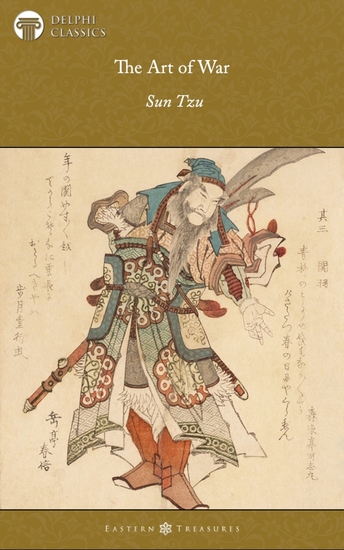
The Art of War by Sun Tzu Illustrated - cover

The Art of War by Sun Tzu Illustrated

Sun Tzu

Casa editrice: Delphi Publishing Ltd

  • 0
  • 0
  • 0

Sinossi

A military strategist and general of the fifth or sixth century BC, Sun Tzu served the state of Wu near the end of the Spring and Autumn period. He is traditionally ascribed as the author of ‘The Art of War’, a systematic guide to strategy and tactics for rulers and commanders. The book discusses various manoeuvres and the effect of terrain on the outcome of battles. It stresses the importance of accurate information about the enemy’s forces, dispositions and deployments and movements. The treatise’s insistence on the close relationship between political considerations and military policy went to inform the thinking of politicians, generals and noted leaders across the world.  Delphi’s Eastern Treasures Series provides eReaders with rare and precious works of Middle-Eastern and Asian literature, featuring prominent works of history, fiction, religion and philosophy, complemented with the original texts.  This eBook presents Sun Tzu’s complete works, with illustrations, a concise introduction, multiple translations and the usual Delphi bonus material. (Version 1)

 
* Beautifully illustrated with images relating to Sun Tzu and ‘The Art of War’* Features the complete extant text, in both English translation and the Traditional Chinese text* Multiple English translations* Concise introduction to the work* Excellent formatting of the texts* Easily locate the sections you want to read with individual contents tables* Includes Giles’ extensive annotations, with hyperlinked endnotes* Provides a special dual English and Traditional Chinese text, allowing readers to compare the sections paragraph by paragraph — ideal for students* Features a bonus ‘Resources’ section — discover Sun Tzu’s ancient world

 
CONTENTS:

 
The TranslationsBrief Introduction to ‘The Art of War’Ferguson Calthrop Translation, 1905Lionel Giles Translation, 1910Lionel Giles Translation (Simplified Text)

 
The Original TextContents of the Traditional Chinese Text

 
The Dual TextDual Traditional Chinese and English Text

 
The ResourcesA History of Chinese Literature (1901) by Herbert Allen GilesSun Wu and His Book (1910) by Lionel Giles
Disponibile da: 02/01/2025.
Lunghezza di stampa: 1687 pagine.

Altri libri che potrebbero interessarti

  • The Mind Body Way - The Embodied Leader’s Path to Resilience Connection and Purpose - cover

    The Mind Body Way - The Embodied...

    Dr. Julie Beaulac, Casey...

    • 0
    • 0
    • 0
    Learn how to lead from the inside out. 
    Are you spending your energy wisely, or are you teetering on the brink of exhaustion? Whether you're an executive, an entrepreneur, or a community organizer, embodiment can help you find meaningful success in life and leadership. In The Mind-Body Way, wellness and leadership experts Courtney Amo, Dr. Julie Beaulac, and Casey Berglund use their decades of experience to reveal how tapping into the intuitive wisdom of your body makes you a better, happier leader—no matter the unique challenges of your everyday. 
    With a step-by-step approach founded on six pillars of embodiment, The Mind-Body Way teaches you how to be a more resilient, connected, and purpose-driven leader by deepening your relationship with your body and heeding its wisdom. Through meaningful stories and accessible exercises, this practical guide will teach you how to interpret your body’s signals and use that knowledge to curb self-doubt and become a stronger, more agile leader in this increasingly complex world. 
    Discover a new way of leading that is powerful, connected, and aligned with purpose, a way that heals you and invigorates you to move through massive change—all while inspiring and empowering others.
    Mostra libro
  • Ounces of Philosophy in a World of Ads - cover

    Ounces of Philosophy in a World...

    Gilles Vervisch

    • 0
    • 0
    • 0
    “That’s the game my dear Lucette!”
    (What is happiness?)
    “Beef, the taste of being together.”
    (What is religion?)
    “Because you’re worth it.”
    (Who am I?)
    The “creators” of ads seem to be teaching us to live through the great “concepts” of philosophy, such as happiness, freedom, nature, the self or religion. But how many ounces of philosophy are there in this world of ads? That’s the question this book asks, without forgetting to include a dose of humor in its ingredients.
    Mostra libro
  • Knights and Chivalry - The Warrior Code - cover

    Knights and Chivalry - The...

    Harris Ropes

    • 0
    • 0
    • 0
    Chivalry, a code of conduct and a set of ideals, emerged during the early Middle Ages, forming the backbone of the knightly order and defining the conduct of warriors across Europe. The origins of chivalry can be traced back to the feudal system, where the role of the knight was essential in maintaining the social and political structure of the time. Knights were initially seen as mounted warriors serving a lord or king, and their duties were deeply intertwined with the political and military landscapes of medieval society. 
    The concept of chivalry grew from various sources, including the martial traditions of early medieval Europe, the influence of the church, and the rising importance of courtly love in literature. Early codes of conduct, though not uniform, emphasized qualities such as bravery, loyalty, and honor. These ideals were primarily martial in nature, as knights were expected to protect their lords and lands from invaders. Over time, however, the influence of Christianity began to shape the code of chivalry, adding elements of piety, mercy, and the protection of the weak. 
    One of the key influences in the development of chivalry was the rise of feudalism. As the Roman Empire fell and Europe entered a period of fragmentation, the feudal system became the dominant form of social and economic organization. Lords granted land to vassals in exchange for military service, and knights became essential for the protection of these lands. This system encouraged the development of a warrior class that was bound by loyalty and honor, principles that would later become central to chivalric codes.
    Mostra libro
  • Audiology - The Science of Sound Hearing and Balance Disorders - cover

    Audiology - The Science of Sound...

    Mike Crawford

    • 0
    • 0
    • 0
    Audiology is the branch of science that focuses on the study of sound, hearing, and balance. It is a multifaceted field that encompasses the assessment, diagnosis, and treatment of various auditory and vestibular disorders. The role of audiologists is essential in identifying hearing impairments, providing interventions, and promoting overall ear health, which plays a vital part in communication and quality of life. 
    Sound, in its simplest form, is the vibration of molecules in the air that travel as waves to our ears. As one of the primary ways humans perceive the world around them, hearing is not only crucial for communication but also for safety, socialization, and enjoyment. Audiologists specialize in understanding these complex processes and the challenges that arise when they are impaired. Their work involves not only diagnosing hearing loss but also managing conditions related to balance and the inner ear, both of which are intricately linked. 
    The study of audiology dates back to the early 20th century, with significant advancements made throughout the decades in both technology and methodology. Today, audiology has grown into a highly specialized field that includes a range of services, from basic hearing tests to advanced procedures like cochlear implants and balance rehabilitation. Audiologists employ a variety of diagnostic tools, including audiometers, tympanometers, and specialized tests, to evaluate hearing and vestibular function. These assessments are critical in identifying the specific nature of auditory or balance problems, which can stem from a range of causes such as aging, genetics, illness, injury, or environmental factors.
    Mostra libro
  • Social Experiments in the 20th Century: The History of the World’s Most Famous and Infamous Psychological Experiments - cover

    Social Experiments in the 20th...

    Editors Charles River

    • 0
    • 0
    • 0
    The human psyche is one of the most complex, unpredictable, enigmatic, and therefore riveting phenomena in existence, one that psychologists have been working on deciphering since the dawn of modern science. To better understand the multifaceted intricacies of human behavior, and to unlock the secrets of the conscious mind and the subconscious, ambitious professionals in the field have conducted numerous groundbreaking – and at times, problematic – psychological experiments. The practice originated with German philosopher Wilhelm Wundt, one of the fathers of modern psychology and the creator of the world's first experimental psychology laboratory at the University of Leipzig. He sought to measure the average speed of thought processes by assigning a range of reaction time tasks to his subjects.  
    	As the nascent, yet fast-developing scientific discipline took hold around the globe, psychological experiments simultaneously diversified. As revolutionary and eye-opening as many of these experiments were, they often danced on the fine line between ethical and unethical. There was, for instance, the now-infamous Little Albert Experiment, conducted at Johns Hopkins University in 1920, in which a nine-month-old infant was deliberately manipulated into developing an irrational fear for the purpose of studying classical conditioning, and the correlation between adult fears and childhood traumas. The Monster Study, carried out at the University of Iowa in 1939, attempted to convert orphans into stutterers, half of whom were subjected to positive reinforcements and the others to negative ones. Then, there was arguably the most notorious psychological experiment in history: the 1971 Stanford Prison Experiment, in which participants were randomly assigned the character of either prisoner or prison guard. That role-playing study quickly spiraled out of control.
    Mostra libro
  • The Discovery of Tutankhamun's Tomb - Archaeology and Legacy - cover

    The Discovery of Tutankhamun's...

    Omar Khalil

    • 0
    • 0
    • 0
    The search for Tutankhamun’s tomb was one of the most ambitious archaeological pursuits of the early 20th century. For years, Egyptologists and explorers had scoured the Valley of the Kings, believing that the burial site of the young pharaoh remained hidden beneath the desert sands. Despite previous excavations yielding little success, one man remained convinced that the tomb had yet to be discovered. 
    Howard Carter, a British archaeologist, had spent decades working in Egypt, developing an unmatched expertise in excavation. His belief in the existence of Tutankhamun’s tomb was fueled by fragments of artifacts bearing the young pharaoh’s name, suggesting that his final resting place was still untouched. However, funding such an extensive search required a patron, and it was Lord Carnarvon, a wealthy British aristocrat, who provided the financial backing. In 1917, Carter’s systematic excavation of the Valley of the Kings began, but after several years of fruitless digging, Carnarvon grew impatient. 
    By 1922, with resources nearly depleted, Carter convinced Carnarvon to allow him one final season of excavation. It was in November of that year that Carter’s persistence paid off. While investigating an area near the tomb of Ramses VI, workers uncovered a set of steps leading down into the earth. Clearing away the debris, Carter discovered a sealed doorway marked with the insignia of Tutankhamun. Excitement and caution filled the air as he realized that the tomb had remained undisturbed for centuries.
    Mostra libro