¡Acompáñanos a viajar por el mundo de los libros!
Añadir este libro a la estantería
Grey
Escribe un nuevo comentario Default profile 50px
Grey
Suscríbete para leer el libro completo o lee las primeras páginas gratis.
All characters reduced
Dim Hope Glows - cover

Dim Hope Glows

Storm Mindweaver

Traductor A AI

Editorial: Publifye

  • 0
  • 0
  • 0

Sinopsis

Dim Hope Glows offers a practical guide to depression recovery, emphasizing the powerful combination of structured daily routines and appropriate medical intervention. Recognizing that even a faint glimmer of hope can be nurtured, the book addresses the challenges of disrupted routines and reluctance towards seeking medical help that often accompany depression. It highlights the importance of establishing consistent daily structures, such as regular sleep schedules and meal times, to provide stability amid the chaos of depressive symptoms.

 
The book delves into the neurobiology of depression, explaining how neurotransmitters and brain structures influence mood regulation, while also exploring the historical context of mental health and shifting societal attitudes. By integrating Cognitive Behavioral Therapy (CBT) techniques and discussing medication management, Dim Hope Glows empowers individuals to take an active role in their healing process.

 
The book progresses from introducing the core concepts of routine and medical assistance to detailing the science behind routine and culminating in practical guidance for creating personalized recovery plans. This self-help resource uniquely combines the often-separated aspects of routine and medical care, presenting a unified framework for recovery. It provides tools for tracking progress and adjusting plans, demonstrating how these approaches reinforce each other for better outcomes.

 
Drawing upon clinical studies, personal narratives, and expert interviews, the book not only informs but also encourages readers to cultivate long-term well-being, even when facing mood disorders.
Disponible desde: 27/02/2025.
Longitud de impresión: 116 páginas.

Otros libros que te pueden interesar

  • The Big Truth - Upholding Democracy in the Age of “The Big Lie” - cover

    The Big Truth - Upholding...

    Major Garrett, David Becker

    • 0
    • 0
    • 0
    When a seven-million-vote margin of victory and 306 electoral votes pointed to Joe Biden as the victor in the 2020 Presidential Election, Trump-fueled conspiracy theories exploded. 


    In The Big Truth, CBS's Chief Washington Correspondent Major Garrett and the nation's foremost elections expert David Becker completely upend The Big Lie that has infected the Far Right with firsthand stories of election officials like Georgia Secretary of State Brad Raffensperger and Bucks County, Pennsylvania, election director Thomas Freitag. And they reveal the concrete evidence proving that 2020 may have been the most secure US election ever. But Garrett and Becker go beyond the key players from all six swing states, the pre-election litigation that clarified the rules for both parties, and the fully auditable and verifiable ballots used. They lay bare the methods being undertaken right now to undercut faith, belief, and effectiveness of elections, identifying the places where the most dire actions have been taken since 2020—where election laws have been changed; or election officials been hounded out of office, retired out of frustration/fatigue, or been replaced by pro-Trump political figures.
    Ver libro
  • Why Can't I Fix It? - The Questions We Ask When We Love Someone with Addiction - cover

    Why Can't I Fix It? - The...

    Nathan Detering

    • 0
    • 0
    • 0
    Why is this happening? How do you care for yourself and your family? If you are struggling with a loved one’s addiction you are not alone. A compassionate resource for anyone stuck between a rock and a hard place. 
    When Rev. Nathan Detering shared the story of his brother’s death from a drug overdose with the members of his congregation, many of them shared their own addiction stories with him. Realizing the healing power of sharing stories and questions in community, Rev. Detering conducted interviews to identify and address the common questions that haunt us when we love someone with addiction. In conversations both within and outside his community, he heard the palpable need for those struggling with a loved one’s addictions to know they are not alone. 
    Weaving together his own and others’ deeply felt experiences of addiction, Why Can’t I Fix It? responds to sometimes desperate questions such as: Why is this happening? What can you do? What can’t you do? How do you care for yourself and the rest of your family? Can you trust your community to support you and your family? While the answers to these questions aren’t easily found, Why Can’t I Fix It? encourages those of us who are struggling with a loved one’s addictions to practice self-care and self-compassion, understand the cultural context for emotional responses and expectations of ourselves and others, and reach out for support.
    Ver libro
  • Cubrich's Dictionary for Sleepers - cover

    Cubrich's Dictionary for Sleepers

    Cody Cubrich

    • 0
    • 0
    • 0
    Increase your vocabulary while you SLEEP! 
    Doesn't that sound s-p-e-c-t-a-c-u-l-a-r?!?! 
    Cubrich's Dictionary for Sleepers has yet to be scientifically proven to increase your vocabulary and memory retention. 
    TRY IT TODAY
    Ver libro
  • Roman Gladiators and the Colosseum The: The History and Legacy of Ancient Rome’s Most Famous Arena and Fighters - cover

    Roman Gladiators and the...

    Editors Charles River

    • 0
    • 0
    • 0
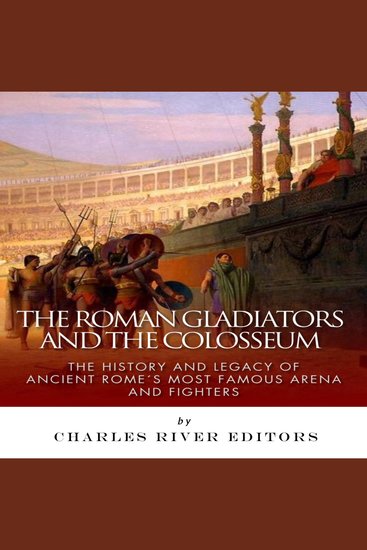
    When the Colosseum was built in the late 1st century A.D., the Romans, a people known for their architectural acumen, managed to amaze themselves. Martial, a Roman poet writing during the inauguration of the Colosseum, clearly believed the Colosseum was so grand a monument that it was even greater than the other Wonders of the Ancient World, which had been written about and visited endlessly by the Romans and Greeks in antiquity. Indeed, although the Wonders were wondrous to behold, the Colosseum was a spectacular achievement in architecture, something new and innovative, and therefore an amazing “Wonder” in its own way. 
    Of course, the main events in the Colosseum were gladiator fights. Gladiators are somewhat synonymous with ancient Rome, and even thousands of years after they performed on the sands, when people are asked about Roman culture, many think about and refer to the bloody spectacles of men fighting to the death in the arena. Gladiatorial combat is often regarded as barbaric, and most find it very difficult to comprehend how people could have enjoyed watching something so violent, but nevertheless, the spectacle still intrigues and fascinates people today, whether in movies like Gladiator or television shows about Spartacus. 
    Each match usually pitted one type of gladiator against a different type of gladiator, with each having their own kind of armor, weaponry and fighting style. For example, the retiarius was a gladiator that used a net, dagger and trident as his offensive weapons, while only wearing a protective guard over his left arm for protection. The retiarius would typically fight against the secutor, a gladiator armed with a sword, large shield, helmet and protective covering on his right arm and left leg. Therefore, a retiarius sacrificed armor for quickness in battle, while the secutor did the opposite.
    Ver libro
  • Watershed - Herman Murrah and the Pascagoula River Swamp - cover

    Watershed - Herman Murrah and...

    Davy Murrah

    • 0
    • 0
    • 0
    The Pasagoula River is the largest unobstructed river in the continuous United States. Because of this lack of restraint, the river has been left to rise and fall naturally with the seasons, overflowing annually into the adjoining bottomland surrounded by some of the most ecologically diverse woodlands, in North America. 


    Herman Murrah (1935-2022) lived his entire life on the banks and in the swamp surrounding this river in southeast Mississippi. In this book, Herman's eldest son, Davy, details the adventures that continue to inspire young conservationists in the fight to protect our remaining natural ecosystems. 


    As a young adult, Herman worked as a game warden in the Pascagoula River Swamp. When the Pascagoula Hardwood Company, then owners of the swamp, decided to sell the vast tract of forest for clearcutting, Herman was incensed. Determined to protect this natural wonder, Herman teamed up with other visionaries to persuade the State of Mississippi to purchase the land and preserve it in perpetuity. Herman was appointed area manager for the upper portion of the newly designated Pascagoula River Wildlife Management Area. He dedicated the remainder of his life to preserving, protecting, and improving the swamp for the good of south Mississippi.
    Ver libro
  • Kill Caesar! - Assassination in the Early Roman Empire - cover

    Kill Caesar! - Assassination in...

    Rose Mary Sheldon

    • 0
    • 0
    • 0
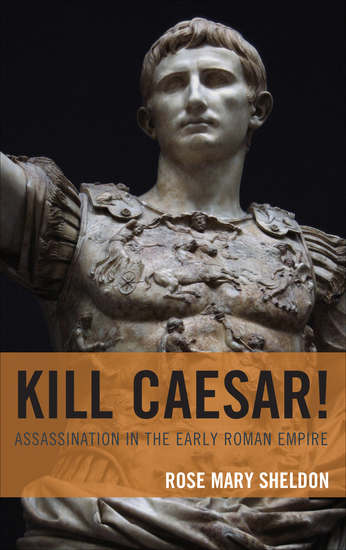
    “Why were Rome’s first emperors—the good, the bad, and the ugly—so vulnerable to conspiracies and assassination? . . . an expert analysis . . . compelling.” —Adrienne Mayor, author of The Poison King: The Life and Legend of Mithradates and Rome’s Deadliest Enemy Exploring the history of internal security under the first Roman dynasty, this groundbreaking book answers the enduring question: If there were 9,000 men guarding the emperor, how were three-quarters of Rome’s leaders assassinated? Rose Mary Sheldon traces the evolution of internal security mechanisms under the Julio-Claudians, evaluating the system that Augustus first developed to protect the imperial family and the stability of his dynasty. Yet in spite of the intensive precautions taken, there were multiple attempts on his life.    Like all emperors, Augustus had a number of competing constituencies—the senate, the army, his extended family, the provincials, and the populace of Rome—but were they all equally threatening? Indeed, the biggest threat would come from those closest to the emperor—his family and the aristocracy. Even Roman imperial women were deeply involved in instigating regime change. By the fourth emperor, Caligula, the Praetorian Guards were already participating in assassinations, and the army too was becoming more politicized.    Sheldon weighs the accuracy of ancient sources: Does the image of the emperor presented to us represent reality or what the people who killed him wanted us to think? Were Caligula and Nero really crazy, or did senatorial historians portray them that way to justify their murder? Was Claudius really the fool found drooling behind a curtain and made emperor, or was he in on the plot from the beginning? These and other fascinating questions are answered as Sheldon concludes that the repeated problem of “killing Caesar” reflected the empire’s larger dynamics and turmoil.
    Ver libro