¡Acompáñanos a viajar por el mundo de los libros!
Añadir este libro a la estantería
Grey
Escribe un nuevo comentario Default profile 50px
Grey
Suscríbete para leer el libro completo o lee las primeras páginas gratis.
All characters reduced
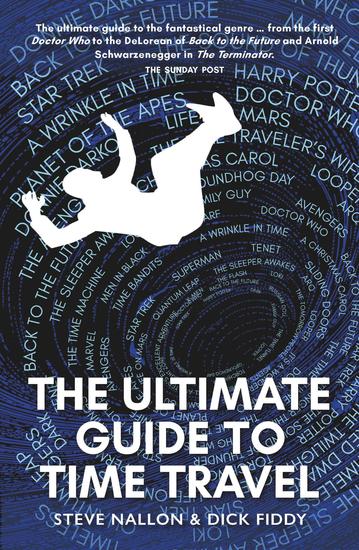
The Ultimate Guide to Time Travel - cover

The Ultimate Guide to Time Travel

Steve Nallon, Dick Fiddy

Editorial: Luath Press

  • 0
  • 0
  • 0

Sinopsis

Where are we going? 
The future, Doc! 
Great Scott! 
Not forgetting the wibbly-wobbly, timey-wimey past. 
That's right, ticket holders, this book is your journey into the many worlds of the time travel tale – exploring its tropes, its rules, its devices, its science, its values, its plots, its characters and, most importantly, its enduring – and timeless – appeal.
Disponible desde: 12/12/2025.
Longitud de impresión: 318 páginas.

Otros libros que te pueden interesar

  • A Rare Recording of Film Icon Peter Ustinov - cover

    A Rare Recording of Film Icon...

    Peter Ustinov

    • 0
    • 0
    • 0
    Sir Peter Alexander Ustinov, born Peter Alexander Freiherr von Ustinov in London, England (April 16, 1921 - March 28, 2004) was a British actor, writer and director. An internationally known raconteur, he was a fixture on television talk shows and lecture circuits for much of his career. Ustinov received two Academy Awards and two other Oscar nominations (one for screenwriting), a BAFTA Award, three Emmy Awards, and a Grammy Award. The following recording is from a tv interview form the 1980s.
    Ver libro
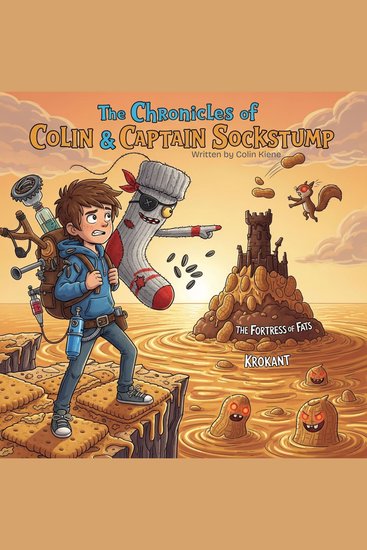
  • The Chronicles of Colin & Captain Sockstump - Book 1: The Curse of the Crunch King - cover

    The Chronicles of Colin &...

    Colin Kiene

    • 0
    • 0
    • 0
    This audiobook is narrated by an AI Voice.   
    Warning: This book may contain traces of adventure! 
    For nine-year-old Colin, life is a minefield. A single peanut puff is enough to turn his head into a red balloon. While other kids munch on Snickers cake, Colin sits at the "Safe Table" with his dry rice cake. He always thought he was just allergic. 
    He was wrong. 
    When he gets yelled at by a grumpy, one-eyed wool sock named Captain Sockstump in the laundry room, Colin learns the incredible truth: He isn't sick – he is a Guardian! The tingling in his throat isn't a bug, it’s a built-in radar against humanity's darkest threat: 
    The Peanut Butter Trolls. 
    These nasty, sticky beasts want all the nuts in the world for themselves and have cursed children to keep them away. Together with the Captain (who has a panic fear of moths), Colin must now prove his courage. Armed with his Epi-Blaster and the Kernel-Cannon 3000, he dares to jump through the dishwasher into a dimension of toffee beaches and milk lakes. 
    Their mission: Infiltrate the Fortress of Fats, defeat the nasty King Crunchy, and save the world – before Colin runs out of breath! 
    A hilarious fantasy adventure about courage, friendship, and the deadliest danger since the invention of trail mix.
    Ver libro
  • The Road to Riverdance - cover

    The Road to Riverdance

    Bill Whelan

    • 0
    • 0
    • 0
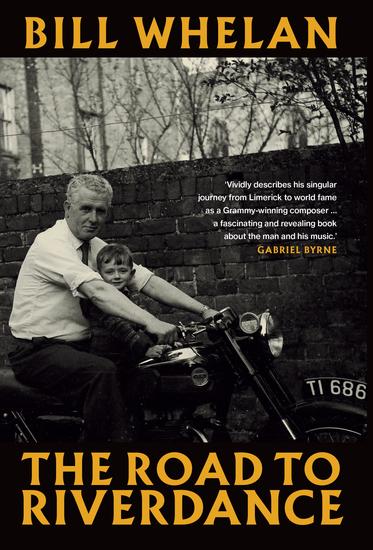
    Riverdance exploded across the stage at Dublin's Point Theatre one spring evening in 1994 during a seven-minute interval of the Eurovision Song Contest hosted by Ireland. It was a watershed moment in the cultural history of a country embracing the future, a confident leap into world music grounded in the footfall of the choreographed kick-line. It was a moment forty-five years in the making for its composer.
    In this tenderly unfurled memoir Bill Whelan rehearses a lifetime of unconscious preparation as step by step he revisits his past, from with his Barrington Street home in 1950s Limerick, to the forcing ground of University College Dublin and the Law Library during the 1960s, to his attic studio in Ranelagh. Along the way the reader is introduced to people and places in the immersive world of fellow musicians, artists and producers, friends and collaborators, embracing the spectrum of Irish music as it broke boundaries, entering the global slipstream of the 1980s and 1990s. As art and commerce fused, dramas and contending personalities come to view behind the arras of stage, screen and recording desk.
    Whelan pays tribute to a parade of those who formed his world. He describes the warmth and sustenance of his Limerick childhood, his parents and Denise Quinn, won through assiduous courtship; the McCourts and Jesuit fathers of his early days, the breakthrough with a tempestuous Richard Harris who summoned him to London; Danny Doyle, Shay Healy, Dickie Rock, Planxty, The Dubliners and Stockton's Wing, Noel Pearson, Seán Ó Riada; working with Jimmy Webb, Leon Uris, The Corrs, Paul McGuinness, Moya Doherty, John McColgan, Jean Butler and Michael Flatley.
    Written with wry, inimitable Irish humour and insight, Bill Whelan's self deprecation allows us to to see the players in all their glory, vulnerability and idiosyncracy. This fascinating work reveals the nuts, bolts, sheer effort and serendipities that formed the road to Riverdance in his reinvention of the Irish tradition for a modern age. As the show went on to perform to millions worldwide, Whelan was honoured with a 1997 Grammy Award when Riverdance was named the 'Best Musical Show Album.' Richly detailed and illustrated, The Road to Riverdance forms an enduring repository of memory for all concerned with the performing arts.
    Ver libro
  • Urban Design - Principles Practices and Innovations - cover

    Urban Design - Principles...

    Lyric Vale

    • 0
    • 0
    • 0
    Urban design is the process of shaping the physical features of cities, towns, and villages. It is a discipline that integrates various elements such as architecture, planning, landscaping, and sociology to create functional, aesthetically pleasing, and sustainable urban spaces. As cities continue to grow and evolve, urban design becomes increasingly important in ensuring that urban areas meet the needs of both current and future generations. This chapter introduces the concept of urban design, its historical development, and its significant role in modern cities. 
    The history of urban design can be traced back to ancient civilizations where urban planning was guided by principles of geometry, religion, and governance. The layout of cities such as Ancient Rome and Greek cities was often designed with grand structures, forums, and public spaces to reflect social hierarchies and civic values. Over time, as cities grew larger and more complex, the role of urban design evolved. In the modern era, the Industrial Revolution brought about rapid urbanization, with a focus on accommodating large populations and facilitating economic growth. However, this period also led to overcrowded, unsanitary conditions that highlighted the need for better planning and design to improve quality of life. 
    Urban design today is centered around creating environments that are not only functional but also enhance the well-being of their inhabitants. It involves a multidisciplinary approach that considers various factors such as traffic flow, pedestrian access, environmental sustainability, and social equity. The goals of urban design are to create places that are safe, accessible, inclusive, and beautiful. This requires careful consideration of the built environment, including buildings, streets, public spaces, and infrastructure, as well as the natural environment, such as green spaces, waterways, and ecosystems.
    Ver libro

  • Glamour Witch - Conjuring Style and Grace to Get What You Want - cover

    Glamour Witch - Conjuring Style...

    Sophie Saint Thomas

    • 0
    • 0
    • 0
    An empowering, sex-positive guide to glamour magic with spells and fashion advice for all budgets and body types.Sophie Saint Thomas knows fashion and glamour and how to use them to make magic happen. “Vanity is not a sin,” she writes, “but a tool of power to be embraced. Costume is power, and through fashion, makeup, and other glamour magick tools, we can step into such power.”In Glamour Witch, Sophie offers a history of glamour magick from a modern perspective complete with a bounty of glamour magick spells. Her message is that not only can you have fun with your appearance—be it a sparkly David Bowie-esque getup or a laid-back wood nymph vibe—but you can also use glamour to express yourself and get what you want.People are turning to this form of self-care more than ever.Men are increasingly being included in wellness, fashion, and jewelry trends.It’s high time that more people know that you can use your dress for power before some idiot tries to use it against you (insert throwback to being called to the principal’s office for dress code violations).Embracing glamour and dress is no longer a tool of repression but a tool of expression—and this book will teach you how, at all price points and for all genders.
    Ver libro
  • Kamakura Shogunate - Samurai Power and the Mongol Invasions - cover

    Kamakura Shogunate - Samurai...

    Rolf Hedger

    • 0
    • 0
    • 0
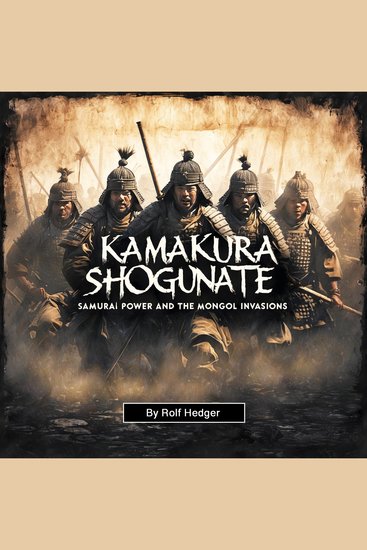
    The rise of the Kamakura Shogunate marks a pivotal moment in Japanese history, transitioning from the aristocratic Heian period to the feudal system dominated by the samurai. This era began with the victory of Minamoto no Yoritomo, who, after the Genpei War (1180-1185), established a new form of governance centered in Kamakura, a small coastal town far from the imperial capital of Kyoto. 
    The Genpei War was a civil conflict between the Taira and Minamoto clans, which ultimately ended with the defeat of the Taira in the Battle of Dan-no-ura in 1185. Minamoto no Yoritomo, the leader of the Minamoto clan, emerged as the victor, but his triumph was not simply a personal or clan-based success. Yoritomo's victory laid the foundation for a shift in the political landscape of Japan. The Taira had represented the old courtly aristocracy that governed Japan through the imperial system, but the rise of the Minamoto signaled the beginning of samurai dominance and a move toward military rule. 
    In 1192, Yoritomo was granted the title of shogun by the emperor, an act that formalized his military authority. This title, meaning "generalissimo" or "commander of the army," was traditionally given to military leaders in times of war but had never been used as the primary governing title before. This marked the official beginning of the Kamakura Shogunate, a military dictatorship that would rule Japan for over a century. Though the emperor remained the nominal ruler, Yoritomo’s power was based in Kamakura, far from the imperial court, which shifted the balance of power from the capital to the military elite.
    Ver libro