¡Acompáñanos a viajar por el mundo de los libros!
Añadir este libro a la estantería
Grey
Escribe un nuevo comentario Default profile 50px
Grey
Suscríbete para leer el libro completo o lee las primeras páginas gratis.
All characters reduced
Flash Memory Evolution - cover

Flash Memory Evolution

Sterling Blackwood

Traductor A AI

Editorial: Publifye

  • 0
  • 0
  • 0

Sinopsis

Flash Memory Evolution explores the captivating story of portable digital storage, from early CompactFlash cards to today's ubiquitous SD cards and USB drives. It highlights how relentless innovation, driven by the demand for portable, reliable, and affordable data storage, has transformed how we manage data. Early flash memory cards like CompactFlash and SmartMedia, though now largely obsolete, paved the way for the high-capacity, fingernail-sized storage we rely on today. The book breaks down the technological advancements, standardization battles, and market forces that have shaped flash memory's evolution.

 
The book progresses logically, starting with the fundamental concepts of flash memory technology and the rise and fall of early formats. It then analyzes the emergence of SD cards and USB drives as dominant standards, propelled by their versatility and ongoing advancements in storage density. This evolution isn't just about increasing capacity; it reflects the constant interplay between technological innovation and market forces.

 
The book adopts a professional yet accessible style, making it valuable for both technical readers and anyone interested in the history of computers and technology.
Disponible desde: 25/02/2025.
Longitud de impresión: 77 páginas.

Otros libros que te pueden interesar

  • The Perspectives of Psychiatry - cover

    The Perspectives of Psychiatry

    Paul R. McHugh, Phillip R. Slavney

    • 0
    • 0
    • 0
    Substantially revised to include a wealth of new material, the second edition of this highly acclaimed work provides a concise, coherent introduction that brings structure to an increasingly fragmented and amorphous discipline. Paul R. McHugh and Phillip R. Slavney offer an approach that emphasizes psychiatry's unifying concepts while accommodating its diversity. Recognizing that there may never be a single, all-encompassing theory, the book distills psychiatric practice into four explanatory methods: diseases, dimensions of personality, goal-directed behaviors, and life stories. These perspectives, argue the authors, underlie the principles and practice of all psychiatry. With an understanding of these fundamental methods, readers will be equipped to organize and evaluate psychiatric information and to develop a confident approach to practice and research.
    Ver libro
  • The Invisible Bond - Exploring the Therapeutic Power of Emotional Support Animals - cover

    The Invisible Bond - Exploring...

    PhD Dr. Patrick Fisher

    • 0
    • 0
    • 0
    She told me she hadn't left her apartment in eleven days. The grocery delivery sat inside the front door. She had eaten what she could reach from her bed. Her therapist had called twice; she let it go to voicemail. Then her dog pressed its body against her side—and something shifted. 
    The Invisible Bond is the first book in The Invisible Series by Dr. Patrick Fisher—clinician, researcher, and founder of TheraPetic. Built on original doctoral research at Walden University, this book goes beyond clinical data to capture what it actually feels like to manage anxiety with an emotional support animal by your side. 
    Through in-depth qualitative interviews with adults living with clinically significant anxiety, Dr. Fisher documents the themes that emerged: presence, routine, grounding, connection, and the quiet ways an animal can hold space for a person who is struggling. 
    This book is for clinicians seeking to better serve clients who rely on ESAs. For individuals navigating anxiety with an animal companion. For policymakers making decisions about rights they may not fully understand. And for anyone who has ever been told that needing an animal is a weakness rather than a strategy of survival. 
    The science has not changed. Cortisol still drops. Oxytocin still releases. The autonomic nervous system still responds. This book documents why—and what it means for the future of mental health care. 
    The Invisible Series continues with The Invisible Disability, The Invisible Law, The Invisible Prison, The Invisible Identity, and The Invisible Data.
    Ver libro
  • Intuitive Eating Principles - A Revolutionary Approach to Weight Loss and Well-Being With Intuitive Eating - cover

    Intuitive Eating Principles - A...

    Behnay Books

    • 0
    • 0
    • 0
    Is dieting and counting calories making you crazy? Intuitive Eating Principles book is here to help you. 
    You’ve probably tried every diet out there. You may have even tried counting calories or spending hours in the kitchen cooking healthy meals. But somehow, you always find yourself back at your old eating habits. If weight loss is your goal, it’s time to try intuitive eating. This approach to weight loss focuses on eating foods that are satisfying and feel good in your body. So if counting calories or meticulously planning every meal isn’t working for you, it might be time to try intuitive eating principles. It will teach you how to change the way you think about food and eat without feeling deprived or crazy. 
    Intuitive eating is a diet mindset that encourages people to eat in a way that feels satisfying, rather than trying to restrict or eliminate food groups. This approach can help people lose weight without dieting or feeling deprived. Intuitive eating involves learning to pay attention to your own body and how it responds to foods. When you eat intuitively, you will feel full sooner and eat less overall. You may also find that you are more likely to stick to a healthy diet overall because you’ll feel satisfied with less food. If you’re struggling to lose weight, give intuitive eating a try – it might be the key to your success. 
    Intuitive eating is a way of life that revolves around honoring your body and food. Rather than trying to restrict or change what you eat, intuitive eating allows you to connect with your hunger and fullness signals. This way of eating can help you lose weight and feel more satisfied, which can lead to improved moods and happiness. In this book, you will teach you how to begin practicing intuitive eating, how to develop a healthy relationship with food, and how to stick with it over time.
    Ver libro
  • Software Development Metrics - Advanced Analytics Enhancing Software Development through Metrics - cover

    Software Development Metrics -...

    Jacob Richardson

    • 0
    • 0
    • 0
    "Software Development Metrics: Advanced Analytics. Enhancing Software Development through Metrics" delves into the intricacies of leveraging metrics to enhance every aspect of the software development lifecycle. Building upon foundational concepts, this comprehensive guide explores advanced analytics techniques that empower development teams to achieve new heights of efficiency, productivity, and quality. 
    From sophisticated measurement frameworks to cutting-edge data visualization methods, this book equips readers with the tools they need to extract actionable insights from their software development processes. Through real-world case studies and practical examples, it demonstrates how advanced metrics can drive informed decision-making, optimize resource allocation, and mitigate risks. 
    Readers will learn how to:Implement advanced measurement strategies tailored to their organization's unique needsUtilize predictive analytics to anticipate and prevent potential issues before they ariseHarness the power of machine learning algorithms to identify patterns and trends within development dataIntegrate metrics-driven approaches seamlessly into agile and DevOps methodologiesCultivate a culture of continuous improvement through data-driven feedback loops 
    "Software Development Metrics: Advanced Analytics. Enhancing Software Development through Metrics" provides invaluable guidance for maximizing the impact of your development efforts. Embrace the power of data-driven decision-making and propel your team towards greater success in today's competitive landscape. 
     
    Ver libro
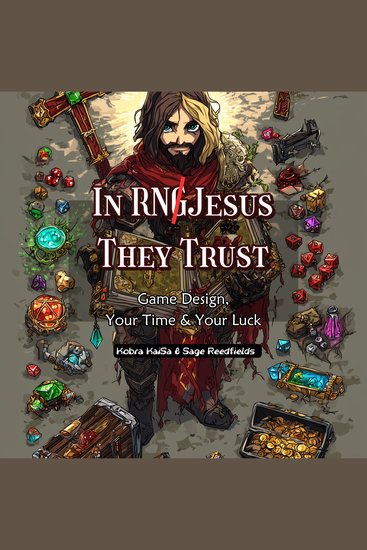
  • In RNJesus They Trust - Game Design Your Time & Your Luck - cover

    In RNJesus They Trust - Game...

    Kobra KaiSa, Sage Reedfields

    • 0
    • 0
    • 0
    In RNJesus They Trust: Game Design, Your Time & Your Luck is a witty, sharp-eyed exploration of randomness in modern gaming — and how it blesses, tests, or exploits the players who kneel before it. From the ecstatic thrill of a rare drop to the soul-crushing grind of gacha pulls, game developers have turned RNG (random number generation) into a design pillar that fuels excitement and monetization. But where does randomness stop being fun and start wasting your time — or draining your wallet? This book unpacks that question across genres: MMOs, gacha games, roguelikes, shooters, and strategy titles. It blends game design insight with psychological analysis and a dash of sacred satire, portraying “RNJesus” as the unpredictable deity we’ve all prayed to at 2 AM. Whether you're a game designer, critic, or lifelong gamer tired of losing to the dice, this book offers clarity, laughter, and empowerment. Learn to recognize fair design, spot exploitative patterns, and advocate for gaming systems that respect your time — and your luck.
    Ver libro
  • Six Not-So-Easy Pieces - Einstein's Relativity Symmetry and Space-Time - cover

    Six Not-So-Easy Pieces -...

    Richard P. Feynman

    • 0
    • 0
    • 0
    Learn about Einstein's theory of relativity from a physics Nobel laureate and "one of the greatest minds of the twentieth century" (New York Review of Books) in six memorable lessons It was Richard Feynman's outrageous and scintillating method of teaching that earned him legendary status among students and professors of physics. From 1961 to 1963, Feynman delivered a series of lectures at the California Institute of Technology that revolutionized the teaching of physics. In Six Not-So-Easy Pieces, taken from these famous Lectures on Physics, Feynman delves into one of the most revolutionary discoveries in twentieth-century physics: Einstein's theory of relativity. The idea that the flow of time is not a constant, that the mass of an object depends on its velocity, and that the speed of light is a constant no matter what the motion of the observer, at first seemed shocking to scientists and laymen alike. But as Feynman shows, these tricky ideas are not merely dry principles of physics, but things of beauty and elegance.   No one — not even Einstein himself — explained these difficult, anti-intuitive concepts more clearly, or with more verve and gusto, than Feynman. Filled with wonderful examples, Six Not-So-Easy Pieces is the ideal introduction to the fundamentals of physics by one of the most admired and accessible physicists of all time.  “There is no better explanation for the scientifically literate layman.” –Washington Post Book World
    Ver libro