¡Acompáñanos a viajar por el mundo de los libros!
Añadir este libro a la estantería
Grey
Escribe un nuevo comentario Default profile 50px
Grey
Suscríbete para leer el libro completo o lee las primeras páginas gratis.
All characters reduced
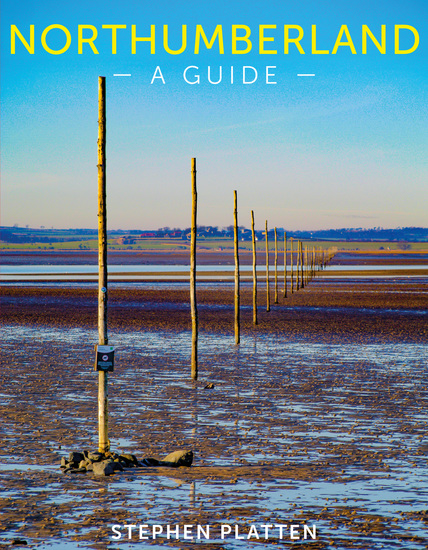
Northumberland - A guide - cover

Northumberland - A guide

Stephen Platten

Editorial: Sacristy Press

  • 0
  • 0
  • 0

Sinopsis

Northumberland, one of the most sparsely-populated counties in England, with unique features like the Holy Island of Lindisfarne and Hadrian’s Wall, was also a crucible of European civilization and remains a treasury of culture. Giving birth to railways worldwide through George Stephenson, it saw the beginnings of hydraulics, hydro-electricity and turbines and, with Joseph Swan, witnessed the earliest light from electric incandescent lamps; it was a laboratory of invention.

 
Northumberland has, however, changed dramatically over the course of the last century: deep coal-mining, shipbuilding and much heavy engineering have gone, but new industries have flowered. So, the largest man-made lake in northwest Europe, lying within the largest man-made forest is set within the north west of the county, bringing water in abundance and supporting entirely new leisure and tourist activities. The lower Tyne has been transformed both architecturally, and culturally.

 
This unique guide to England’s most northern county explores the land, the people, the flora and fauna alongside its architecture and history. A gazetteer takes readers to Northumberland’s towns and cities – Newcastle, Hexham, and Berwick-upon-Tweed, but also to villages, hamlets, castles, beaches, churchyards, great houses, ruined abbeys, and vast wild open countryside. Among the places visited are the castles at Warkworth, Bamburgh, Dunstanburgh and Alnwick, the Farne Islands and the remote valleys of Allendale and the South Tyne, battle sites at Heavenfield, Otterburn and Flodden, alongside Vanbrugh’s final triumphant Palladian mansion at Seaton Delaval.

 
Fully illustrated with more than 240 photographs, this guidebook invites travellers and locals alike to explore the unique features and the true character of Northumberland.
Disponible desde: 01/08/2022.
Longitud de impresión: 240 páginas.


Otros libros que te pueden interesar

  • A Southern Underground Railroad - Black Georgians and the Promise of Spanish Florida and Indian Country - cover

    A Southern Underground Railroad...

    Paul M. Pressly

    • 0
    • 0
    • 0
    Despite its apparent isolation, the Southeast provided a vital connecting link between the Black self-emancipation that occurred during the American Revolution and the growth of the Underground Railroad. From the beginning of the revolutionary war to the eve of the First Seminole War in 1817, several thousand Africans and African Americans in Georgia and South Carolina crossed the borders and boundaries that separated the Lowcountry from the British and Spanish in coastal Florida and from the Seminole and Creek people in the vast interior of the Southeast. Even in times of peace, there remained a steady flow of individuals moving south and southwest. 


    A Southern Underground Railroad constitutes a powerful counter-narrative in American history, a tale of how enslaved men and women found freedom and human dignity not in Jefferson's "Empire of Liberty" but outside the expanding boundaries of the United States. It is a reminder of the strength of Black resistance in the post-revolutionary South and the ability of this community to influence the balance of power in a contested region. Pressly's research shows that their movement across borders was an integral part of the struggle for dominance in the Southeast not only among the Great Powers but also among the many different racial, ethnic, and religious groups that inhabited the region and contended for control.
    Ver libro
  • Gospel music of black men trying in tough times - cover

    Gospel music of black men trying...

    Raymond Sturgis

    • 0
    • 0
    • 0
    Black men must understand that religion or their faith is instrumental in their lives, and it affects their decisions and encourages them in times of trouble. Although black men have made economic and educational improvements in the past, there are still problems that make black men today more depressed, stressed, and sad about their current conditions. The stereotypes that all black men are irresponsible, make babies, leave their families behind, and create impediments to success, love, and economic stability, are wrong. Black men have feelings, from the obdurate gang banger to the father who works two jobs to support his family, while the pressure of the world sits on their dreams like an anchor pulling them toward defeat. 
      However, black men are trying to change their lives, and what they do not need, is outside influences obstructing their desire to positively change. Yes, many black men are angry, and many black men are tired of negative and racist misinformation concerning them and their communities. This is the most beloved book on real black men's issues TRYING and DOING positive things to atone and avert from their past mistakes.
    Ver libro
  • Ancient Myths And Nazi Propaganda - How Hitler Twisted Ancient History to Justify the Aryan Race Myth - cover

    Ancient Myths And Nazi...

    Davis Truman

    • 0
    • 0
    • 0
    A chilling exposé of how one of history’s most infamous regimes distorted the ancient past to engineer a deadly future. 
    In Ancient Myths and Nazi Propaganda, Davis Truman unveils the shocking ways Adolf Hitler and the Nazi elite co-opted classical mythology, archaeology, and pseudo-history to fabricate the myth of Aryan supremacy. Drawing from original documents, Nazi-era publications, and modern scholarship, this groundbreaking work exposes how ancient symbols and legends were weaponized to create a false historical narrative, one that fueled genocide, war, and the darkest chapter of the twentieth century. 
    From misused Greco-Roman iconography to twisted interpretations of Indo-European migration theories, Truman traces the roots of Nazi ideology through a manipulated lens of antiquity. He explores how fabricated “evidence” of ancient Aryan civilization was used to justify racial purity laws, territorial expansion, and the cultural erasure of entire populations. 
    With compelling clarity and academic precision, Ancient Myths and Nazi Propaganda offers a powerful warning: when history is rewritten to serve an ideology, the consequences are catastrophic. 
    Perfect for readers of history, politics, WWII studies, and anyone seeking to understand how ancient and modern myths can be used to manipulate truth and justify atrocity.
    Ver libro
  • Classic Rock & Rock Radio Commercials - Jefferson Airplace & The Moody Blues - cover

    Classic Rock & Rock Radio...

    Jefferson Airplane, The Moody Blues

    • 0
    • 0
    • 0
    Formed in 1965, Jefferson Airplane was an American rock band based in San Francisco, California, that became one of the pioneering bands of psychedelic rock. Their 1967 break-out album Surrealistic Pillow includes two songs, "Somebody to Love" and "White Rabbit", that are among Rolling Stone's "500 Greatest Songs of All Time". The October 1966 to February 1970 lineup of Jefferson Airplane, consisting of Marty Balin (vocals), Paul Kantner (guitar, vocals), Grace Slick (vocals), Jorma Kaukonen (lead guitar, vocals), Jack Casady (bass), and Spencer Dryden (drums), was inducted into the Rock and Roll Hall of Fame in 1996. The Moody Blues were an English rock band formed in Birmingham in 1964. During the band's "classic era" into the early 1970s, the lineup included keyboardist Mike Pinder, multi-instrumentalist Ray Thomas, drummer Graeme Edge, guitarist Justin Hayward, and bassist John Lodge. Their second album, Days of Future Passed, which was released in 1967, was a fusion of rock with classical music which established the band as pioneers in the development of art rock and progressive rock. The band has sold 70 million albums worldwide, which includes 18 platinum and gold LPs. They were inducted into the Rock and Roll Hall of Fame in 2018. This fascinating audio program includes actual radio commercials from the 1960s for each of the bands.
    Ver libro
  • Nerva-Antonine Dynasty The: The History and Legacy of the Emperors Who Ruled the Roman Empire at Its Peak - cover

    Nerva-Antonine Dynasty The: The...

    Editors Charles River

    • 0
    • 0
    • 0
    “The Five Good Emperors,” a reference to the five emperors who ruled the Roman Empire between 96 and 180 CE (Nerva, Trajan, Hadrian, Antoninus Pius, and Marcus Aurelius), was a term first coined by Machiavelli and later adopted and popularized by historian Edward Gibbon, who said that under these men, the Roman Empire “was governed by absolute power under the guidance of wisdom and virtue.”  
    	This period of 84 years is generally regarded as the high point of the Roman Empire, at least after Augustus, but what is uncertain and a matter of ongoing debate is whether the five emperors were personally responsible for the situation and the accompanying prosperity enjoyed throughout the empire at the time or if they were simply the beneficiaries of the Pax Romana, inaugurated by Augustus in the early part of the 1st century CE. In other words, historians have wondered whether anyone in power during those years would have enjoyed the same rewards.  
    	The description of these rulers as “good” is also a matter of interpretation, with some scholars suggesting they were only “good” in comparison to the preceding emperor (Domitian) and the emperor who followed Marcus Aurelius (Commodus). Both of them were horrible rulers in every aspect, making their near contemporaries look all the better.  
    	Regardless, it is clear that the era of the Five Good Emperors was one of unparalleled success and wealth, and the reasons Rome reached its zenith at this time are worthy of scrutiny. Perhaps most noteworthy is that none of these five emperors were blood relatives - while the final two are often referred to as the Antonines, they were not, in fact, related except by adoption, a practice that may in itself provide at least part of the answer to the question as to why this particular period was so magnificent.
    Ver libro
  • The Northmen In Britain - cover

    The Northmen In Britain

    Eleanor Hull

    • 0
    • 0
    • 0
    Two great streams of Northern immigration met on the shores of Britain during the ninth, tenth, and eleventh centuries. The Norsemen from the deep fiords of Western Norway, fishing and raiding along the coasts, pushed out their adventurous boats into the Atlantic, and in the dawn of Northern history we find them already settled in the Orkney and Shetland Isles, whence they raided and settled southward to Caithness, Fife, and Northumbria on the east, and to the Hebrides, Galloway, and Man on the western coast. Fresh impetus was given to this outward movement by the changes of policy introduced by Harald Fairhair, first king of Norway (872–933). Through him a nobler type of emigrant succeeded the casual wanderer, and great lords and kings’ sons came over to consolidate the settlements begun by humbler agencies. Iceland was at the same time peopled by a similar stock. The Dane, contemporaneously with the Norseman, came by a different route. Though he seems to have been the first to invade Northumbria (if Ragnar and his sons were really Danes), his movement was chiefly round the southern shores of England, passing over by way of the Danish and Netherland coast up the English Channel, and round to the west. Both streams met in Ireland, where a sharp and lengthened contest was fought out between the two nations, and where both took deep root, building cities and absorbing much of the commerce of the country.The Viking was at first simply a bold adventurer, but a mixture of trading and raiding became a settled practice with large numbers of Norsemen, who, when work at home was slack and the harvest was sown or reaped, filled up the time by pirate inroads on their own or neighboring lands. Hardy sailors and fearless fighters they were; and life would have seemed too tame had it meant a continuous course of peaceful farming or fishing. New possessions and new conquests were the salt of life.
    Ver libro