¡Acompáñanos a viajar por el mundo de los libros!
Añadir este libro a la estantería
Grey
Escribe un nuevo comentario Default profile 50px
Grey
Suscríbete para leer el libro completo o lee las primeras páginas gratis.
All characters reduced
A History of the City of Brooklyn and Kings County - Complete Edition (Vol 1&2) - cover

A History of the City of Brooklyn and Kings County - Complete Edition (Vol 1&2)

Stephen M. Ostrander

Editorial: DigiCat

  • 0
  • 0
  • 0

Sinopsis

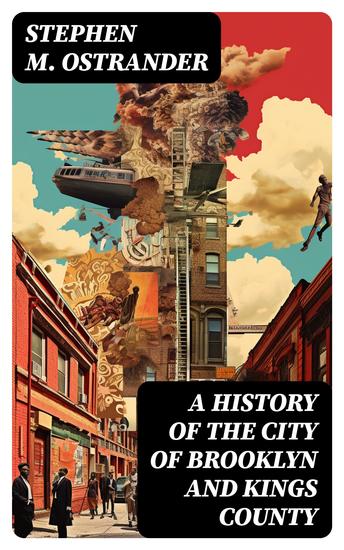
In "A History of the City of Brooklyn and Kings County," Stephen M. Ostrander offers a comprehensive exploration of Brooklyn's rich past, meticulously chronicling its evolution from a small Dutch settlement to one of New York City's most vibrant boroughs. Employing a narrative style steeped in meticulous historical research, Ostrander weaves together social, economic, and cultural threads, providing readers with a nuanced understanding of the factors that shaped the area. His work situates Brooklyn within a broader historical context, paying homage to significant events and key figures while highlighting the often-overlooked local stories that contribute to its unique identity. Stephen M. Ostrander's background as a historian and a long-time resident of Brooklyn provides him with both the perspective and the passion necessary to engage with the intricate dynamics of the city. His deep-seated interest in urban development, coupled with a profound appreciation for local history, informs his scholarly approach, making this book not only informative but also deeply personal. Ostrander's dedication to preserving the stories of his beloved borough showcases the importance of local history in understanding the larger narrative of American urbanization. This book is an essential read for history enthusiasts, residents, and anyone seeking to grasp the complex tapestry of Brooklyn's identity. Ostrander's engaging prose and thorough examination invite readers to delve into the past and reflect on how it informs the present. Discover the rich heritage of Brooklyn in this authoritative and captivating study.
Disponible desde: 16/11/2023.
Longitud de impresión: 328 páginas.

Otros libros que te pueden interesar

  • A Rare Recording of Frank Lloyd Wright - cover

    A Rare Recording of Frank Lloyd...

    Frank Lloyd Wright

    • 0
    • 0
    • 0
    Frank Lloyd Wright (June 8, 1867 to April 9, 1959), born in Richland Center, Wisconsin, was an American architect, designer, writer, and educator. He designed more than 1,000 structures over a creative period of 70 years. Wright played a key role in the architectural movements of the twentieth century, influencing architects worldwide through his works and mentoring hundreds of apprentices in his Taliesin Fellowship. Wright believed in designing in harmony with humanity and the environment, a philosophy he called organic architecture. This philosophy was exemplified in Fallingwater (1935), which has been called "the best all-time work of American architecture." The following audio clips are from the late 1950s.
    Ver libro
  • Resistance to Imperialism - How Colonized Nations Fought for Independence and Sovereignty - cover

    Resistance to Imperialism - How...

    Arlo Holders

    • 0
    • 0
    • 0
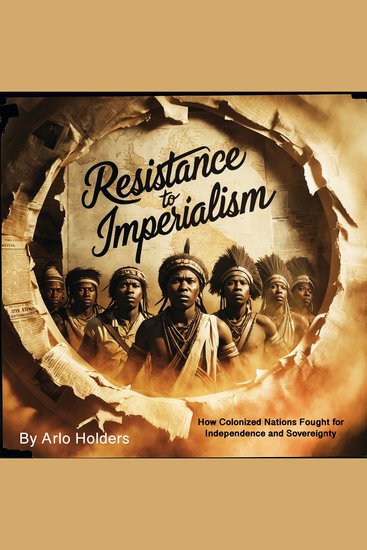
    Imperialism, a system of domination and exploitation, has shaped the course of human history for centuries. At its core, imperialism refers to the policy of a nation extending its power and influence through diplomacy or military force. Colonization, often considered its most aggressive form, involves the establishment of control over a foreign territory, exploiting its resources, and subjugating its people. The roots of imperialism date back to ancient civilizations, but the most notable period of imperial expansion occurred between the 15th and early 20th centuries, driven by European powers such as Britain, France, Spain, and Portugal. 
    The Age of Exploration, beginning in the late 15th century, marked the beginning of a new era of European imperialism. With the development of advanced navigational technologies, European nations sought to expand their empires by discovering new trade routes and territories. Colonization became intertwined with economic ambition, as European countries sought access to valuable resources like gold, spices, and sugar. The discovery of the Americas by Christopher Columbus in 1492 marked the start of extensive European colonization in the Western Hemisphere, followed by the establishment of colonies in Asia and Africa. 
    The motivations for colonization were multifaceted. Economically, European nations sought to control trade routes and establish lucrative colonies that could supply raw materials, which would fuel the industrial revolutions in Europe. Politically, nations pursued imperialism as a way to enhance their power and prestige on the world stage. Colonization also provided a solution to domestic issues, such as overpopulation and unemployment, by offering new lands for settlement and economic opportunity.
    Ver libro
  • Flourishing Chinese Empires - Art Trade and Power (3 in 1) - cover

    Flourishing Chinese Empires -...

    Rolf Hedger

    • 0
    • 0
    • 0
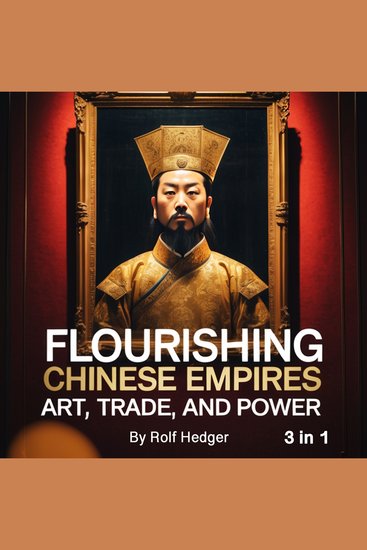
    After centuries of division, China experienced an extraordinary renaissance through three dynasties that elevated the empire to unprecedented heights of cultural brilliance and global influence. "Flourishing Chinese Empires: Art, Trade, and Power" examines the Sui, Tang, and Song dynasties—a golden age when China stood as the world's most advanced civilization. 
    The short-lived Sui Dynasty (581-618 CE) accomplished the crucial task of reunification through ambitious projects including the Grand Canal, standardized administration, and reformed examination system. Though bankrupted by these massive undertakings and unsuccessful military campaigns, the Sui created the essential foundation for the glory that followed. 
    The Tang Dynasty (618-907 CE) transformed this unified state into a cosmopolitan empire of unrivaled splendor. China's borders expanded dramatically while its capital at Chang'an became the world's largest and most sophisticated city—a multicultural metropolis where Persian merchants, Japanese monks, and Korean scholars mingled in bustling markets and elegant gardens. This was the era of China's greatest poets, its artistic zenith in sculpture and painting, and unprecedented openness to foreign influences. 
    The Song Dynasty (960-1279 CE) compensated for military vulnerability with stunning economic and technological advancement. Urbanization accelerated as printing spread literacy, commerce flourished through paper money, maritime trade expanded, and scientific innovation thrived. Though constantly threatened by powerful northern neighbors, the Song fostered a refined cultural environment where landscape painting, philosophical inquiry, and scholarly pursuits reached remarkable sophistication.
    Ver libro
  • Confederacy on the Brink The: The History and Legacy of the Battles that Saved the Confederate Cause in 1862 - cover

    Confederacy on the Brink The:...

    Editors Charles River

    • 0
    • 0
    • 0
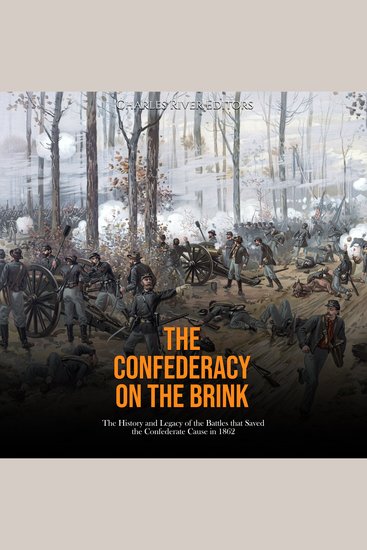
    As Union commander George McClellan moved the Army of the Potomac up the Peninsula in early 1862, the Union army had a nearly 2-1 advantage in manpower, so Army of Northern Virginia commander Joseph E. Johnston continued to gradually pull his troops back to a line of defense nearer Richmond as McClellan advanced. In conjunction, the Union Navy began moving its operations further up the James River, until it could get within 7 miles of the Confederate capital before being opposed by a Southern fort.  
    It was at this point that Johnston got uncharacteristically aggressive at the end of May, perhaps because he had run out of breathing space for his army. By the time the Battle of Seven Pines was over, nearly 40,000 had been engaged on both sides, making it the biggest battle in the Eastern theater to date, and Johnston was injured, bringing Robert E. Lee to command. 
    Despite not losing, the fighting rattled McClellan, but even after Lee pushed McClellan’s Army of the Potomac away from Richmond and back up the Peninsula in late June, he then had to swing his army north to face a second Union army: John Pope’s Army of Virginia. Correctly assuming that he needed to strike out before the Army of the Potomac successfully sailed back to Washington and linked up with Pope’s army, Lee daringly split his army to threaten Pope’s supply lines, forcing Pope to fall back to Manassas to protect his flank and maintain his lines of communication. At the same time, it left half of Lee’s army (under Stonewall Jackson) potentially exposed against the larger Union army until the other wing (under James Longstreet) linked back up. Thus, in late August 1862, the Army of Northern Virginia and the Army of Virginia found themselves fighting over nearly the exact same land the North and South fought over in the First Battle of Bull Run 13 months earlier. 
    Ver libro
  • Psychology - A Very Short Introduction - cover

    Psychology - A Very Short...

    Gillian Butler, Freda McManus

    • 0
    • 1
    • 0
    Psychology is part of everyone's experience: it influences the way we think about everything from education and intelligence, to relationships and emotions, advertising and criminality. People readily behave as amateur psychologists, offering explanations for what people think, feel, and do. But what exactly are psychologists trying to do? What scientific grounding do they have for their approach? This Very Short Introduction explores some of psychology's leading ideas and their practical relevance. 


    In this new edition, Gillian Butler and Freda McManus explore a variety of new topics and ways of studying the brain. Until recently it was not possible to study the living human brain directly, so psychologists studied our behavior, and used their observations to derive hypotheses about what was going on inside. Now—through neuroscience—our knowledge of the workings of the brain has increased and improved technology provides us with a scientific basis on which to understand the structure and workings of the brain, allowing brain activity to be observed and measured. Exploring some of the most important advances and developments in psychology—from evolutionary psychology and issues surrounding adolescence and aggression to cognitive psychology—this is a stimulating introduction for anyone interested in understanding the human mind.
    Ver libro
  • The Rime of the Ancient Mariner - Kubla Khan Christabel Frost at Midnight The Nightingale To William Wordsworth and others - cover

    The Rime of the Ancient Mariner...

    Samuel Taylor Coleridge

    • 0
    • 0
    • 0
    "The Rime of the Ancient Mariner" by Samuel Taylor Coleridge is a classic narrative poem that follows the harrowing journey of a mariner who faces supernatural occurrences and the consequences of his actions.
    Each poem in this collection showcases Coleridge's mastery of language, imagery, and symbolism, inviting readers on a journey through landscapes both real and imagined. 
    From the eerie enchantment of "Kubla Khan" to the gothic suspense of "Christabel" and the tranquil introspection of "Frost at Midnight," this collection offers a diverse range of poetic experiences. Through themes of nature, imagination, and the human condition, Coleridge's poetry continues to resonate with readers across generations.
    "The Rime of the Ancient Mariner" is a captivating compilation that showcases the timeless beauty and enduring appeal of Coleridge's poetry.
    Ver libro