Twenty
Stella Benson
Editorial: Bu Classics Books
Sinopsis
These twenty poems offer a lyrical window into a sensitive mind, capturing the fragile beauty of life and the stark impact of war through poignant, concise verse.
Editorial: Bu Classics Books
These twenty poems offer a lyrical window into a sensitive mind, capturing the fragile beauty of life and the stark impact of war through poignant, concise verse.
This is a collection of 29 poems read by LibriVox volunteers for April 2015.Ver libro
Hear rare recordings from some of the world's most-respected poets reading their own works: Ezra Pound, Old Men With Beautiful Manners; William Butler Yeats, The Lake Isle Of Innisfree; Robert Graves, A Last Poem; Edna St. Vincent Millay, The Harp-Weaver; Richard Eberhart, The Groundhog; Philip Levine, Blasting from Heaven; Marianne Moore, The Mind is an Enchanting Thing; Stephen Spender, What I Expected; Vachel Lindsay, An Interpolation by Mr. Lindsay. Recording obtained and published by Rick Sheridan. ©2009 Rick Sheridan (P)2009 Rick SheridanVer libro
Librivox volunteers bring you ten readings of Still, Still, with Thee by Harriet Beecher Stowe. This hymn written by the author of Uncle Tom's Cabin was the weekly poem for December 14 - 21, 2014. - Summary by RachelVer libro
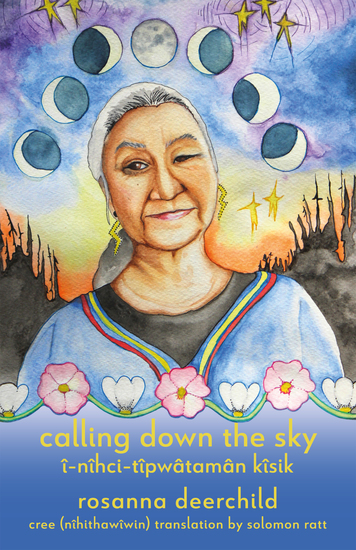
"This poetry collection is fierce, raw and candid. By recounting her mother’s residential school experience in a powerfully poetic narrative, Deerchild expertly illustrates the heartbreaking trauma of that tragic saga and how it complicates relationships over generations." – Waubgeshig Rice, author of Moon of the Crusted Snow A tenth anniversary bilingual edition in English and Cree of Rosanna Deerchild’s stunning collection about the intergenerational impacts of the Canadian residential school system. you want me toshare my story ok thenhere it ishere in the unwrittenhere in the broken linesof my body that can never forget î-nitawîthimiyankita-âcimostâtân nitâcimisowin hâw mâkamâkômaôta îkâ kâ-kî-masinahikâtîkôta kâ-pîkopathiki masinahikîwinanimiyaw îkâ wîhkâc kâ-wanikiskisit In Calling Down the Sky, poet Rosanna Deerchild viscerally evokes her mother’s experience within the residential school system, the Canadian government’s system of violently removing Indigenous children from their homes, families, and languages in an explicit attempt to destroy Indigenous cultures and identities. With precise and intricate poetry, Deerchild weaves together the story of her mother’s childhood and Deerchild’s memories of her mother: her love of country music, her attempts to talk about what happened to her, how tightly she braided her daughter’s hair on the first day of school. In doing so, Deerchild illustrates the disruptive and devastating impacts of the residential school system on generations of families while also celebrating the life and culture of her mother and other survivors. Published for the first time in a bilingual edition of Cree and English, in time for the tenth anniversary of the original publication, Calling Down the Sky is an intimate and gorgeously evoked reckoning with a horrifying part of North American history.Ver libro
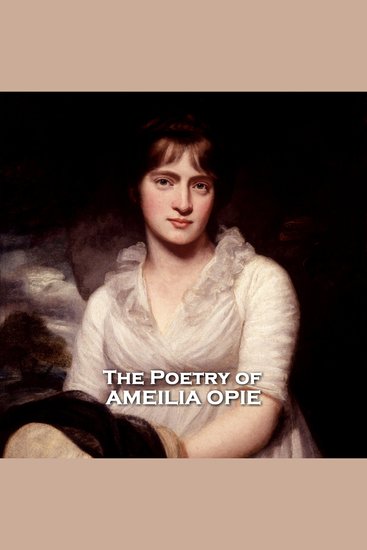
Amelia Alderson, an only child, was born on the 12th of November 1769 in Norwich, England. After the death of her mother the teenage Amelia became her father's housekeeper and hostess. The young Amelia was energetic, attractive, and an admirer of fashion. She spent much of her youth writing poetry and plays and putting on local amateur theatricals. At 18 she had published anonymously ‘The Dangers of Coquetry’. Amelia married in the spring of 1798 to the artist John Opie at the Church of St Marylebone, in Westminster, and together they lived in Berners Street in London's West End. Her next novel in 1801 ‘Father and Daughter’, was very popular even though it dealt with such themes as illegitimacy, a socially difficult subject for its times. From this point on published works were far more regular. The following year her volume ‘Poems’ was enthusiastically received. Novels continued to flow and she never once abandoned her social activism and her call for better treatment of women and the dispossessed in her works. She was also keenly involved in a love of society and its attendant frills. Encouraged by her husband to write more she published ‘Adeline Mowbray’ in 1804, an exploration of women's education, marriage, and the abolition of slavery. Her husband died in 1807, and she paused from writing for a few years before resuming. Of particular interest was her short poem ‘The Black Man's Lament’ in 1826. Her life now was in the main spent travelling and working for charities and against slavery. She even helped create a Ladies Anti-Slavery Society in Norwich which organised a parliamentary petition of 187,000 names of which hers was the first name. After a visit to Cromer, a seaside resort on the North Norfolk coast, she caught a chill and retired to her bedroom. Amelia Opie died on the 2nd of December 1853 in Norwich. She was 84.Ver libro
If Queen Mary I of England wants something, you'd better not try and stop her, or else you might soon find yourself without a head! When this hot-headed young Royal's new favourite courtier, an Italian gentleman named Fabiano Fabiani who has already made himself very unpopular with the court, is caught sneaking around with another girl - a commoner no less! - the Queen begins to plan her revenge in the only way suitable for a Queen. (Summary by Charlotte Duckett) Narrator: balaMary I of England: Kristin GjerløwJane Talbot: Beth ThomasLord Clinton: alanmapstoneJoshua Farnaby: Peter TuckerGilbert: ToddHWFabiano Fabiani: Eden Rea-HedrickSimon Renard: Bob NeufeldLord Chandos: Elizabeth KlettLord Montague: Greg PrzywaraMan/ The Jew: Rob BoardLord Gardiner/Lord Chancellor: Joseph TablerMaster Eneas: Rob BoardA jailer: Elizabeth KlettThe People/voices 1: Michele FryThe People/Voices 2: Mary KayThe People/Voices 3: Beth ThomasStandard-bearer 1: Shakira SearleStandard-bearer 2: Mary KayVer libro