¡Acompáñanos a viajar por el mundo de los libros!
Añadir este libro a la estantería
Grey
Escribe un nuevo comentario Default profile 50px
Grey
Suscríbete para leer el libro completo o lee las primeras páginas gratis.
All characters reduced
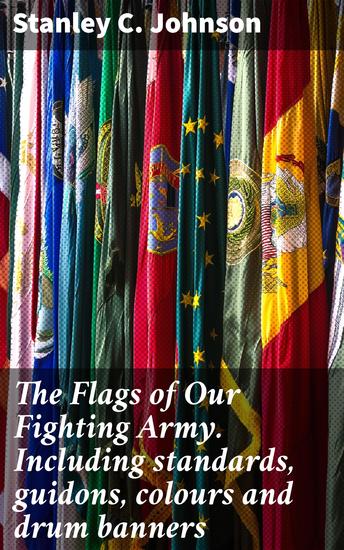
The Flags of Our Fighting Army Including standards guidons colours and drum banners - Unveiling the Army's Symbolic Legacy - cover

The Flags of Our Fighting Army Including standards guidons colours and drum banners - Unveiling the Army's Symbolic Legacy

Stanley C. Johnson

Editorial: Good Press

  • 0
  • 0
  • 0

Sinopsis

In "The Flags of Our Fighting Army," Stanley C. Johnson presents a meticulous exploration of military heraldry, providing a comprehensive guide to the standards, guidons, colors, and drum banners that have represented the valor and heritage of armed forces. Johnson employs a scholarly yet accessible style, seamlessly blending historical narrative with rich visual descriptions, which allows readers to appreciate both the aesthetic and symbolic significance of these military emblems. The book situates its content within a broader context of military history, emphasizing how flags have played a pivotal role in instilling morale and identity among troops throughout various conflicts. Stanley C. Johnson, an esteemed historian and military scholar, draws upon his extensive background in military studies and flag history to craft this authoritative volume. His passion for the subject matter is evident in his detailed research and personal anecdotes, which enrich the text. Johnson's commitment to preserving the legacies of those who served is a driving force behind this work, motivated by a desire to illuminate the intricate connections between banners and soldier identity in times of war. This book is highly recommended for historians, military enthusiasts, and anyone interested in the cultural significance of flags. Johnson's insightful analysis offers valuable perspectives on how these symbols of honor continue to resonate with contemporary audiences, making "The Flags of Our Fighting Army" an essential addition to both personal libraries and academic collections.
Disponible desde: 11/11/2023.
Longitud de impresión: 125 páginas.

Otros libros que te pueden interesar

  • A Concise Study of Two Controversial Christian Doctrines - Marriage Divorce and Remarriage According To The Scriptures Seven Doctrines on the Holy Spirit - cover

    A Concise Study of Two...

    W. Earl Grant

    • 0
    • 0
    • 0
    Bibliography Concordance: Strong's Exhaustive Concordance of The Bible The Amplified Bible published by Zondervan KJV Original African Heritage Edition published by J. C. Winston Pub. I attended The United Christian College In the Northern District of The United Church of America, Inc. I graduated with a Ph.D. 1990 and is the Pastor of the Holy Assembly of Jesus The Christ, Inc. and The Bible Knowledge Institute in Ocala, Florida. My prayerful hope is that this concise study will bring some clarity to these two controversial subjects. wearlgrant@yahoo.com 352-307-7647
    Ver libro
  • Global Disasters - The Escalating Crisis of Natural and Man-Made Calamities - cover

    Global Disasters - The...

    Marcus Klein

    • 0
    • 0
    • 0
    The world is increasingly vulnerable to a wide array of disasters, both natural and man-made, that threaten our lives, economies, and ecosystems. These crises, which range from catastrophic earthquakes to the far-reaching impacts of climate change, have become more frequent, intense, and interconnected. While the planet has always been subject to the forces of nature, human activity has amplified many of these events, while also introducing new, unprecedented risks. Natural disasters, like hurricanes, wildfires, and floods, have become an inevitable part of the global landscape, but they are now exacerbated by the ongoing environmental degradation we’ve caused. Likewise, man-made calamities, from industrial accidents to nuclear disasters, have demonstrated how human innovation can have disastrous consequences when not properly managed. 
      
    The interwoven nature of these crises has led to a compounded sense of urgency. Events like pandemics, which have a devastating impact on public health, can be worsened by the social and economic disarray that follows a natural or political disaster. The global interconnectivity in the age of globalization means that no disaster remains confined to one region; effects ripple across borders, affecting distant countries and societies. With climate change creating new uncertainties, the boundaries between natural and man-made disasters are becoming increasingly blurred. Rising temperatures contribute to more severe weather events, droughts, and wildfires, while deforestation, industrial pollution, and resource depletion are accelerating these destructive trends.
    Ver libro
  • The Siege of Stalingrad - The Turning Point in the War on the Eastern Front - cover

    The Siege of Stalingrad - The...

    Sage Winters

    • 0
    • 0
    • 0
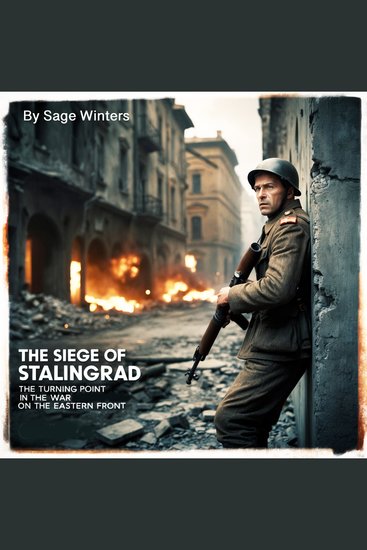
    The Battle of Stalingrad stands as one of the most defining events of the 20th century, a turning point that shifted the trajectory of World War II. Situated along the banks of the Volga River, Stalingrad was not only a city of industrial and strategic importance but also a symbolic prize for both Adolf Hitler and Joseph Stalin. The ferocity and scale of the battle transformed it into a microcosm of the broader conflict between Nazi Germany and the Soviet Union.  
      
    When Germany launched Operation Barbarossa in June 1941, the Wehrmacht seemed unstoppable as it swept across the Soviet Union. Hitler’s ambitions of seizing Soviet territories were fueled by his vision of Lebensraum and the destruction of Bolshevism. By the summer of 1942, German forces were pressing deeper into the southern front, aiming to capture the oil fields of the Caucasus and secure Stalingrad as a vital stepping stone. For Hitler, Stalingrad held immense propaganda value, carrying the name of his adversary, Stalin. Its fall would signify not just a military triumph but a psychological blow to the Soviet people.  
      
    For the Soviet Union, the defense of Stalingrad became a matter of national survival and pride. Stalin’s orders to defend the city at all costs rallied both soldiers and civilians. The infamous directive “Not a step back!” underscored the desperation and determination of the Soviet war effort. As the battle unfolded, Stalingrad was transformed into a hellish landscape of rubble, where every building and street became a battlefield. 
    Ver libro
  • Stories on lord Ganesh series - 25 - From various sources of Ganesh Purana - cover

    Stories on lord Ganesh series -...

    Anusha HS

    • 0
    • 0
    • 0
    Lord Ganesh is the son of Goddess Parvati and Lord Shiva. He is the first one to get worshipped before worshipping any other god. We can say in short that there is no Hindu who doesn't perform Lord Ganesh’s worship. In Ramayana Lord Rama had worshipped Lord Ganesh. 
    In Mahabharata Lord Krishna had also worshipped Lord Ganesh. They have become the role models to the whole world. Before the beginning of any work it is common to worship Lord Ganesh. There are many Holy hymns on Lord Ganesh. Lord Ganesh’s favorite food is modak. 
    He gets pleased if we offer Durva grass to him. He also loves red Hibiscus flower. He is called the vighnaharta because he wards off all the obstacles in our life. He is also called vighnaraja. There are infinite names to Lord Ganesh which we cannot explain. He ties a snake around his waist. 
    The vehicle of Lord Ganesh is mouse in Hindu culture. Lord Ganesh is worshipped all over India. His miracles have been described in all of the 18 Puranas. There are many forms of Lord Ganesh. 
    He has got two wives one is riddhi and the other is siddhi.Lord Ganesh has got 32 forms of incarnations. The modak which you offer to Lord Ganesh will give you good results. Lord Ganesh does not bias among his devotees. He is specially worshipped on sankashti days. On Ganesh Chaturthi people fast and perform vrath.On this day it is forbidden to see Chandra the moon.
    Ver libro
  • Peacemaker - U Thant and the Forgotten Quest for a Just World - cover

    Peacemaker - U Thant and the...

    Thant Myint-U

    • 0
    • 0
    • 0
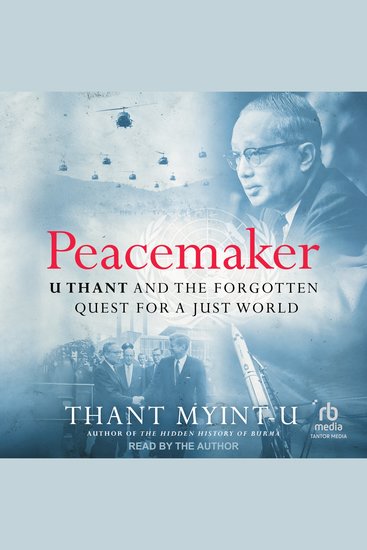
    In the early 1960s, a peaceful world was an imaginable goal. The United Nations was widely respected and regarded as humankind's best hope for resolving global conflicts. African and Asian nations, having recently won their freedom from colonial domination, sought dignity and influence on the world stage. At the helm of their efforts was U Thant, a practicing Buddhist from a remote town in Burma who, as the UN's first non-Western secretary-general, became the Cold War era's preeminent ambassador of peace. From the moment of his predecessor's death in 1961, Thant faced a deluge of violent conflicts. Crucially, during the Cuban Missile Crisis, he played an indispensable role in defusing tensions and helping both superpowers find a way back from nuclear confrontation. For years Thant also challenged Washington over its war in Vietnam, identifying paths to peace that could have saved the lives of millions. 
      
    Drawing on newly declassified documents, Thant's grandson, historian Thant Myint-U, gives a riveting account of how his grandfather's gentle yet willful disposition shaped his determination to avoid a third world war, give voice to the newly decolonized world, create a fairer international economy, and safeguard the environment. Rather than a vestige of an idealistic past, U Thant's fight for peace is central to a fresh understanding of our world today.
    Ver libro
  • Empire of Liberty - A History of the Early United States Republic 1789–1815 - cover

    Empire of Liberty - A History of...

    Harry Montgomery

    • 0
    • 0
    • 0
    In 1789, the United States stood at a turning point. After years of conflict during the American Revolution and an uncertain postwar period under the Articles of Confederation, the country was in need of stronger national leadership. The new Constitution, ratified in 1788, was designed to create a more effective federal system while still preserving the ideals of liberty and republicanism. This document was a compromise between those who wanted a powerful central government and those who feared tyranny. It created three branches of government—executive, legislative, and judicial—each with checks and balances to prevent abuse of power. The Bill of Rights, added shortly after ratification, helped ease concerns by protecting individual freedoms such as speech, religion, and the right to a fair trial. 
    With the Constitution in place, attention turned to the task of putting it into practice. George Washington was unanimously elected as the first president, taking office in April 1789. His presence offered reassurance to many citizens who trusted his leadership and commitment to republican values. Washington worked to establish the authority of the executive branch without appearing monarchical. He formed the first presidential cabinet, appointing Thomas Jefferson as Secretary of State, Alexander Hamilton as Secretary of the Treasury, and Henry Knox as Secretary of War. This team would help shape the future direction of the republic. 
    The first Congress, meanwhile, worked to set up the basic structures of the new government. They created the federal court system through the Judiciary Act of 1789 and established executive departments. They also passed revenue legislation to fund the government’s activities. One of the early and pressing tasks was addressing the national debt from the Revolution. Alexander Hamilton proposed a financial plan that included federal assumption of state debts, the creation of a national bank, and new taxes.
    Ver libro