¡Acompáñanos a viajar por el mundo de los libros!
Añadir este libro a la estantería
Grey
Escribe un nuevo comentario Default profile 50px
Grey
Suscríbete para leer el libro completo o lee las primeras páginas gratis.
All characters reduced
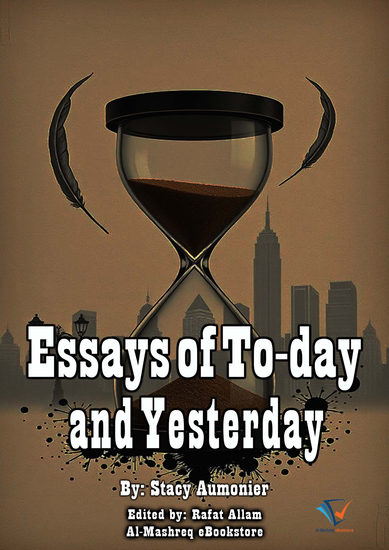
Essays of To-day and Yesterday - cover

Essays of To-day and Yesterday

Stacy Aumonier

Editorial: Al-Mashreq eBookstore

  • 0
  • 0
  • 0

Sinopsis

Little Windows is a posthumous collection that encapsulates Stacy Aumonier's mastery in short story writing. Comprising twenty-six diverse tales, this volume offers a panoramic view of early 20th-century life, delving into themes of human nature, societal norms, and the complexities of everyday existence. Aumonier's keen eye for detail and profound understanding of character dynamics make this collection a compelling read for enthusiasts of literary fiction.
Disponible desde: 14/06/2025.
Longitud de impresión: 200 páginas.

Otros libros que te pueden interesar

  • Honeymoons in Temporary Locations - cover

    Honeymoons in Temporary Locations

    Ashley Shelby

    • 0
    • 0
    • 0
    Climate disaster–induced fugue states, mutinous polar bears, support groups for recently displaced millionaires, men who hear trees, and women who lose their wives on environmental refugee resettlement trips. In these dispatches from a weirding world, the absurd and fantastic are increasingly indistinguishable from reality. Exploring this liminal moment, Ashley Shelby's collection of climate fictions imagines a near future that is both unnervingly familiar and subversively strange. 


    Set in the same post-climate-impact era, these stories range from playfully satirical to poignantly humane, bending traditional narrative forms and coming together into a brilliant and unusual contemplation of our changing world. Featuring the Hugo-nominated novelette "Muri," Honeymoons in Temporary Locations processes the unthinkable through riotous inventions like guided tours of submerged cities, Craigslist ads placed by climate refugees, and cynical pharmaceutical efforts to market a drug to treat solastalgia, the existential distress caused by environmental change. 


    Shelby reengineers the dystopic bleakness that characterizes so much climate fiction by embracing an eclectic experimentalism leavened with humor, irony, and the inevitable bathos that characterizes the human experience. Unexpected and clever, this innovative collection confirms her status as a visionary writer whose work expands the forms, attitudes, and possibilities of climate fiction.
    Ver libro
  • Monkey Nuts - cover

    Monkey Nuts

    D H Lawrence

    • 0
    • 0
    • 0
    ‘Monkey Nuts’ was written by D H Lawrence in 1922. 'Monkey Nuts' turns the traditional love story on its head. It is the woman (the new liberated woman Lawrence had little time for) who does the chasing and the boy who is reluctant. Lawrence seems to be saying it is the unspoken love between the two men in the story which is more satisfying than the possible love between the man and the woman which the boy rejects. Although the older man goes through the motions of chasing the girl, even he seems to realise the sterility of one-sided love.
    Ver libro
  • Jack and Kitty's Valentine's Day Feel-Good Stories - Funny and Heartwarming Short Stories for Couples Singles and Everyone in Between! - cover

    Jack and Kitty's Valentine's Day...

    Kitty Norton, Jack Norton

    • 0
    • 0
    • 0
    Jack and Kitty's Valentine's Day Feel-Good Stories: Funny and Heartwarming Short Stories for Couples, Singles... and Everyone in Between! 
    Grab your tissues and chocolate, and get ready to cuddle up with this heartwarming collection of Valentine's Day stories. From the joy of finding "the one" to the deep bond of friendship, these short tales are perfect for couples, singles, and everyone who believes in love.  
    Experience the magic of a 50th wedding anniversary, chuckle at a first date fail, and discover that sometimes, it's not just about living happily ever after, but happily after laughter. Jack and Kitty's Valentine's Day Feel-Good Stories celebrates the power of love in all its forms, making this a sweet treasure for anyone who enjoys uplifting short stories.
    Ver libro
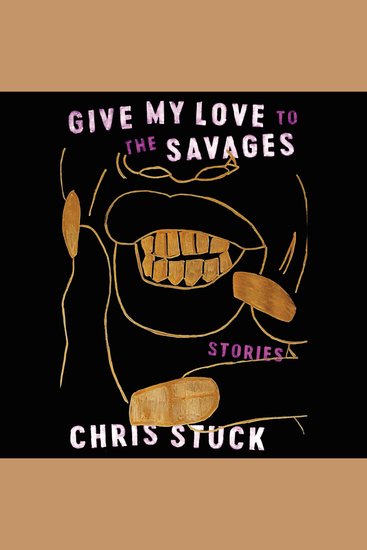
  • Give My Love to the Savages - Stories - cover

    Give My Love to the Savages -...

    Anónimo

    • 0
    • 0
    • 0
    A provocative and raw debut collection of short fiction reminiscent of Junot Diaz’s Drown. 
      
     A Black man’s life, told in scenes—through every time he’s been called nigger. A Black son who visits his estranged white father in Los Angeles just as the ’92 riots begin. A Black Republican, coping with a skin disease that has turned him white, is forced to reconsider his life. A young Black man, fetishized by an older white woman he’s just met, is offered a strange and tempting proposal.   
    The nine tales in Give My Love to the Savages illuminate the multifaceted Black experience, exploring the thorny intersections of race, identity, and Black life through an extraordinary cast of characters. From the absurd to the starkly realistic, these stories take aim at the ironies and contradictions of the American racial experience. Chris Stuck traverses the dividing lines, and attempts to create meaning from them in unique and unusual ways. Each story considers a marker of our current culture, from uprisings and sly and not-so-sly racism, to Black fetishization and conservatism, to the obstacles placed in front of Black masculinity and Black and interracial relationships by society and circumstance.  
    Setting these stories across America, from Los Angeles, Phoenix and the Pacific Northwest, to New York and Washington, DC, to the suburbs and small Midwestern towns, Stuck uses place to expose the absurdity of race and the odd ways that Black people and white people converge and retreat, rub against and bump into one another.  
    Ultimately, Give My Love to the Savages is the story of America. With biting humor and careful honesty, Stuck riffs on the dichotomy of love and barbarity—the yin and yang of racial experience—and the difficult and uncertain terrain Black Americans must navigate in pursuit of their desires. 
    Give My Love to the Savages contains the following reprinted with permission.  
    “And Then We Were The Norrises,” American Literary Review 
    “Cowboys,” Callaloo 
    “Every Time They Call You Nigger,” Meridian 
    “Give My Love to the Savages,” Bennington Review and The 
    Pushcart Prize Anthology XLV 
    “This Isn’t Music,” Natural Bridge 
    “How to Be a Dick in the Twenty-First Century,” StoryQuarterly
    Ver libro

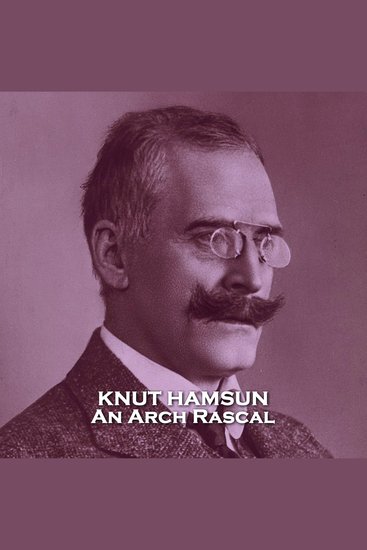
  • Arch Rascal An - From their pens to your ears genius in every story - cover

    Arch Rascal An - From their pens...

    Knut Hamsun

    • 0
    • 0
    • 0
    Knud Pedersen was born in Lom in the Gudbrandsdal valley of Norway on the 4th of August, 1859 in what was then the United Kingdoms of Sweden and Norway.  He was the fourth son of seven children born to poor parents who, when he was three, were invited to an uncle’s farm to work his land. 
    When he was nine he moved away from his family to help another uncle who ran a post office.  Whilst with him he was beaten and starved which manifested in a series of chronic nervous difficulties.  The treatment endured for six years until he managed to escape back to Lom. 
    For some time he now took any job that was available to him, including store clerk, peddler, shoemaker's apprentice, sheriff's assistant, elementary-school teacher and ropemaker's apprentice.  At about the same time, with the wealth of these gained experiences, he began to explore his literary talents. 
    In 1877 he published his first book ‘The Enigmatic Man: A Love Story from Northern Norway’, others soon followed but real success only came in 1890 with ‘Hunger’, an influential work for later novelists with its internal monologue and bizarre logic.  His work is often associated with Pantheism; where nature and mankind are unified in a strong and often mystical bond.   
    His work was so influential that in 1920 he was awarded the Novel Prize for Literature. 
    Shortly after this point his works became fewer and his interests darker.  During World War II he became a fervent admirer of the Nazi’s, even meeting Hitler, even though German armies had overrun Norway.  With the war’s end he was detained on charges of treason.  His old age was apparently the primary reason given for Hamsun receiving only a fine.  Other reasons also sought to excuse his abhorrent behaviour but it was clear that whilst he was loved for his literature he was detested for his politics and morals. 
    His literary canon includes more than 20 novels, a poetry collection, short stories, plays, a travelogue, other works of non-fiction and essays. 
    Knut Hamsun died on the 19th February 1952 in Grimstad. He was 92.
    Ver libro
  • A Scene from the Ghetto of Venice - From their pens to your ears genius in every story - cover

    A Scene from the Ghetto of...

    Rainer Maria Rilke

    • 0
    • 0
    • 0
    René Karl Wilhelm Johann Josef Maria Rilke was born into a troubled marriage on the 4th December 1875 in Prague, then part of the Austro-Hungarian Empire.  His mother, having previously lost a baby girl, would dress the young boy up in girl’s clothing.   
    Later his father dispatched him to a military academy at age 10 but after a miserable 5 years the young Rilke left due to illness and instead entered first Prague and then Munich and finally Berlin university to study art history, philosophy and literature. 
    His initial forays into literature was in poetry.  His intense, mystical and lyrical style was much admired and over time inspired many in succeeding generations.    
    His short prose collection ‘Stories of God’, written in an impassioned burst over several nights was published in 1900 and offers a beguiling view of much of Rilke’s influences and outlook.  
    The following year he married the pioneering sculptor and artist Clara Westhoff.  The union produced one child, a daughter Ruth.   
    He lived in Paris for most of the Century’s first decade where he mixed with many great minds of the time.  Although he continued to write he also worked as a secretary to the sculptor, Rodin.   
    It was only after they settled in Switzerland in 1919 that his writing output was in full flow.  Here he wrote profusely in both German and French, which included much on his previous travels, his left-wing sympathies, his religious and existential thoughts, all part of a unique and consummate style. 
    From 1923 on, Rilke increasingly struggled with his health which was now in constant decline and often spent time rehabilitating at a sanatorium.   
    Rainer Maria Rilke died of leukaemia on the 29th December 1926 in Montreux, Switzerland.  He was 51.
    Ver libro