¡Acompáñanos a viajar por el mundo de los libros!
Añadir este libro a la estantería
Grey
Escribe un nuevo comentario Default profile 50px
Grey
Suscríbete para leer el libro completo o lee las primeras páginas gratis.
All characters reduced
The Temptation of Saint Anthony - cover

The Temptation of Saint Anthony

محمد الخضري

Editorial: Memorable Classics eBooks

  • 0
  • 0
  • 0

Sinopsis

The Temptation of Saint Anthony by Gustave Flaubert  is a dramatic poem in prose (often referred as a novel) by the French author Gustave Flaubert published in 1874. Flaubert spent his whole adult life working fitfully on the book.

In 1845, at age 24, Flaubert visited the Balbi Palace in Genoa, and was inspired by a painting of the same title, then attributed to Bruegel the Elder (now thought to be by one of his followers). Flaubert worked at the subject in three versions, completed in 1849, 1856 (with extracts published at that time) and 1872, before publishing the final version in 1874.

It takes as its subject the famous temptation faced by Saint Anthony the Great, in the Egyptian desert, a theme often repeated in medieval and modern art. It is written in the form of a play script, detailing one night in the life of Anthony the Great, during which he is faced with great temptations.

	Saint Anthony: The protagonist. He is tempted by many characters and objects to stray from his belief that isolation is the truest form of worship.
	Ammonaria: One of his sister's friends, Anthony is drawn into a battle between his desire for her and his desire to remain holy before God in his isolation. He is distraught that he cannot control his body.
Disponible desde: 03/06/2022.

Otros libros que te pueden interesar

  • Memory (Unabridged) - cover

    Memory (Unabridged)

    H. P. Lovecraft

    • 0
    • 0
    • 0
    This story takes place in the ancient valley of Nis, in vegetation-covered stone ruins described by Lovecraft in great detail. These crumbling blocks of monolithic stone now serve only for grey toads and snakes to nest under. Interspersed in the ruins are large trees that are home to little apes. Through the bottom of this valley runs the great, slimy red river called Than. "Memory" involves only two characters: "the Genie that haunts the moonbeams" and "the Daemon of the Valley". The Genie inquires of the Daemon who it was that long ago placed the stones that were now the desolate ruin near the river Than. The Daemon replies that he remembers the name of the creatures "clearly," but only because their name rhymed with that of the river: they were called Man. He also remembers "dimly" that they appeared like the small apes that now leap through the ruins. The Genie flies back to his moonbeams, and the Daemon turns to regard an ape in silent contemplation.
    Ver libro
  • Les Misérables: Volume 1: Fantine - Book 7: The Champmathieu Affair (Unabridged) - cover

    Les Misérables: Volume 1:...

    Victor Hugo

    • 0
    • 0
    • 0
    Victor-Marie Hugo (26 February 1802 - 22 May 1885) was a French poet, novelist, essayist, playwright, and dramatist of the Romantic movement. During a literary career that spanned more than sixty years, he wrote abundantly in an exceptional variety of genres: lyrics, satires, epics, philosophical poems, epigrams, novels, history, critical essays, political speeches, funeral orations, diaries, and letters public and private, as well as dramas in verse and prose.
    BOOK 7: THE CHAMPMATHIEU AFFAIR: The incidents the reader is about to peruse were not all known at M. sur M. But the small portion of them which became known left such a memory in that town that a serious gap would exist in this book if we did not narrate them in their most minute details. Among these details the reader will encounter two or three improbable circumstances, which we preserve out of respect for the truth.
    Ver libro
  • The Innocence of Father Brown - cover

    The Innocence of Father Brown

    G. K. Chesterton

    • 0
    • 0
    • 0
    Chesterton portrays Father Brown as a short, stumpy Roman Catholic priest, with shapeless clothes and a large umbrella, and an uncanny insight into human evil. "How in Tartarus," cried Flambeau, "did you ever hear of the spiked bracelet?" -- "Oh, one's little flock, you know!" said Father Brown, arching his eyebrows rather blankly. "When I was a curate in Hartlepool, there were three of them with spiked bracelets." Not long after he published Orthodoxy, G. K. Chesterton moved from London to Beaconsfield, and met Father O'Connor. O'Connor had a shrewd insight to the darker side of man's nature and a mild appearance to go with it--and together those came together to become Chesterton's unassuming Father Brown. Chesterton loved the character, and the magazines he wrote for loved the stories. The Innocence of Father Brown was the first collection of them, and it's a great lot of fun.
    Ver libro
  • Siddhartha - cover

    Siddhartha

    Herman Hesse

    • 0
    • 0
    • 0
    He abandons comfort, wisdom, and love—because truth cannot be taught, only lived.
    In ancient India, Siddhartha sets out on a lifelong quest to understand the meaning of existence. Rejecting rigid teachings and borrowed truths, he experiences asceticism, desire, loss, and profound stillness. Each step—joyful or painful—draws him closer to a deeper harmony with life and the self.
    
    Celebrated as "one of the most influential spiritual novels of the twentieth century," Hermann Hesse's masterpiece blends Eastern philosophy with poetic simplicity, offering readers a quiet yet transformative experience. Its wisdom speaks softly, but it lingers long after the final page.
    
    If you seek clarity, balance, and a story that invites reflection rather than instruction, this novel will become a companion on your own inner journey.
    
    Open the book—and walk the path that leads inward.
    Ver libro
  • Unknown Friend Nobel Prize 1933 An - cover

    Unknown Friend Nobel Prize 1933 An

    Ivan Bunin

    • 0
    • 0
    • 0
    Ivan Bunin received the 1933 Nobel Prize in Literature "for the strict artistry with which he has carried on the classical Russian traditions in prose writing." Aristocrat to the core, Bunin somehow remained connected to the land and people and keenly felt their pulse of life. His acute observations resulted in the accurate and unforgettable characters who populated his writing. His love for punctuation and punctilious choice of words is legendary. Reading Bunin's stories is one of the best ways to understand the mysterious Russian soul and begin to understand one of Russia's greatest periods of literature.
    Ver libro
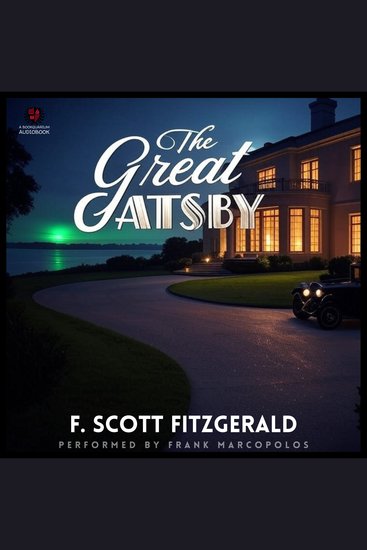
  • The Great Gatsby - cover

    The Great Gatsby

    F. Scott Fitzgerald

    • 0
    • 0
    • 0
    The Great Gatsby, set in the backdrop of the Roaring Twenties on Long Island, New York, is a poignant critique of the American Dream. The novel is not just a love story but a tragic tale of ambition, class, and the illusion of social mobility, encapsulated in the era's excess and disillusionment. When the novel was first published in 1925, it did not enjoy immediate commercial success. Only around 20,000 copies were sold in its first year, and Fitzgerald himself considered it a commercial disappointment. By the time of his death in 1940, Fitzgerald felt his work, including Gatsby, had been forgotten, with sales being so low that he was reportedly buying copies himself to keep it in print. The novel's fortunes changed dramatically during World War II when the Council on Books in Wartime chose it for distribution to American soldiers, printing over 155,000 copies. This initiative significantly boosted its popularity and recognition, transforming it from a largely forgotten work into an American classic. Today, The Great Gatsby sells approximately 500,000 copies annually, with total sales reaching over 25 million copies worldwide since its original publication. It has become Scribner's best-selling title, illustrating its enduring appeal and commercial success. Overall, The Great Gatsby has not only achieved commercial success but has also left a profound and lasting impact on American literature and culture, embodying the complexities and contradictions of the American experience. 
    F. Scott Fitzgerald (September 24, 1896 – December 21, 1940) was an American novelist and short story writer, widely regarded as one of the greatest writers of the 20th century. His works are emblematic of the Jazz Age, particularly capturing the spirit and excesses of the Roaring Twenties in America. 
    Frank Marcopolos lives in Florida with his dog, Sparky.
    Ver libro