Junte-se a nós em uma viagem ao mundo dos livros!
Adicionar este livro à prateleira
Grey
Deixe um novo comentário Default profile 50px
Grey
Assine para ler o livro completo ou leia as primeiras páginas de graça!
All characters reduced
Global Tech Lobbying - cover
LER

Global Tech Lobbying

Soren Earthwalker

Tradutor A AI

Editora: Publifye

  • 0
  • 0
  • 0

Sinopse

"Global Tech Lobbying" explores how major technology companies, particularly those in software and AI, are influencing public policy worldwide through sophisticated lobbying strategies. It reveals how these firms shape legislation, regulatory frameworks, and public opinion, prompting critical questions about transparency and accountability. The book investigates both direct engagement with policymakers and indirect methods, such as funding think tanks to sway public discourse.

 
The book highlights the uneven playing field created by extensive tech lobbying, potentially marginalizing smaller entities and the public. For instance, the rise of AI has intensified lobbying efforts as companies navigate regulatory uncertainties and ethical considerations. "Global Tech Lobbying" unfolds systematically, examining the history of tech lobbying, case studies on data privacy and AI governance, and potential policy reforms to promote broader stakeholder engagement.

 
Drawing on policy documents, lobbying disclosures, and expert interviews, the book adopts a fact-based, analytical stance, accessible to a broad audience. It offers valuable insights for policymakers, academics, and anyone interested in the intersection of technology and politics, providing a comparative perspective on how different regions grapple with the influence of powerful tech corporations and advocating for a more equitable technological future through increased transparency.
Disponível desde: 18/02/2025.
Comprimento de impressão: 77 páginas.

Outros livros que poderiam interessá-lo

  • The Law - cover

    The Law

    Frédéric Bastiat

    • 0
    • 0
    • 0
    "The Law" is a classic work written by the French political economist and philosopher Frédéric Bastiat. Originally published in 1850, the book is a concise and powerful exploration of the concept of law and its proper role in society. Bastiat's main argument revolves around the idea that the purpose of law is to protect individual rights and property, rather than being an instrument for legal plunder or the redistribution of wealth. In "The Law," Bastiat discusses the fundamental principles of a just and free society, emphasizing the importance of limited government intervention and the protection of individual liberties. He criticizes various forms of legal plunder, such as tariffs, subsidies, and progressive taxation, which he views as violations of the natural rights of individuals. The book is known for its clarity of thought, persuasive reasoning, and its defense of the principles of classical liberalism.
    Ver livro
  • If Freedom is Responsibility How Do I Act? - Brockwood Park 1972 - Public Talk 3 - cover

    If Freedom is Responsibility How...

    Jiddu Krishnamurti

    • 0
    • 0
    • 0
    If freedom is responsibility, how do I act? - 16 September 1972 
    • Q: What is the action that will be a total response to the world around us? 
    • Can one respond totally without learning about love and death in relation to 
    daily life? 
    • Do we live, or do we tolerate living? 
    • Do we live according to ideas and conclusions based on belief, dogma and 
    memory? 
    • Is there an action which dissipates all images? 
    • Is love relationship in which there is no image? Is disorder relationship in which 
    there is the image? 
    • Can a mind seeking comfort learn about death? 
    • Find out whether death is something to be avoided or to be lived with naturally. • Can the mind free itself from the known? 
    • Q: What relationship has literature, beauty and art to our daily life? 
    • Q: Were you conditioned by the Masters? 
    • Q: Can one help someone in distress?
    Ver livro
  • Carrie Kills A Man - A Memoir - cover

    Carrie Kills A Man - A Memoir

    Carrie Marshall

    • 0
    • 0
    • 0
    Carrie Kills A Man* is about growing up in a world that doesn't want you, and about how it feels to throw a hand grenade into a perfect life. It's the story of how a tattooed transgender rock singer killed a depressed suburban dad, and of the lessons you learn when you renounce all your privilege and power.
    
    When more people think they've seen a ghost than met a trans person, it's easy for bad actors to exploit that – and they do, as you can see from the headlines and online. But here's the reality, from someone who's living it. From coming out and navigating trans parenthood to the thrills of gender-bending pop stars, fashion disasters and looking like Velma Dinkley, this is a tale of ripping it up and starting again: Carrie's story in all its fearless, frank and funny glory.
    
    *"Spoiler: That man was me." – Carrie
    "Nasty & funny! HIGHLY RECOMMENDED." - Patton Oswalt
    Ver livro
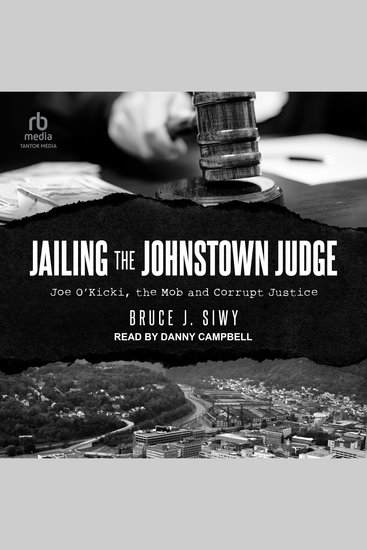
  • Jailing the Johnstown Judge - Joe O'Kicki the Mob and Corrupt Justice - cover

    Jailing the Johnstown Judge -...

    Bruce Siwy

    • 0
    • 0
    • 0
    In 1988, Judge Joe O'Kicki was regarded by his peers as one of the most brilliant legal minds in the United States. He was newly remarried, sworn in as the president judge of a Pennsylvania county and on the fast track to a federal bench . . .  


    Silently, however, a state police vice unit was in the midst of covert operation into O'Kicki's personal affairs. The judge would be accused of soliciting bribes, frequenting brothels, and running the county as if he were a "battleship commander." Later he'd concoct a plan to flee the country and exact revenge on his enemies. 


    Set in the aftermath of the 1977 Johnstown flood and including courtroom testimony, the memos of whistleblowers, contemporary interviews, and excerpts from O'Kicki's unfinished tell-all memoir, Jailing the Johnstown Judge is a fresh examination of the extraordinary western Pennsylvania case that attained international infamy.
    Ver livro
  • Rational Optimist The: Book Summary & Analysis - cover

    Rational Optimist The: Book...

    Briefly Summaries

    • 0
    • 0
    • 0
    This is a concise summary and analysis of The Rational Optimist, by Matt Ridley.
     
    It is not the original book and is not affiliated with or endorsed by Matt Ridley.
     
    Ideal those seeking a quick and insightful overview.
     
    The Rational Optimist presents a compelling argument for optimism about the future of humanity. With an engaging exploration of history, science, and economics, this book outlines how innovation, exchange, and cooperation have driven human progress. It challenges the prevailing narratives of doom, illustrating how creativity and free markets continue to solve the world’s biggest challenges, from poverty to environmental concerns. Thought-provoking and data-driven, it offers a hopeful perspective on the resilience and ingenuity of human civilization.
    Ver livro
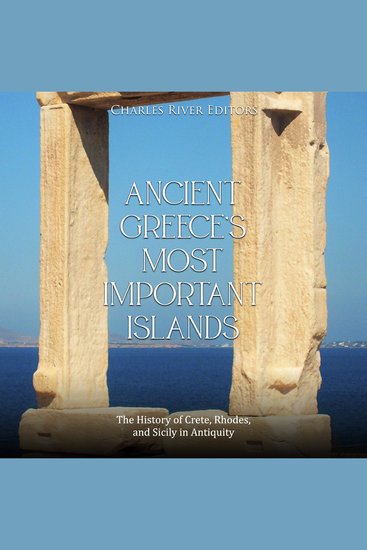
  • Ancient Greece’s Most Important Islands: The History of Crete Rhodes and Sicily in Antiquity - cover

    Ancient Greece’s Most Important...

    Editors Charles River

    • 0
    • 0
    • 0
    Nearly 2,500 years after the Golden Age of Athens, people across the world today continue to be fascinated by the ancient Greeks, but who did the Ancient Greeks look up to? The answer to that question can be found in Homer’s The Odyssey, in which Odysseus makes note of “a great town there, Cnossus, where Minos reigned.” It was perhaps the earliest reference to the Minoan civilization, a mysterious ancient civilization that historians and archaeologists still puzzle over, but a civilization that renowned historian Will Durant described as "the first link in the European chain.” Nearly 2,000 years before Homer wrote his epic poems, the Minoan civilization was centered on the island of Crete, a location that required the Minoans to be a regional sea power. And indeed they were, stretching across the Aegean Sea from about 2700-1500 BCE with trade routes extending all the way to Egypt. 
    In the Archaic and Classical periods, Rhodes often stood as a prime exemplar of the highs and lows of its fellow Greek cities, and as the largest island of the Dodecanese, Rhodes’ history is largely in line with that of the rest of those islands. Rhodes would reach the zenith of its power in the Hellenistic period following the death of Alexander the Great in 323 BCE. Even as the rest of the city-states waned compared to the much larger kingdoms of Alexander’s successors in Egypt and Asia, Rhodes would come to the forefront as a main power in the Greek world, standing toe-to-toe with these Hellenistic kingdoms.  
    It was during the Classical era that, especially under the tyrants (dictators) of the Greek city of Syracuse, Sicily came the closest to being governed as a single, unified, and independent state. In time, it came to challenge the powerful trade empire of Carthage, a former Phoenician colony in North Africa, and it vied with the cities and kingdoms of mainland Greece for primacy in the Greek world.
    Ver livro