¡Acompáñanos a viajar por el mundo de los libros!
Añadir este libro a la estantería
Grey
Escribe un nuevo comentario Default profile 50px
Grey
Suscríbete para leer el libro completo o lee las primeras páginas gratis.
All characters reduced
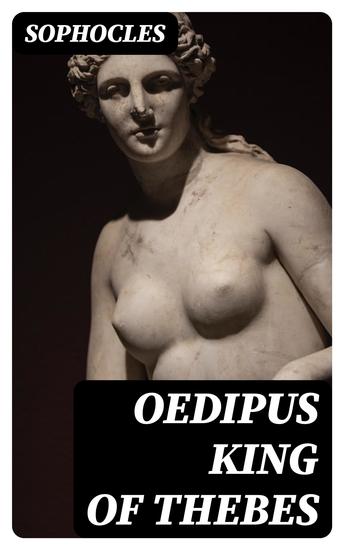
Oedipus King of Thebes - Translated into English Rhyming Verse with Explanatory Notes - cover

Oedipus King of Thebes - Translated into English Rhyming Verse with Explanatory Notes

Sophocles

Traductor Gilbert Murray

Editorial: DigiCat

  • 0
  • 0
  • 0

Sinopsis

In 'Oedipus King of Thebes,' Sophocles masterfully weaves a tragic narrative that explores the inescapable nature of fate and the struggles of human agency. Within the framework of classical Greek tragedy, the play is marked by its intricate use of dramatic irony and poignant character development. Oedipus, the epitome of a tragic hero, embarks on a relentless quest for truth, only to uncover harrowing secrets about his own identity and destiny. The text reflects the socio-religious dynamics of ancient Greece, where the oracles and divine will dictate the moral and philosophical underpinnings of existence. Sophocles, renowned as one of the three ancient Greek tragedians whose works have survived, wrote 'Oedipus King of Thebes' in a context steeped in the exploration of human limitations amidst divine power. His intricate understanding of human psychology and societal ethics may have been influenced by the societal upheavals and philosophical inquiries of his time, allowing him to delve deep into themes of guilt, responsibility, and the interference of the gods in human affairs. For readers seeking an exploration of existential dilemmas and the human condition, this seminal work is paramount. 'Oedipus King of Thebes' not only captivates with its rich symbolism and timeless themes but also invites reflection on personal agency within the constraints of fate, making it a quintessential read for those interested in classic literature and tragedy.
Disponible desde: 28/05/2022.
Longitud de impresión: 45 páginas.


Otros libros que te pueden interesar

  • The Horse-Stealers - cover

    The Horse-Stealers

    Anton Chekhov

    • 0
    • 0
    • 0
    The Horse-Stealers - a story by Anton Pavlovich Chekhov. Written in 1890, first published in the magazine "New Time" No. 5061, April 1, 1890, signed Anton Chekhov.
    Ver libro
  • The Sun Also Rises - cover

    The Sun Also Rises

    Ernest Hemingway

    • 0
    • 0
    • 0
    The Sun Also Rises is Ernest Hemingway’s timeless exploration of the post-war generation’s search for meaning in a rapidly changing world. Set in the vibrant cultural hubs of Paris and the spirited landscapes of Spain, the novel follows a group of expatriates as they navigate love, loss, and disillusionment. Hemingway’s crisp, understated prose captures the raw emotions of the Lost Generation, revealing both the allure and the emptiness of their hedonistic pursuits. From the adrenaline-fueled bullfighting arenas of Pamplona to the quiet, introspective moments of personal reflection, this classic work delves deep into the complexities of identity, passion, and the enduring human spirit.
    Ver libro
  • Our French Watering-place (Unabridged) - cover

    Our French Watering-place...

    Charles Dickens

    • 0
    • 0
    • 0
    Our English Watering-Place and Our French Watering-Place are short stories by Charles Dickens. Charles John Huffam Dickens (7 February 1812 - 9 June 1870) was an English writer and social critic. He created some of the world's most memorable fictional characters and is generally regarded as the greatest novelist of the Victorian period. During his life, his works enjoyed unprecedented fame, and by the twentieth century his literary genius was broadly acknowledged by critics and scholars. His novels and short stories continue to be widely popular.
    Ver libro
  • Note on Realism A (Unabridged) - cover

    Note on Realism A (Unabridged)

    Robert Louis Stevenson

    • 0
    • 0
    • 0
    Robert Louis Stevenson was a Scottish novelist, essayist, poet and travel writer. Born and educated in Edinburgh, Stevenson suffered from serious bronchial trouble for much of his life, but continued to write prolifically and travel widely in defiance of his poor health. As a young man, he mixed in London literary circles, receiving encouragement from Andrew Lang, Edmund Gosse, Leslie Stephen and W. E. Henley, the last of whom may have provided the model for Long John Silver in Treasure Island.
    A NOTE ON REALISM: Style is the invariable mark of any master; and for the student who does not aspire so high as to be numbered with the giants, it is still the one quality in which he may improve himself at will. Passion, wisdom, creative force, the power of mystery or colour, are allotted in the hour of birth, and can be neither learned nor simulated.
    Ver libro
  • White Fang - cover

    White Fang

    Jack London

    • 0
    • 0
    • 0
    In the frozen wilderness of the Yukon, a lone wolf-dog named White Fang must navigate the brutal laws of nature and the complexities of human society. Born in the wild and shaped by both savage survival and cruel treatment, White Fang learns the harsh realities of life, adapting to each challenge with intelligence and resilience. As he moves between brutal masters and kind-hearted guardians, his journey unfolds as an exploration of the thin line between savagery and civilization. Jack London’s White Fang is a gripping adventure that delves deep into the primal instincts of animals and humans alike, offering a timeless meditation on survival, loyalty, and the power of compassion. 
    This classic novel, first published in 1906, remains one of London’s most celebrated works, complementing The Call of the Wild with its reverse narrative—where a wild creature is gradually domesticated rather than a domesticated one returning to the wild. White Fang is an unforgettable tale of endurance, transformation, and the enduring bond between humans and animals.
    Ver libro
  • The Statement of Randolph Carter - cover

    The Statement of Randolph Carter

    H. P. Lovecraft

    • 0
    • 0
    • 0
    Title: The Statement of Randolph Carter 
    Author: H. P. Lovecraft 
    Narrator: Jonathan Dunne 
    Original Publication: 1919 
    Public Domain: Yes 
    Series Placement: Number 11 in the Timeless Terrors series 
    Description: 
    The Statement of Randolph Carter by H. P. Lovecraft is a haunting tale of the unknown and the incomprehensible. First published in 1920 in The Vagrant, it recounts a disturbing testimony given before authorities, where the narrator struggles to explain the fate of his companion. 
    Told as a sworn statement, the story unfolds through Carter’s account of a midnight exploration of a graveyard and the horrifying events that follow. As his friend descends into a crypt, strange sounds and an overwhelming sense of dread mount, culminating in a final revelation that suggests forces far beyond human understanding. 
    This recording, narrated by Amazon bestselling horror author Jonathan Dunne, captures the eerie tension and creeping inevitability that defines Lovecraft’s early fiction. While the text is in the public domain, this performance is an original work and copyright © 2025 Jonathan Dunne. 
    Listeners should be prepared for an unsettling meditation on forbidden knowledge, cosmic dread, and the terrifying mysteries that lie buried in the dark.
    Ver libro