¡Acompáñanos a viajar por el mundo de los libros!
Añadir este libro a la estantería
Grey
Escribe un nuevo comentario Default profile 50px
Grey
Suscríbete para leer el libro completo o lee las primeras páginas gratis.
All characters reduced
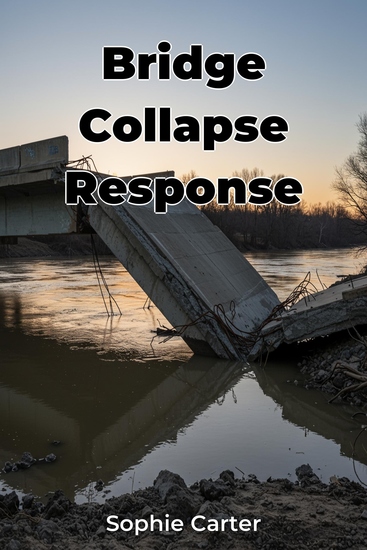
Bridge Collapse Response - cover

Bridge Collapse Response

Sophie Carter

Traductor A AI

Editorial: Publifye

  • 0
  • 0
  • 0

Sinopsis

Bridge Collapse Response offers a comprehensive exploration of the critical actions and coordination needed immediately after a bridge failure. It highlights the complex challenges faced by emergency teams, focusing on understanding failure causes, managing crowds, and executing search and rescue through debris. Bridge collapses, though rare, are high-impact events demanding swift, coordinated responses.

 
Did you know that bridge failures have shaped the evolution of engineering standards, with lessons learned from past disasters influencing current protocols? The book uniquely integrates engineering with emergency management, providing a holistic view from prevention to recovery.

 
It progresses from foundational bridge engineering principles and common collapse causes to examining emergency response elements, including assessing structural stability and rescue methodologies. Case studies of past bridge collapses are analyzed, showcasing successes and failures in response efforts. The text also considers emerging technologies like drone surveillance to improve future response capabilities.
Disponible desde: 07/04/2025.
Longitud de impresión: 83 páginas.

Otros libros que te pueden interesar

  • Tutankhamen's Curse - The Legend of the Pharaoh's Deadly Tomb - cover

    Tutankhamen's Curse - The Legend...

    John Harpoon

    • 0
    • 0
    • 0
    The discovery of Tutankhamen's tomb in 1922 remains one of the most significant archaeological events in history, but it also brought with it a mysterious and terrifying legend—the Curse of the Pharaoh. For centuries, the tomb of the young Egyptian king, who ruled during the 18th dynasty, lay hidden beneath the sands of the Valley of the Kings. It wasn’t until British archaeologist Howard Carter and his financial backer, Lord Carnarvon, unearthed the tomb that the world was introduced to the wonder and mystique surrounding King Tutankhamen’s final resting place. 
    Tutankhamen, who ascended to the throne as a child, died young under uncertain circumstances, leaving behind a legacy that has fascinated historians, archaeologists, and the public alike. His tomb, filled with precious artifacts, murals, and the famous golden mask, was unlike anything ever discovered in ancient Egyptian tombs. Yet, the treasures would be overshadowed by an eerie series of deaths, leading many to believe in a curse linked to the tomb. 
    The first death tied to the curse was that of Lord Carnarvon, who financed the excavation. His sudden death just months after entering the tomb in 1923 shocked the world, and rumors of a deadly curse spread rapidly. Over the next few years, several individuals connected to the tomb’s discovery met untimely and mysterious deaths, fueling the belief that the wrath of Tutankhamen had been unleashed upon those who dared to disturb his resting place.
    Ver libro
  • Music Therapy - Healing through Harmony and Rhythm - cover

    Music Therapy - Healing through...

    Vivian Westlake

    • 0
    • 0
    • 0
    Music has long been recognized as a universal language, transcending cultural and linguistic barriers to evoke emotions, inspire creativity, and foster connections. Its profound ability to influence the human mind and body makes it a powerful tool in the realm of healing. Across centuries and civilizations, music has been intertwined with rituals, ceremonies, and therapeutic practices, underscoring its integral role in promoting well-being and harmony. 
    At its core, the healing power of music lies in its ability to engage multiple dimensions of human experience. On a physical level, music stimulates neural pathways in the brain, influencing areas responsible for emotion, memory, and motor coordination. Research has shown that listening to or playing music can lower cortisol levels, the hormone associated with stress, while simultaneously boosting the production of dopamine, which promotes feelings of pleasure and relaxation. These biochemical responses highlight music’s potential to alleviate stress, reduce pain, and improve overall physiological health. 
    Emotionally, music serves as a conduit for expression and connection. It has the unique ability to articulate feelings that words often cannot capture, offering solace during moments of grief, anxiety, or despair. For individuals dealing with mental health challenges, music therapy provides a safe and non-invasive avenue to explore and process emotions. Whether through the soothing strains of a classical melody or the energizing beats of a rhythmic tune, music can uplift spirits, encourage self-reflection, and foster resilience.
    Ver libro
  • The Devil's Garden - Rommel's Desperate Defense of Omaha Beach on D-Day - cover

    The Devil's Garden - Rommel's...

    Steven J Zaloga

    • 0
    • 0
    • 0
    A military historian’s account of the German fortifications at Omaha Beach explains the huge American losses during this key WWII conflict.   In this fresh look at D-Day—one of World War II's pivotal battles—author Steven Zaloga draws on original research, including recently discovered German artillery maps, and offers well-supported evidence for why the U.S. Army suffered such enormous casualties on Omaha Beach.  Focusing on Erwin Rommel, the Desert Fox, who oversaw German defenses in Normandy, Zaloga covers little-known aspects of the war, such as the German patrols who were tasked with shooting down pigeons the French resistance used to send messages to the Allies, offering up conclusions that are sure to spark debate. 
    Ver libro
  • Roman Gladiators and the Colosseum The: The History and Legacy of Ancient Rome’s Most Famous Arena and Fighters - cover

    Roman Gladiators and the...

    Editors Charles River

    • 0
    • 0
    • 0
    When the Colosseum was built in the late 1st century A.D., the Romans, a people known for their architectural acumen, managed to amaze themselves. Martial, a Roman poet writing during the inauguration of the Colosseum, clearly believed the Colosseum was so grand a monument that it was even greater than the other Wonders of the Ancient World, which had been written about and visited endlessly by the Romans and Greeks in antiquity. Indeed, although the Wonders were wondrous to behold, the Colosseum was a spectacular achievement in architecture, something new and innovative, and therefore an amazing “Wonder” in its own way. 
    Of course, the main events in the Colosseum were gladiator fights. Gladiators are somewhat synonymous with ancient Rome, and even thousands of years after they performed on the sands, when people are asked about Roman culture, many think about and refer to the bloody spectacles of men fighting to the death in the arena. Gladiatorial combat is often regarded as barbaric, and most find it very difficult to comprehend how people could have enjoyed watching something so violent, but nevertheless, the spectacle still intrigues and fascinates people today, whether in movies like Gladiator or television shows about Spartacus. 
    Each match usually pitted one type of gladiator against a different type of gladiator, with each having their own kind of armor, weaponry and fighting style. For example, the retiarius was a gladiator that used a net, dagger and trident as his offensive weapons, while only wearing a protective guard over his left arm for protection. The retiarius would typically fight against the secutor, a gladiator armed with a sword, large shield, helmet and protective covering on his right arm and left leg. Therefore, a retiarius sacrificed armor for quickness in battle, while the secutor did the opposite.
    Ver libro
  • Isaiah - The World English Bible Book 23 (Unabridged) - cover

    Isaiah - The World English Bible...

    Various Authors

    • 0
    • 0
    • 0
    Within the text of the Book of Isaiah, Isaiah himself is referred to as "the prophet", but the exact relationship between the Book of Isaiah and the actual prophet Isaiah is complicated. The traditional view is that all 66 chapters of the book of Isaiah were written by one man, Isaiah, possibly in two periods between 740 BC and c. 686 BC, separated by approximately 15 years, and that the book includes dramatic prophetic declarations of Cyrus the Great in the Bible, acting to restore the nation of Israel from Babylonian captivity. Another widely held view is that parts of the first half of the book (chapters 1-39) originated with the historical prophet, interspersed with prose commentaries written in the time of King Josiah a hundred years later, and that the remainder of the book dates from immediately before and immediately after the end of the exile in Babylon, almost two centuries after the time of the historical prophet.
    Ver libro
  • Unthought - The Power of the Cognitive Nonconscious - cover

    Unthought - The Power of the...

    N. Katherine Hayles

    • 0
    • 0
    • 0
    N. Katherine Hayles is known for breaking new ground at the intersection of the sciences and the humanities. In Unthought, she once again bridges disciplines by revealing how we think without thinking—how we use cognitive processes that are inaccessible to consciousness yet necessary for it to function. Marshalling fresh insights from neuroscience, cognitive science, cognitive biology, and literature, Hayles expands our understanding of cognition and demonstrates that it involves more than consciousness alone. Cognition, as Hayles defines it, is applicable not only to nonconscious processes in humans but to all forms of life, including unicellular organisms and plants. Startlingly, she also shows that cognition operates in the sophisticated information-processing abilities of technical systems: when humans and cognitive technical systems interact, they form “cognitive assemblages”—as found in urban traffic control, drones, and the trading algorithms of finance capital, for instance—and these assemblages are transforming life on earth. The result is what Hayles calls a “planetary cognitive ecology,” which includes both human and technical actors and which poses urgent questions to humanists and social scientists alike. At a time when scientific and technological advances are bringing far-reaching aspects of cognition into the public eye, Unthought reflects deeply on our contemporary situation and moves us toward a more sustainable and flourishing environment for all beings.
    Ver libro