¡Acompáñanos a viajar por el mundo de los libros!
Añadir este libro a la estantería
Grey
Escribe un nuevo comentario Default profile 50px
Grey
Suscríbete para leer el libro completo o lee las primeras páginas gratis.
All characters reduced
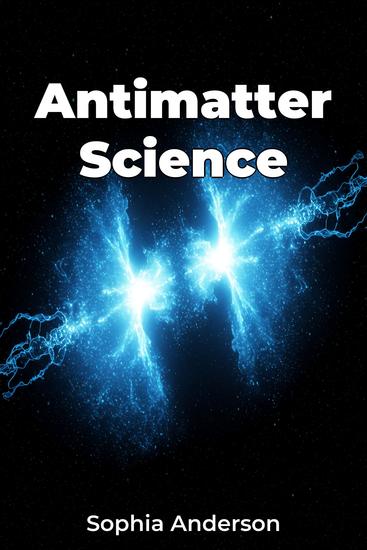
Antimatter Science - cover

Antimatter Science

Sophia Anderson

Traductor A AI

Editorial: Publifye

  • 0
  • 0
  • 0

Sinopsis

Antimatter Science explores the intriguing world of antimatter, the mirror image of ordinary matter, and its potential to revolutionize physics, energy production, and space exploration. The book explains how antimatter theory evolved from Dirac's equation to its place within the Standard Model of particle physics. A key focus is the creation and detection of antimatter using particle colliders and specialized labs. Imagine the possibilities: antimatter could one day fuel spacecraft or provide new sources of energy. 

 
The book progresses logically, beginning with the fundamental concepts of matter and energy before diving into antimatter's theoretical underpinnings. It then details the experimental techniques used to create and study antimatter, including particle accelerators. A significant portion explores applications like antimatter-catalyzed fusion and propulsion.

 
While antimatter presents significant challenges, such as the economic viability of its production, its potential impact warrants continued investigation. Ultimately, Antimatter Science offers a balanced perspective on this fascinating area of physics, making complex concepts accessible to a broad audience. It avoids sensationalism, focusing instead on scientific facts drawn from peer-reviewed publications and experimental data. Readers gain a solid foundation in antimatter physics, empowering them to understand future developments in particle physics, cosmology, and even materials science.
Disponible desde: 06/03/2025.
Longitud de impresión: 70 páginas.


Otros libros que te pueden interesar

  • Mystic Matter - The Strangest Stuff in Space (3 in 1) - cover

    Mystic Matter - The Strangest...

    Dirk Fallon

    • 0
    • 0
    • 0
    “Mystic Matter – The Strangest Stuff in Space” is an awe-inspiring deep dive into the bizarre and bewildering materials that make up our universe. This 3-in-1 collection takes you far beyond everyday matter into the heart of cosmic mystery, exploring the strangest and most elusive elements of existence. Through Mystical Matter, you’ll unravel the secrets of dark matter, antimatter, and strange particles that challenge the very rules of classical physics. Why can’t we see dark matter? What happens when antimatter collides with matter? These questions and more are explored in ways both captivating and understandable. 
    In Cosmic Alchemy, you’ll journey through the lifecycle of stars, watching them forge the elements in massive furnaces before dying in dramatic explosions that scatter their atomic creations across the cosmos. This book illuminates how the universe transforms—from hydrogen to gold—and reveals the mystical science behind the periodic table written in the stars. 
    Finally, The Quantum Darkness plunges into the smallest scales of existence, where particles pop in and out of reality and the vacuum of space is anything but empty. You’ll encounter quantum fluctuations, strange forces, and the very limits of our scientific understanding. 
    Whether you're a casual space enthusiast or a seasoned science lover, this book provides a thrilling, accessible, and mind-expanding tour of the most puzzling phenomena in modern astrophysics. Discover how the invisible shapes the visible, how stars play alchemist, and how our universe is woven together by forces still beyond our grasp. With rich insights and vivid explanations, Mystic Matter invites you to explore a universe far stranger—and more wondrous—than fiction.
    Ver libro
  • Cave of Bones - cover

    Cave of Bones

    Lee Berger, John Hawkes

    • 0
    • 0
    • 0
    In the summer of 2022, Lee Berger lost 50 pounds in order to wriggle though impossibly small openings in the Rising Star cave complex in South Africa—spaces where his team has been unearthing the remains of Homo naledi, a proto-human likely to have coexisted with Homo sapiens some 250,000 years ago. The lead researcher on the site, still Berger had never made his way into the dark, cramped, dangerous underground spaces where many of the naledi fossils had been found. Now he was ready to do so. Once inside the cave, Berger made shocking new discoveries that expand our understanding of this early hominid—discoveries that stand to alter our fundamental understanding of what makes us human. So what does it all mean? Join Berger on the adventure of a lifetime as he explores the Rising Star cave system and begins the complicated process of explaining these extraordinary finds—finds that force a rethinking of human evolution, and discoveries that Berger calls "the Rosetta stone of the human mind."
    Ver libro
  • Quantum Computing Impact - Unleashing the Power of Data for the Future - cover

    Quantum Computing Impact -...

    Chuck Sherman

    • 0
    • 0
    • 0
    In "Quantum Computing Impact: Shaping the Future of Technology and Science," embark on a captivating journey into the cutting-edge realm of quantum computing. From the early days of quantum mechanics to the development of quantum computers, this book demystifies the complex principles that underpin this revolutionary technology. 
    Discover the power of quantum bits, or qubits, and explore the mind-bending phenomena of superposition and entanglement. Follow the evolution of quantum hardware, from superconducting qubits to trapped ions, and delve into the world of quantum algorithms that promise to outperform classical counterparts in cryptography, drug discovery, optimization, and more. 
    This book goes beyond the theoretical, examining the real-world applications of quantum computing and its impact on industries. Uncover the quantum race among startups, tech giants, and governments, and explore the ethical and social implications of this groundbreaking technology. 
    As quantum computing intersects with artificial intelligence, learn about quantum machine learning, neural networks, and the ethical considerations that arise. Navigate the challenges and limitations, from error correction to environmental concerns, and gain insights into the future of quantum computing, including quantum internet and post-quantum cryptography. 
    "Quantum Computing Impact: Shaping the Future of Technology and Science Computing Unleashed" doesn't just explore the possibilities — it provides a roadmap for individuals, businesses, and governments to navigate the quantum era. Whether you're a curious reader, a tech enthusiast, or a decision-maker, this book equips you with the knowledge to understand, embrace, and prepare for the quantum revolution that is reshaping the future of technology and science. Are you ready to unleash the power of quantum computing? 
     
    Ver libro
  • Does Coffee Cause Cancer? - And 8 More Myths about the Food We Eat - cover

    Does Coffee Cause Cancer? - And...

    Dr. Christopher Labos

    • 0
    • 0
    • 0
    In this fascinating, refreshingly clarifying book about food, food myths, and how sloppy science perpetuates misconceptions about food, a medical doctor on his way to a conference gets drawn into conversations that answer the following questions:
    		
    		Does vitamin C prevent the common cold? And if it works, why does it only work in Canadian soldiers, ultramarathon runners, and skiers?
    		Was red meat really declared a carcinogen by the WHO? Does that mean I should become a vegetarian? And who decides what gets labeled as red meat and white meat?
    		Is salt really not that bad for you and did a group of researchers really want to experiment on prisoners to prove the point?
    		Does coffee cause cancer or heart attacks? Why did a California court say coffee needed a warning label?
    		Is red wine really good for your heart, and what makes the French Paradox such a paradox?
    		Why did the New England Journal of Medicine link eating chocolate with winning a Nobel Prize?
    		Why were eggs once bad for you but now good for you again? Does that mean I don’t need to worry about cholesterol?
    		Should I be taking vitamin D?
    Ver libro
  • American Bittern Singing Near Delicate Babbling Stream in Canadian Grasslands of Saskatchewan - Ambient Audio for Deep Sleep and Relaxation - cover

    American Bittern Singing Near...

    Greg Cetus

    • 0
    • 0
    • 0
    Step into the serene grasslands of Saskatchewan, Canada, where nature's symphony awaits. Immerse yourself in the enchanting audio recording of the American Bittern singing near a delicate babbling stream. As the sun gently casts its golden rays over the picturesque landscape, you'll be transported to a world of tranquillity and deep relaxation. Listen closely as the American Bittern, also known as Botaurus lentiginosus, unveils its mesmerizing song. This elusive heron, adorned in a rich tapestry of brown plumage with intricate black stripes, gracefully blends into its marshland home. But its true beauty lies not just in appearance, but in its captivating vocalizations. Within this binaural audio recording, the captivating chorus of nature unfolds. Alongside the enchanting call of the American Bittern, you'll be serenaded by a delightful medley of other feathered friends. The Common Nighthawk adds its hauntingly beautiful song, while the Sora and Yellow-breasted Chat lend their unique melodies to the enchanting symphony.
    Ver libro
  • Gravity's Hidden Partner - Understanding Dark Matter's Role in Space - cover

    Gravity's Hidden Partner -...

    Dirk Fallon

    • 0
    • 0
    • 0
    Dark matter is one of the most perplexing and elusive concepts in modern astrophysics. It was first proposed in the early 20th century when astronomers and physicists observed that galaxies and galaxy clusters seemed to be moving in ways that couldn't be explained by the visible matter alone. Despite the fact that dark matter cannot be directly seen or measured through conventional means, its existence has been inferred through its gravitational effects on visible matter, radiation, and the large-scale structure of the universe. 
    The concept of dark matter emerged after astronomer Fritz Zwicky made an important observation in the 1930s. He noticed that galaxy clusters were moving much faster than they should have been based on the amount of visible matter present in them. In other words, there seemed to be an invisible force or substance that was exerting additional gravitational pull on these galaxies. However, it wasn't until the 1970s when Vera Rubin made similar findings in her studies of galactic rotation curves that the theory of dark matter gained significant traction. 
    Rubin's work revealed that the outer edges of galaxies were rotating faster than expected, based on the amount of visible matter present in them. If only the visible stars, gas, and dust were taken into account, the outer regions should have been moving slower, but they weren't. This discrepancy suggested that there was more mass in these galaxies than what could be seen. This unseen mass was later attributed to dark matter, a substance that doesn't emit, absorb, or reflect light, making it undetectable by conventional instruments.
    Ver libro