¡Acompáñanos a viajar por el mundo de los libros!
Añadir este libro a la estantería
Grey
Escribe un nuevo comentario Default profile 50px
Grey
Suscríbete para leer el libro completo o lee las primeras páginas gratis.
All characters reduced
The right hand : Left-handedness - cover

The right hand : Left-handedness

Sir Daniel Wilson

Editorial: Good Press

  • 0
  • 0
  • 0

Sinopsis

In "The Right Hand: Left-Handedness," Sir Daniel Wilson meticulously explores the complex cultural and social implications of left-handedness throughout history. Written in the late 19th century, Wilson employs a blend of scientific inquiry and philosophical reflection, weaving an examination of the stigma surrounding left-handed individuals with an analysis of their unique cognitive and physical traits. His interdisciplinary approach situates the discussion within contemporary debates on human behavior and societal norms, highlighting the often-overlooked contributions of left-handed people across various fields, from art to science. Sir Daniel Wilson, a prominent Victorian era scholar and archaeologist, was deeply invested in the sociological issues of his time. His academic pursuits at the University of Toronto and his extensive research in anthropology and history informed his perspective on the marginalization of left-handed individuals. Personal experiences and societal observations perhaps sparked his interest in addressing left-handedness as a unique identity, challenging prevailing perceptions and contributing to discussions on human diversity and inclusivity. This book is essential reading for those intrigued by the intersection of psychology, society, and culture. Wilson's thoughtful analysis not only broadens our understanding of left-handedness but also serves as a call to recognize and embrace human variance. A profound reflection on identity, it invites readers to reassess their own biases and celebrate the diversity that enriches our collective experience.
Disponible desde: 02/03/2025.
Longitud de impresión: 190 páginas.
Otros libros que te pueden interesar

  • Once Upon a Town - The Miracle of the North Platte Canteen - cover

    Once Upon a Town - The Miracle...

    Anónimo

    • 0
    • 0
    • 0
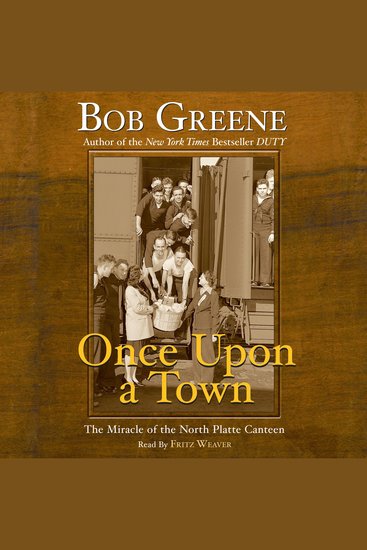
    During World War II, American soldiers from every city and walk of life rolled through North Platte, Nebraska on troop trains, en route to Europe and the Pacific. The tiny town transformed its modest railroad depot into the North Platte Canteen -- a place where soldiers could enjoy coffee, music, home-cooked food, magazines, and friendly conversation during a stopover that lasted only a few minutes. It provided homesick military personnel with the encouragement they needed to help them through the difficult times ahead. Every day of the war, the Canteen -- staffed and funded entirely by local volunteers from the community of twelve thousand -- was open from 5 a.m. until the last troop train of the day pulled away after midnight. By war's end they provided welcoming words, friendship, and baskets of food to more than six million GIs. 
    Based on interviews with North Platte residents and the GIs who once passed through, Bob Greene unearths and reveals a classic, lost-in-the-mists-of-time American story of a grateful country honoring its brave and dedicated sons.
    Ver libro
  • World Citizen Journeys of a Humanitarian - cover

    World Citizen Journeys of a...

    Jane Olson

    • 0
    • 0
    • 0
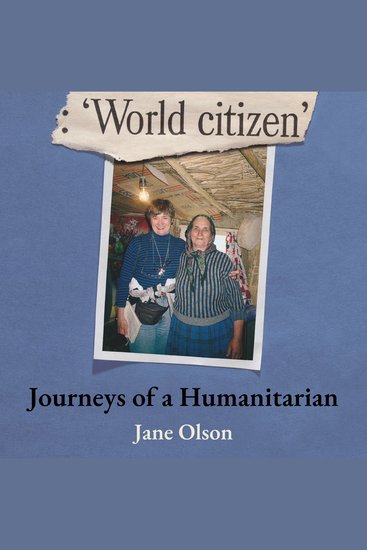
    These stories are about light and hope in the midst of unimaginable human suffering in war zones and places of extreme poverty around the world. Important lessons from a childhood in rural western Iowa are woven throughout, as are examples of human strength and resiliency. Each chapter can be read as a complete experience. Intimate details recorded by the author in journals and on film take the reader on memorable journeys with international human rights and humanitarian organizations. Despite being plunged into war zones, crowded refugee camps, and some of the poorest and most disease-affected places on the planet, we learn the life-saving impact of humanitarian intervention, the healing power of community, the importance of justice, and the truth that one caring person can indeed make a difference. To be a World Citizen is to embrace and champion the Universal Declaration of Human Rights, knowing that all lives are valuable and equally deserving of protection and support.
    Ver libro
  • How Does Change Happen? - Scenes from the Frontlines of Activism - cover

    How Does Change Happen? - Scenes...

    Sam Gonçalves

    • 0
    • 0
    • 0
    Mass protests and direct action have been familiar tactics against the many crises of the 21st century. Though methods vary, there's a collective longing for meaningful and transformative action. Some are deemed too weak, others too disruptive: from Instagram tiles to cans of soup thrown on famous paintings.
    Through conversations with activists and organisers, Sam Gonçalves recounts stories of protest and the fight for change, from a community of landless workers in Southern Brazil, to chefs unionising their workplace in Glasgow, Scotland. These narratives reveal the opportunities and challenges that are part of the difficult work of creating change, a wrestling with the question: how does change happen?
    Having a 'positive impact' in the world is often relegated to the 'personal', an individual endeavour. Gonçalves investigates that assumption and explores ways communities have resisted collectively, and fought against the individualising forces surrounding them.
    Ver libro
  • The School And Society - cover

    The School And Society

    John Dewey

    • 0
    • 0
    • 0
    "School and Society" is a book written by John Dewey, a philosopher and educator, in 1899. In this book, Dewey advocates for a more progressive and democratic approach to education that emphasizes the importance of practical learning and social experience. 
    Dewey argues that traditional education, which focuses on rote memorization and standardized testing, fails to prepare students for real-life situations and inhibits their ability to think critically and creatively. Instead, he suggests that education should be based on the interests and experiences of the students, and should involve hands-on activities and problem-solving exercises. 
    Furthermore, Dewey believes that education should not be isolated from society, but should be integrated into the community and reflect the values and needs of the society. He asserts that education should help students develop social consciousness and promote democracy by encouraging cooperation, tolerance, and social responsibility. 
    Overall, "School and Society" is a seminal work in the history of education, as it paved the way for the development of progressive education, which continues to influence educational theory and practice to this day
    Ver libro
  • Why Religion? - A Personal Story - cover

    Why Religion? - A Personal Story

    Anónimo

    • 0
    • 0
    • 0
    New York Times bestseller 
    One of PW’s Best Books of the Year 
    One of Amazon’s Best Books of the Month 
     
    Why is religion still around in the twenty-first century? Why do so many still believe? And how do various traditions still shape the way people experience everything from sexuality to politics, whether they are religious or not? In Why Religion? Elaine Pagels looks to her own life to help address these questions. 
    These questions took on a new urgency for Pagels when dealing with unimaginable loss—the death of her young son, followed a year later by the shocking loss of her husband. Here she interweaves a personal story with the work that she loves, illuminating how, for better and worse, religious traditions have shaped how we understand ourselves; how we relate to one another; and, most importantly, how to get through the most difficult challenges we face. 
    Drawing upon the perspectives of neurologists, anthropologists, and historians, as well as her own research, Pagels opens unexpected ways of understanding persistent religious aspects of our culture. 
    A provocative and deeply moving account from one of the most compelling religious thinkers at work today, Why Religion? explores the spiritual dimension of human experience.
    Ver libro
  • University - A Reckoning - cover

    University - A Reckoning

    Lee C. Bollinger

    • 0
    • 0
    • 0
    The American university―one of the most successful institutions in human history―is facing an unprecedented assault from the president of the US. Experts on authoritarianism have drawn comparisons to other countries where strongmen subdued universities as part of their power grabs. Yet as former Columbia president Lee C. Bollinger points out in his account of the university's significance, in such dire times one has no choice but to state clearly and forcefully what one stands for. 
     
    Bollinger reveals how the structure of the university contributes to the success of the American system―because it provides those who study and work within it a degree of creative freedom hard to find elsewhere―and why that structure is both impossible to recreate and vulnerable to outside attack. The fundamental mission of the university is to enhance knowledge, but this is not merely a high-minded idea. It is, as Bollinger demonstrates, a notion rooted deeply in the Constitution, specifically the First Amendment, the basis of our political and social life. The university helps realize the First Amendment; the First Amendment helps make the university. Bollinger argues that, with the press diminished, the university remains the only source of truth-seeking for those who still believe in democracy. The university must be defended if the American experiment is to continue.
    Ver libro