Junte-se a nós em uma viagem ao mundo dos livros!
Adicionar este livro à prateleira
Grey
Deixe um novo comentário Default profile 50px
Grey
Assine para ler o livro completo ou leia as primeiras páginas de graça!
All characters reduced
Anonymous - cover
LER

Anonymous

Simone Malacrida

Editora: BookRix

  • 0
  • 0
  • 0

Sinopse

The pursuit of the vain hopes of success and the total invisibility of entire segments of the population are the two complementary visions that characterize the protagonists of this novel.
Seven stories, separated in places and environments, meet only on a chronological level, leaving each immersed in anonymity, the only possible solution between an unattainable affirmation and a tragedy not consonant with the characteristics of contemporary society.
Disponível desde: 18/04/2023.
Comprimento de impressão: 458 páginas.

Outros livros que poderiam interessá-lo

  • Evening Guest An - From their pens to your ears genius in every story - cover

    Evening Guest An - From their...

    Alexander Kuprin

    • 0
    • 0
    • 0
    Alexander Kuprin was born in Narovchat, Penza in Russia on 7th September 1870. 
    At 3 his Father died and he and mother moved to Moscow. By 10 he was enrolled at the Second Moscow Military High School and there his interest in literature began. The Alexander Military Academy followed and two years later he was a sub-lieutenant and posted to an Infantry Regiment for a further four years. 
    Despite his duties he was a now a keen writer and published his first short story at this time. His military duties also garnered him experiences for his breakthrough work ‘The Duel’.  Leaving the military he left for Kiev to work for local newspapers.  He continued to publish both stories and novels and by 1901 he was in St Petersburg becoming part of a group that included Chekhov, Ivan Bunin, Maxim Gorky and Leonid Andreyev.  
    In the years that followed further controversial works and acclaim followed.  His comments on the regime meant he was also put under secret police surveillance.   
    As World War I erupted, Kuprin opened a military hospital but was then given command of an infantry company in Finland. He was soon discharged on grounds of ill health.  
    The October Revolution saw him praise Lenin, but he warned that the Bolsheviks threatened Russian culture and might cause further widespread suffering to the peasants.  As Civil War raged he took his family to Helsinki and then on to Paris. 
    Exile saw his talents decline further and his succumbing to alcoholism. He became lonely and withdrawn. The family's poverty increased his malaise.   
    In May 1937, the Kuprin’s returned to Moscow.  He now saw his work published but wrote almost nothing new.  In 1938 his health rapidly deteriorated.  Already suffering from a kidney problems and sclerosis, he had now developed cancer of the oesophagus.  
    Alexander Kuprin died on 25th August 1938.
    Ver livro
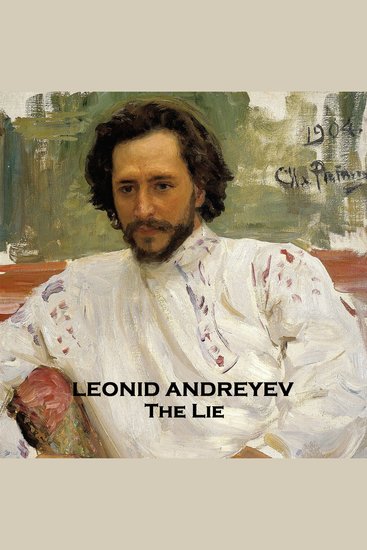
  • The Lie - From their pens to your ears genius in every story - cover

    The Lie - From their pens to...

    Leonid Andreyev

    • 0
    • 0
    • 0
    Leonid Nikolaievich Andreyev was born on 21st August in Oryol, Russia to a middle-class family of Polish, Ukranian and Finnish ancestry. 
    He studied law in Moscow before working as a police-court reporter for a daily newspaper.  His literary efforts at this time were confined to poetry and those he did try to get published were all rejected.  
    In 1898 his first short story ‘Bargamot and Garaska’, published in the ‘Kurier’ newspaper caught the attention and friendship of Maxim Gorky.  Andreyev now discarded any other career path apart from that of author. 
    His first collection of short stories appeared in 1901 and sold over a quarter of a million copies.  He was a sensation. Using his interest in psychology and psychiatry gave him an almost unrivalled ability to delve into the human psyche and create astonishing characters. 
    During the first Russian revolution Andreyev was a staunch defender of democratic ideals and many of his stories reflected the heated mood of the times. With the 1905 Revolution’s failure his work became pessimistic and despairing. By the beginning of the following decade he began losing his audience to new literary movements such as the Futurists. 
    He published little after 1914 except political writings, instead working as the literary editor of the ‘Russian Will’ newspaper.  When the Bolsheviks took power he sensed catastrophe was coming and moved to Finland where he spent his last years in poverty distraught at the outcome of the Revolution. 
    Leonid Andreyev died of heart failure on 12th September 1919 at the age of 48 in Mustamäki, Finland. 
    His classic story ‘Lazarus’ brilliantly tells the story of Christ’s disciple, forced to wander the earth for all time is both chilling and heart-breaking in its Russian setting.
    Ver livro
  • Make Yourselves at Home: And Other Stories - cover

    Make Yourselves at Home: And...

    Katherine Elberfeld

    • 0
    • 0
    • 0
    These stories of small-town life in the American South evoke a sense of pleasant, polite community, with some blessed by strong family ties. But beneath the surface, these tales—some comic, some dark, and some both—reveal the secrets and resentments that fester in the past and haunt the present. 


    In the tradition of Southern writers like Flannery O’Connor, Carson McCullers, and Eudora Welty, Katherine Elberfeld has created eccentric characters ranging from slightly odd to downright sinister. Her stories are about choices and change, with characters confronting what life has dealt them, making mistakes—sometimes for the better, and sometimes for the worse.
    Ver livro
  • Six of the Best - John Galsworthy - Their legacy in 6 classic stories - cover

    Six of the Best - John...

    John Galsworthy

    • 0
    • 0
    • 0
    John Galsworthy was born on the 14th August 1867 on the family estate, Parkfield, in Kingston-upon-Thames.  His family’s wealth came from the shipping industry 
    At age nine he began his education at Saugeen, a Bournemouth preparatory school, before moving to Harrow school in 1881, distinguishing himself as an athlete.  
    Galsworthy attended New College, Oxford to read law and left with a second-class degree with honours in 1889. The bar called him in 1890 but Galsworthy decided he would rather run the family’s shipping business. This also meant travelling to destinations such as Vancouver, South Africa and Australia. 
    In 1895 Galsworthy began a decade long affair with Ada Nemesis Pearson Cooper, the wife of his first cousin. It was only when, in 1905, she divorced and married Galsworthy that their affair became known. 
    His literary career began in 1897 with a short story volume, ‘From the Four Winds’, with the pseudonym John Sinjohn as were three further works. Under his own name, in 1904, came ‘The Island Pharisees’, a novel of social observation, seasoned with flashes of satire and propaganda. He also switched from small, independent publishers to the larger Heinemann and to whom he remained for the duration of his career. 
    1906 saw first major play, ‘The Silver Box’, and the novel ‘The Man of Property’. Each to considerable acclaim. The latter was the first in ‘The Forsyte Saga’ trilogy written between 1906 and 1921. It dealt with the questions of status, class and materialism through Soames Forsyte, who is acutely aware of his ‘new money’ status. Jealous of his wife, his machinations drive her into the arms of another. Soames engages in a terrible revenge with terrible consequences.  
    His social agenda was enlightened particularly in his condemnation over the use of solitary confinement in prisons, his attacks on theatrical censorship and campaigning for animal rights. 
    Galsworthy, having been passed over for active service, spent much of the First World War working as an orderly in a field hospital in France. 
    Despite his it was only in 1920 that he had his first blockbuster play ‘The Skin Game’, a melodrama dealing with ethics, property and class.  
    In 1920 ‘In Chancery’ also arrived with further discourse on the marital disharmony between Soames Forsyte and his wife.  
    The appreciation of his work gradually shifted from plays to novels, particularly through his detailing English social difference, tension and pretension with the Forsytes.  A second trilogy, ‘A Modern Comedy’, followed, examining his love for his daughter Fleur and the English commercial upper-middle class, its ideologies and Soames’ poisonous materialism.  
    Having rejected a knighthood in 1918 he was appointed, in 1929, to the Order of Merit. Galsworthy spent his last years writing a third Forsythe trilogy, ‘End of the Chapter’.   
    In 1932 he was awarded the Nobel Prize, but by now failing health meant he was too ill to attend the ceremony. 
    John Galsworthy died at his Hampstead home of a brain tumour on 31st January, 1933. He was cremated and his ashes scattered from an aeroplane over the South Downs.
    Ver livro

  • The Happy Tradies - Bushfire - cover

    The Happy Tradies - Bushfire

    Faith Charity

    • 0
    • 0
    • 0
    ‘The Happy Tradies’ is a collection of short animated stories about tradies and what they do in their daily work to solve problems. 
    Their main drive is to get things done for other people who need their skills and in return the tradie have an enriched life. 
    There is always a mystery or crisis for the tradies to solve and they can do it because they have the skills and knowledge and the tools. 
    Ver livro
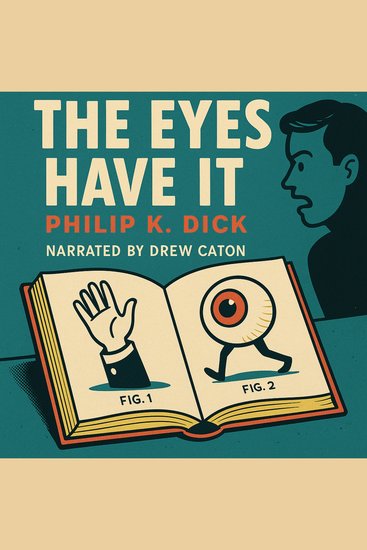
  • The Eyes Have It - cover

    The Eyes Have It

    Philip K. Dick

    • 0
    • 0
    • 0
    What if ordinary language hid extraordinary secrets? 
    Philip K. Dick’s delightfully strange short story The Eyes Have It takes a single misunderstanding and spirals it into full-blown paranoia in the way only Dick can. 
    When an unsuspecting reader opens a simple paperback, he discovers bizarre phrases that seem to describe humans casually removing eyes, hands, and limbs as if it were nothing. Horrified, he becomes convinced he has stumbled onto a hidden truth: alien beings who can detach their body parts walk among us — and the book is their confession. 
    What follows is a hilarious and unsettling descent into misunderstanding, speculation, and fear. With Dick’s trademark mix of satire, sci-fi curiosity, and slippery reality, the story skewers the way we interpret the world around us — and how easily imagination can outrun truth. 
    Narrated with sharp wit and perfect comic timing by Drew Caton, this short tale delivers a punch of classic speculative weirdness in just minutes. A must-listen for fans of retro sci-fi, humor with a paranoid twist, and the early works of Philip K. Dick.
    Ver livro