¡Acompáñanos a viajar por el mundo de los libros!
Añadir este libro a la estantería
Grey
Escribe un nuevo comentario Default profile 50px
Grey
Suscríbete para leer el libro completo o lee las primeras páginas gratis.
All characters reduced
A Handbook of Attention Deficit Hyperactivity Disorder (ADHD) in the Interdisciplinary Perspective - cover

A Handbook of Attention Deficit Hyperactivity Disorder (ADHD) in the Interdisciplinary Perspective

Simone Aparecida Cappellini, Fábio Henrique Pinheiro

Editorial: Bentham Science Publishers

  • 0
  • 0
  • 0

Sinopsis

Attention Deficit Hyperactivity Disorder (ADHD) is a genetic and neurological condition that compromises the academic performance of children. From an educational context, knowledge about the cognitive-linguistic difficulties faced by these students can improve the academic and social quality life of affected children. This handbook presents an interdisciplinary perspective of Attention Deficit Hyperactivity Disorder (ADHD). Educators and healthcare professionals can broaden their knowledge of the clinical and educational characteristics of students with ADHD. Topics covered in the handbook include the clinical features and genetics of ADHD, educational guidelines on reading, writing and learning processes and multidisciplinary interventions. Parents and teachers can apply the information in this handbook to assist children with ADHD in the classroom.
Disponible desde: 16/02/2024.


Otros libros que te pueden interesar

  • Mamerto Gueritz - A Country Catholic 1823–1912 - cover

    Mamerto Gueritz - A Country...

    David Gunn-Johnson

    • 0
    • 0
    • 0
    This is the story of Mamerto Gueritz, a country priest in the second half of the nineteenth century. His is a fascinating tale, with the adventures of his father and grandfather in Spain and the subsequent deeds of his children, framing the story of the man himself.
    
     
    However, Mamerto Gueritz also offers an illustration of the ways in which the Catholic Revival in the Church of England, the Oxford Movement, spread and took root in the remotest corners of the kingdom. His story tells a much wider tale of the renewal of the Church, the revival of a glorious liturgical heritage and the search for holiness which, for Gueritz and many of his peers, was the driving force behind it all.
    
     
    Mamerto’s father had been an officer in the Royal Guard of Spain but his opposition to the absolutism of Ferdinand VII meant that he and his family had to flee. The period between the time of Gueritz’ arrival as an infant refugee from Spain in 1823 and his death in 1912 may indeed be seen as the time of the emergence and flowering of what became known as the Oxford Movement. However, it was also a time of great conflict and change both in the Church and in society. Such change was not without cost and Mamerto Gueritz shared in it all, both in the battles in London and in his country parish, which proved anything but a safe haven.
    
     
    The reader with a straightforward love of history will find Mamerto’s story a significant addition to their store of knowledge. Those who read widely in Church history, particularly that of the nineteenth century, may find that what seems like familiar ground can be anything but!  The student of the Oxford Movement and the catholic heritage of the Church of England may yet find some further insight from hitherto unreported events and in Mamerto Gueritz find also an encouragement for the work of today.
    Ver libro
  • What We Don't Do - Inaction in the Face of Suffering and the Drive to Do More - cover

    What We Don't Do - Inaction in...

    Nick Cooney

    • 0
    • 0
    • 0
    When we think about whether we are good people leading a good life, we usually think about actions. Bad people do bad things that hurt others. Good people do good things that help others, and they avoid doing bad things. Simple. 


    But while our actions certainly have consequences, today our inactions have far greater and far graver consequences. Bad actions can result in the suffering of a few or several dozen others; inaction can result in the extreme misery of thousands. 


    For nearly our entire history as a species, we lived in small groups with minimal resources, leaving our ability to help others limited. Thanks to massive global populations, huge wealth disparities, and modern technologies, the average person now has more power to improve the lives of others than nearly anyone who has ever lived. But the flip side of that great power is the dizzyingly high cost of inaction, in which lives can hang in the balance with each dollar and hour of time we spend. 


    This is a book about what we don't do. It's about our failures to act and the suffering others endure as a result. It's also about the incredible good that can be achieved when we cultivate an internal drive to do more.
    Ver libro
  • Summary: The Creature from Jekyll Island - A Second Look at the Federal Reserve by G Edward Griffin: Key Takeaways Summary & Analysis - cover

    Summary: The Creature from...

    Brooks Bryant

    • 0
    • 0
    • 0
    Disclaimer: This is a summary book; not the official book & it does not accompany it. 
    Uncover the mysteries of the American financial system in our succinct summary of 'The Creature from Jekyll Island: A Second Look at the Federal Reserve' by G. Edward Griffin. This revealing exploration invites you on a journey into the shadowy corridors of power, shedding light on the origins and operations of the U.S Federal Reserve. 
    Griffin's probing examination raises critical questions about the true nature of this influential institution. Is the Federal Reserve a benign entity serving the public good or a clandestine machine that manipulates economies for the benefit of a select few?
    Ver libro
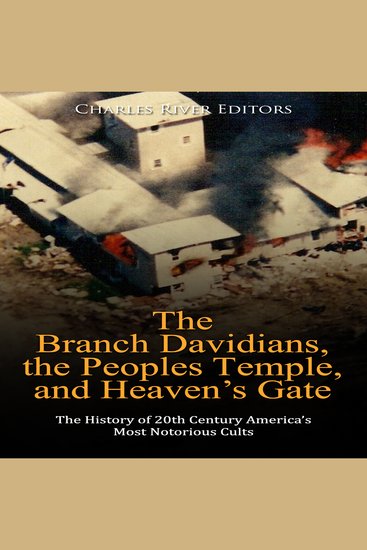
  • Branch Davidians the Peoples Temple and Heaven’s Gate The: The History of 20th Century America’s Most Notorious Cults - cover

    Branch Davidians the Peoples...

    Editors Charles River

    • 0
    • 0
    • 0
    The United States has never had a shortage of cults based on religious teachings and charismatic leaders, but perhaps none are as infamous as Jim Jones and the Peoples Temple, which remain notorious for the mass murder-suicide event in Jonestown, Guyana on November 18, 1978, during which nearly 900 people drank cyanide-laced Flavor Aid, including nearly 300 children. To this day, “drinking the Kool-Aid” is a popular phrase in America to refer to people who blindly follow a person or idea without thought, and the event at Jonestown was the deadliest deliberate act involving Americans in history until the 9/11 attacks. In addition to those deaths, Peoples Temple members also murdered a handful of others on the same day, including journalists, a member trying to leave Jonestown, and Congressman Leo Ryan.  
    	David Koresh, the leader of the Branch Davidians, had deep convictions based on the Book of Daniel and the Book of Revelation, and his sect believed the world was in the power of Satan and that the nations were merging to form a new Babylon. David hoped to establish the kingdom in Jerusalem, where, according to him, he would suffer martyrdom. The headquarters of the sect was a complex called Mount Carmel Center located in Waco, Texas. Koresh claimed to be the mysterious Lamb of Revelation who opens the sealed scroll, as well as the figure who rides the White Horse when the first seal is opened. 
    On paper, the extraordinarily unorthodox ideology spouted by Heaven's Gate ranks near the top of the list of most outlandish end-of-the-world prophecies, and it was built on a blend of Christian, Gnostic, supernatural, New Age, and extraterrestrial lore. Although the cult did not speak in Christian terms, it was clearly apocalyptic, and its belief system was a strange mix between science fiction and the basic message of Revelation.
    Ver libro
  • Hyksos: A Captivating Guide to the Conquerors of Ancient Egypt Who Ruled during the Fifteenth Dynasty - cover

    Hyksos: A Captivating Guide to...

    Captivating History

    • 0
    • 0
    • 0
    Discover the Hyksos: Masters of Ancient Egypt 
    How did a group of foreigners take control of northern Egypt and rule for over a century? Where did they come from? What mark did they leave on Egypt? The story of the Hyksos is one of conquest, culture, and lasting impact. 
    This audiobook provides an easy-to-read history of the Hyksos dynasty, telling the story of people from West Asia who took power during a time of chaos in Egypt. It explores the clashes between the Hyksos and Egyptians, their rule, and the cultural changes they brought. Learn about the innovations the Hyksos introduced that helped shape Egypt into a powerful empire. 
    Discover Answers to Intriguing Questions:What brought the Hyksos to Egypt?Was their takeover sudden and violent, or a gradual shift from within?How did the Hyksos kings rule differently from the Egyptians?Why did they rob tombs?What happened when they introduced horses and chariots?How many Egyptian kings fought the Hyksos before driving them out?Where did the Hyksos go after their defeat? 
    Why This Audiobook? 
    This audiobook is perfect for anyone curious about a lesser-known but fascinating part of ancient Egyptian history. It answers key questions about the Hyksos and their influence on Egyptian culture and technology. With clear language and engaging storytelling, it makes history accessible and exciting. 
    Explore the captivating story of the Hyksos and their impact on one of history's greatest civilizations. 
    Scroll up and click the “add to cart” button to start your journey into the past!
    Ver libro
  • Colombia's Economic Transformation - Historical Insights - cover

    Colombia's Economic...

    Anya Solace

    • 0
    • 0
    • 0
    Colombia's economic transformation has been a complex and dynamic process shaped by historical events, political decisions, and global economic trends. From its early indigenous trade systems to its current standing as one of Latin America's largest economies, Colombia's journey has been marked by periods of growth, crisis, and resilience. Understanding this transformation requires a deep dive into the key factors that have influenced its economy over the centuries. 
    The foundation of Colombia's economy was laid long before Spanish colonization. Indigenous communities engaged in agriculture, trade, and resource management, establishing early economic structures. However, the arrival of the Spanish in the early 16th century drastically altered the economic landscape. The Spanish introduced a mercantilist system that prioritized resource extraction, particularly gold, and forced indigenous labor into exploitative economic activities. This period also saw the beginnings of agricultural exports, as crops like sugar and tobacco became integral to the colonial economy. 
    Following independence in 1810, Colombia faced significant economic instability. The transition from colonial rule to a sovereign state disrupted established trade networks and led to political fragmentation. Wars of independence had devastated infrastructure and financial systems, leaving the new republic struggling to establish a stable economy. The 19th century saw slow economic progress, with regional economies developing independently and a reliance on agriculture persisting. Coffee emerged as Colombia's most valuable export by the late 19th century, setting the stage for greater economic integration and growth.
    Ver libro