¡Acompáñanos a viajar por el mundo de los libros!
Añadir este libro a la estantería
Grey
Escribe un nuevo comentario Default profile 50px
Grey
Suscríbete para leer el libro completo o lee las primeras páginas gratis.
All characters reduced
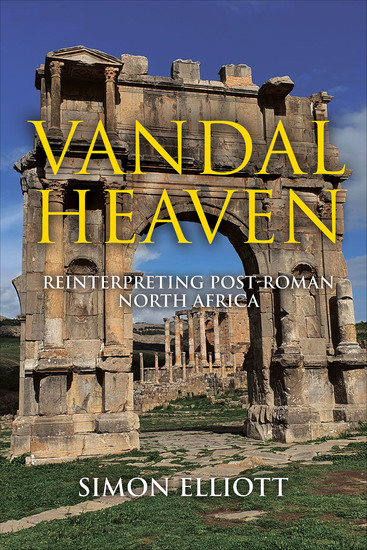
Vandal Heaven - Reinterpreting Post-Roman North Africa - cover

Vandal Heaven - Reinterpreting Post-Roman North Africa

Simon Elliott

Editorial: Casemate

  • 0
  • 0
  • 0

Sinopsis

A new study that challenges previous interpretations of post-Roman North Africa.

North Africa was one of the richest parts of the Roman Empire, the agricultural powerhouse of the Mediterranean. It was also home to some of the emperor’s biggest imperial estates, and prosperous cities of all kinds. Its loss to the Vandals in the first half of the 5th century AD was the mortal blow which both precipitated the fall of the western empire, and set the eastern empire back for decades. Its reconquest then became an obsession with each new emperor in Constantinople. Time and again the eastern Romans failed in this goal, until Justinian I finally succeeded in the AD 530s. Although North Africa’s restoration to the world of Rome only lasted a short time, it has widely been regarded as a positive development.

However, new research—published here for the first time—shows that post-Roman North Africa thrived under the Vandals. To them it was Vandal heaven, a place where they found a way as the new incumbent elite to live comfortably alongside the late Roman inhabitants, despite their different interpretations of Christianity. Together, the two cultures flourished.

When the eastern Romans – now styled Byzantines – returned, they weren’t welcome. This is evidenced in the surviving built environments of this new period of North African history, namely chains of small forts along the frontier and interior, where the Byzantines used mounted troops to keep an unhappy local population under control.

Dr Elliott not only presents a brand-new interpretation of post-Roman North Africa, but makes the case that the Arab Conquest was so successful in this region because the Byzantine overlords were so unpopular. Furthermore his argument explains how the region today came to be part of the Arab world, in contrast to the regions along the northern Mediterranean freeboard, which maintain their Roman-ness to this day.
Disponible desde: 31/03/2024.
Longitud de impresión: 240 páginas.
Otros libros que te pueden interesar

  • Perfect Victims - and the Politics of Appeal - cover

    Perfect Victims - and the...

    Mohammed El-Kurd

    • 0
    • 0
    • 0
    "Mohammed El-Kurd has written a new Discourse on Colonialism for the twenty-first century." —Robin D. G. Kelley 


    Perfect Victims is an urgent affirmation of the Palestinian condition of resistance and refusal—an ode to the steadfastness of a nation. 


    Palestine is a microcosm of the world: on fire, stubborn, fragmented, dignified. While a settler colonial state continues to inflict devastating violence, fundamental truths are deliberately obscured—the perpetrators are coddled while the victims are blamed and placed on trial. 


    Why must Palestinians prove their humanity? And what are the implications of such an infuriatingly impossible task? With fearless prose and lyrical precision, Mohammed El-Kurd refuses a life spent in cross-examination. Rather than asking the oppressed to perform a perfect victimhood, El-Kurd asks friends and foes alike to look Palestinians in the eye, forgoing both deference and condemnation. 


    How we see Palestine reveals how we see each other; how we see everything else. Masterfully combining candid testimony, history, and reportage, Perfect Victims presents a powerfully simple demand: dignity for the Palestinian.
    Ver libro
  • Rethinking Narcissism - The Bad-and Surprising Good-About Feeling Special - cover

    Rethinking Narcissism - The...

    Anónimo

    • 0
    • 0
    • 0
    Harvard Medical School psychologist and Huffington Post blogger Craig Malkin addresses the "narcissism epidemic," by illuminating the spectrum of narcissism, identifying ways to control the trait, and explaining how too little of it may be a bad thing. 
    "What is narcissism?" is one of the fastest rising searches on Google, and articles on the topic routinely go viral. Yet, the word "narcissist" seems to mean something different every time it's uttered. People hurl the word as insult at anyone who offends them. It's become so ubiquitous, in fact, that it's lost any clear meaning. The only certainty these days is that it's bad to be a narcissist—really bad—inspiring the same kind of roiling queasiness we feel when we hear the words sexist or racist. That's especially troubling news for millennials, the people born after 1980, who've been branded the "most narcissistic generation ever." 
    In Rethinking Narcissism readers will learn that there's far more to narcissism than its reductive invective would imply. The truth is that we all fall on a spectrum somewhere between utter selflessness on the one side, and arrogance and grandiosity on the other. A healthy middle exhibits a strong sense of self. On the far end lies sociopathy. Malkin deconstructs healthy from unhealthy narcissism and offers clear, step-by-step guidance on how to promote healthy narcissism in our partners, our children, and ourselves.
    Ver libro
  • Ending Isolation - The Case Against Solitary Confinement - cover

    Ending Isolation - The Case...

    Christopher William Blackwell,...

    • 0
    • 0
    • 0
    The injustice and cruelty of the US carceral system find their barbaric apogee in the practice of solitary confinement. Once deemed a form of torture by the US Supreme Court, "the hole" is still wrongly used as a solution to prison overcrowding and violence. But locking someone in a cell the size of a parking space for months or years causes profound psychological harm. For Christopher Blackwell, it was a harrowing ordeal that changed his life forever. Ending Isolation weaves Chris's vivid account with other stories from solitary, alongside insights from legal and medical experts. Through these narratives and undeniable research, the book makes a powerful case for abolishing this cruel and unusual punishment.
    Ver libro
  • Self Less - Lessons Learned from A Life Devoted to Servant Leadership in Five Acts - cover

    Self Less - Lessons Learned from...

    Len Jessup

    • 0
    • 0
    • 0
    One night, following a painful divorce, Len Jessup hit what he calls the “the lowest moment” of his life. He would go on to credit this moment as the start of his journey to selflessness. In Self Less, you’ll follow Len’s story of emotional vulnerability. Blending personal narrative with research, Jessup argues selfless leaders can maximize impact by guiding teams, not controlling them. He stresses the power of constant learning, surrounding yourself with people far smarter than you, and service to others. For leaders seeking to create meaningful change through personal growth, Jessup provides inspiration along with practical advice on inclusive leadership and securing stakeholder buy-in. Self Less offers a roadmap to lead change through humility, kindness, and care for employees and partners.
    Ver libro
  • Factfulness - cover

    Factfulness

    Hans Rosling

    • 0
    • 0
    • 0
    This work provides a concise synthesis of the key insights and analysis from Factfulness. It is an independent summary, not the original book, and has no affiliation with or endorsement from the original publication. Created for readers who want a clear, thought-provoking overview, it distills the central themes and ideas while preserving the depth and relevance of the work. 
    An argument for a fact-based, less fearful view of the world, this book shows how global data on health, wealth and education contradict widespread pessimism. By exposing the instincts and biases that make people think everything is getting worse, it teaches simple habits for reading statistics and seeing long-term human progress more clearly.
    Ver libro
  • Media Circus - A Look at Private Tragedy in the Public Eye - cover

    Media Circus - A Look at Private...

    Kim Goldman, Tatsha Robertson

    • 0
    • 0
    • 0
    Imagine losing a loved one in the public eye.   A media frenzy ensues and spreads your family name through the news. Reporters ambush you, and across the country, strangers gossip about your personal loss.   Welcome to the circus.   No one understands better than Kim Goldman the complex emotions of individuals suffering a personal tragedy under the relentless gaze of the media. During the famed O.J. Simpson trial, Kim, whose brother, Ron Goldman, was brutally murdered, became the public poster child for victims suffering in the public eye.   In Media Circus, Goldman, now a dedicated victims' advocate who works with families across the country, presents the first collective look at these ordinary, grieving victims—forced to manage their very private trauma and despair in a very public way.   Through candid interviews and detailed, original reporting, Media Circus delivers riveting, humanizing, and inspiring stories from the victims and survivors of violent crimes who found themselves the focus of national media attention. Its heartfelt narratives showcase the unique challenges of coping with and healing from grief when the whole world is watching.   In these pages, the families of other victims tell their stories, including:  Esaw And Emerald Garner, wife and daughter of police brutality victim Eric Garner (2014)  Scarlett Lewis, mother of six-year-old Newtown tragedy victim Jesse Lewis (2012)  Debra Tate, sister of Charles Manson murder victim Sharon Tate (1969)  Judy Shepard, mother of gay hate-crime victim Matthew Shepard (1998)  Mildred Muhammad, ex-wife of the DC Sniper (2002)  Tere Duperrault Fassbender, survivor of family's brutal murder at sea (1961)  Collene Campbell, sister of murdered NASCAR driver Mickey Thompson (1988)  Marie Monville, wife of the Amish Shooter (2006)  Dave And Mary Neese, parents of teen murder victim Skylar Neese (2012)  Scott And Kathleen Larimer, parents of Aurora theater shooting victim John Larimer, and  Shirley Wygal, mother of Aurora theater shooting victim Rebecca Wingo (2012)   Media Circus goes beyond the names and faces to show the real victims behind the stories.
    Ver libro