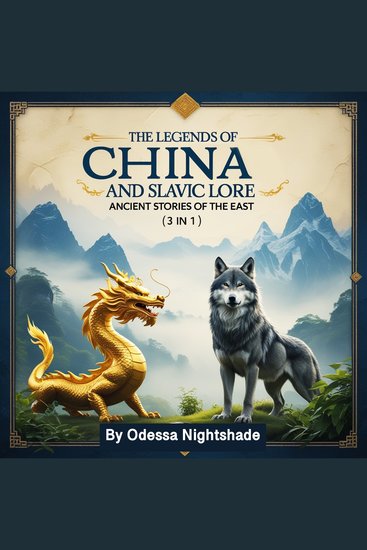
Begleiten Sie uns auf eine literarische Weltreise!
Buch zum Bücherregal hinzufügen
Grey
Einen neuen Kommentar schreiben Default profile 50px
Grey
Jetzt das ganze Buch im Abo oder die ersten Seiten gratis lesen!
All characters reduced
History of the Jews in Russia and Poland (Complete Three-Volume Edition) - Enriched edition - cover

History of the Jews in Russia and Poland (Complete Three-Volume Edition) - Enriched edition

Simon Dubnow

Übersetzer Israel Friedlaender

Verlag: DigiCat

  • 0
  • 0
  • 0

Beschreibung

Simon Dubnow's monumental work, "History of the Jews in Russia and Poland," spans three comprehensive volumes that meticulously chronicle the rich and complex narrative of Jewish life from the Middle Ages to the early 20th century. Employing a scholarly yet accessible literary style, Dubnow combines rigorous historical analysis with vivid storytelling, capturing the socio-political upheavals, cultural developments, and religious transformations that shaped Jewish communities. This definitive edition not only serves as a key resource for understanding the multifaceted experiences of Jews in these regions but also reflects the broader trends of nationalism and identity formation that characterized Jewish life in Eastern Europe. A prominent Jewish historian and moral thinker, Simon Dubnow's own experiences as a 19th-century Jewish intellectual significantly influenced his approach to historical scholarship. Born in what is now Belarus, Dubnow was deeply engaged with the socio-political issues of his time, witnessing the rise of anti-Semitism and the quest for Jewish autonomy. His commitment to documenting the unique history of Jewish communities emerged from a desire to preserve their heritage and affirm their place in the broader tapestry of world history. This essential three-volume set is a must-read for scholars, students, and anyone interested in Jewish history or Eastern European studies. Dubnow's work not only enlightens readers about the past but also encourages a deeper understanding of contemporary Jewish identity and its historical roots, making it a valuable addition to any library.

In this enriched edition, we have carefully created added value for your reading experience:
- A comprehensive Introduction outlines these selected works' unifying features, themes, or stylistic evolutions.
- A Historical Context section situates the works in their broader era—social currents, cultural trends, and key events that underpin their creation.
- A concise Synopsis (Selection) offers an accessible overview of the included texts, helping readers navigate plotlines and main ideas without revealing critical twists.
- A unified Analysis examines recurring motifs and stylistic hallmarks across the collection, tying the stories together while spotlighting the different work's strengths.
- Reflection questions inspire deeper contemplation of the author's overarching message, inviting readers to draw connections among different texts and relate them to modern contexts.
- Lastly, our hand‐picked Memorable Quotes distill pivotal lines and turning points, serving as touchstones for the collection's central themes.
Verfügbar seit: 10.12.2022.
Drucklänge: 765 Seiten.

Weitere Bücher, die Sie mögen werden

  • Brothers of Olympus The: The History of the Ancient Greek Pantheon’s Most Powerful Gods - cover

    Brothers of Olympus The: The...

    Charles River Editors

    • 0
    • 0
    • 0
    Zeus is a god of apparent paradox: sublimely regal yet ridiculously fickle, a giver of laws but a slave to his own passions, a being of incredible power who is desperate to possess that which he cannot have. As the leader of the Greek pantheon on Mount Olympus, Zeus was the god of kingship (and the associated elements of law, oaths, the state and the protection of property) and the god of storms, controlling lightning, wind and thunder.  
    	In many ways, one of ancient Greece’s most complex gods is also the most understandable, since he seems so human, and because there is plenty of information about him that survived, including the original legends about his birth, his early deeds and his many relationships with other gods, lovers, and humans. Furthermore, scholars have been able to analyze the historical roots of "Zeus" as a concept, identifying what gods he is related to among other cultures, where the legends of Zeus originated, and what this information says about the ancient Greeks.  
    	One of the reasons Zeus remains one of the most recognizable gods in history is because of the spread of his influence. Due to the conquests of Alexander the Great, Zeus was brought along with other elements of Hellenization to Egypt and the Near East, and a few centuries later, Rome all but adopted him as their own chief god, Jupiter. From there, he was exported around the Roman Empire and fused with numerous other local gods in the process. Ultimately, Zeus was a prominent god from the period of pre-recorded history until the Christianization of Greece, which was complete by the early 7th century A.D. 
    Zum Buch
  • Silurian Period The: The History of the Prehistoric Era When Life Formed on Land - cover

    Silurian Period The: The History...

    Editors Charles River

    • 0
    • 0
    • 0
    The early history of Earth covers such vast stretches of time that years, centuries, and even millennia become virtually meaningless. Instead, paleontologists and scientists who study geochronology divide time into periods and eras.  
    The Silurian Age occurred during the mid-Paleozoic, and despite its relative brevity, the era developed some interesting features that promulgated life on Earth. Roderick J. Murchison, a British geologist, named a sequence of rocks after a group of indigenous people called the Silures living in Wales during the mid-19th century. Despite their absence in the Silurian Age, the name was bestowed to honor the tribe. 
    Murchison was inspired by close friend Adam Sedgwick, who named the Cambrian Age, employing the Latin word for Wales. In 1835, the two presented a paper together entitled On the Silurian and Cambrian Systems. Their separate categorizing systems caused a serious enough disagreement over chronology that the friendship ended bitterly. The alternative name for Siluria was Gotlandia after the Baltica island of Gotland. 
    What ultimately precipitated these subdivisions in the chronology was a “famous unconformity” on the River Onny in Shropshire. It indicated a natural break within “classic Silurian on its own home territory.” The timeline for beginning and end dates has remained imprecise, but the order of fossilized discoveries has proven correct. Joachim Barrande, a French paleontologist, geologist, and botanist, pursued the same issue in the Prague Basin of Bohemia. Studying the Paleozoic trilobite for a period of 10 years, his extensive work was published in his Silurian System of Central Bohemia. Altogether, he identified and analyzed over 4,000 new fossil species, producing the enormous Encyclopedia of Fossils, numbering over 6,000 pages.
    Zum Buch
  • TEAS Secrets: Transform Your Nursing Journey with Confidence! - "Master the TEAS! Discover dynamic audio lessons that fuel your nursing aspirations with confidence!" - cover

    TEAS Secrets: Transform Your...

    Cyrus Merrick

    • 0
    • 0
    • 0
    TEAS Secrets: Transform Your Nursing Journey with Confidence!  
    Are you ready to advance your career in nursing and solidify your knowledge to pass the TEAS exam with flying colors? 
    Looking for a thorough guide that covers everything you need to succeed on the TEAS exam? 
    Your search ends here! 
    This guide is your ultimate resource for enhancing your understanding, honing your skills, and engaging in practical exercises—all designed to set you up for success. 
    Updated for the 2024-2025 TEAS Exam structure! 
    Key Features of this Comprehensive Guide: 
    - In-depth insights into the TEAS Certification process 
    - Detailed explanations of essential nursing concepts 
    - Effective strategies for exam preparation and tackling challenging questions 
    This guide stands out due to its extensive coverage, which is crucial for your exam success. We don’t just touch on topics; we explore them with clarity and detail. 
    Please note that this guide is an independent resource and is not affiliated with any official TEAS entity. 
    Crafted with a straightforward structure and easy-to-understand language, our TEAS Exam Guide ensures smooth transitions between topics. Say goodbye to complicated jargon and embrace clear, accurate, and technically sound content. 
    So why wait? Click the BUY NOW button, secure your guide, and embark on your journey to confidently ace the TEAS exam! 
    Transform your nursing journey today with confidence!
    Zum Buch
  • The Congress of Vienna - Redrawing Europe's Map - cover

    The Congress of Vienna -...

    Nova Ashford

    • 0
    • 0
    • 0
    The Congress of Vienna, held between 1814 and 1815, came at a pivotal moment in European history. The continent had just endured the upheaval caused by the Napoleonic Wars, which had left Europe in chaos and instability. Napoleon Bonaparte's rise to power and subsequent expansionist ambitions had dramatically altered the political landscape, reshaping borders and redrawing alliances. By 1814, with Napoleon's defeat and exile, Europe was left to deal with the aftermath of a decade of war and turmoil. The challenge for the leaders of the major powers was to rebuild a stable Europe while ensuring that the events which had led to war would not be repeated. 
    The immediate concern was to restore order and prevent any single nation from becoming too powerful. Napoleon’s domination of Europe, followed by his eventual fall, had created an imbalance of power that threatened the security of the continent. The leaders of the great powers—Great Britain, Austria, Prussia, and Russia—realized that to avoid future conflict, they needed to create a system that would maintain peace and stability through diplomacy and careful balancing of power. This would be achieved not by restoring the status quo exactly as it had been before the Napoleonic Wars, but by reshaping Europe in a way that would prevent any one nation from becoming overwhelmingly dominant. 
    The Congress of Vienna aimed to establish a new framework based on the principles of legitimacy and a balance of power. Legitimacy referred to the restoration of rightful monarchs who had been overthrown by Napoleon, while the balance of power involved redistributing territory and influence in a way that would prevent any single country from threatening the security of the others. It was a delicate process, as the major powers had competing interests and varying visions of what a stable Europe would look like. Nonetheless, the common goal was to create a system that could provide long-term peace.
    Zum Buch
  • Politics: Book Summary & Analysis - cover

    Politics: Book Summary & Analysis

    Briefly Summaries

    • 0
    • 0
    • 0
    This is a concise summary and analysis of Politics, by Aristotle.
    It is not the original book and is not affiliated with or endorsed by 
    Aristotle.
     
    Ideal those seeking a quick and insightful overview.
     
    Delve into the timeless exploration of human society and governance in Politics, a foundational work of political philosophy. This seminal text examines the nature of citizenship, justice, and the ideal forms of government, offering profound insights into the complexities of human organization and the pursuit of the common good. With reflections on ethics, economics, and the interplay of individual and collective interests, Politics remains a vital resource for understanding the philosophical roots of modern political systems.
    Zum Buch
  • Web of Deception - Unraveling Cyber Espionage World - cover

    Web of Deception - Unraveling...

    Davis Truman

    • 0
    • 0
    • 0
    With this gripping book, embark on an eye-opening journey into the clandestine world of cyber espionage and international intrigue. Delve deep into the intricate web of covert operations orchestrated by the United States National Security Agency (NSA), exploring its far-reaching impact on the global stage, particularly within the Transatlantic region. 
    Prepare to be captivated as this book navigates the intricate landscapes of cyber espionage, revealing the intersection between technological prowess, national security, and global diplomacy. It's a compelling narrative that will challenge perspectives and offer a profound understanding of the delicate balance between surveillance, security, and international relations.
    Zum Buch