¡Acompáñanos a viajar por el mundo de los libros!
Añadir este libro a la estantería
Grey
Escribe un nuevo comentario Default profile 50px
Grey
Suscríbete para leer el libro completo o lee las primeras páginas gratis.
All characters reduced
Totem and Taboo - Enriched edition Resemblances Between the Psychic Lives of Savages and Neurotics - cover

Totem and Taboo - Enriched edition Resemblances Between the Psychic Lives of Savages and Neurotics

Sigmund Freud

Traductor A. A. Brill

Editorial: DigiCat

  • 0
  • 0
  • 0

Sinopsis

In "Totem and Taboo," Sigmund Freud explores the intersection of psychology, anthropology, and sociology to unravel the complexities of human rituals and societal norms. Written in 1913, the book posits that totemism and the taboos associated with it reveal fundamental aspects of the human psyche, revealing connections between primitive societies and the underlying mechanisms of modern civilization. Freud employs a unique blend of psychoanalytic theory and ethnographic analysis, examining the totemic practices found in various cultures and drawing parallels to neuroses in individuals, thereby illuminating the dynamics of collective and individual subconsciousness. Freud, often heralded as the father of psychoanalysis, synthesized various fields of inquiry in his quest to understand the human mind and its development. His experiences and observations, particularly regarding the interplay between culture and psychology, informed his theories on civilization's restraining influence on innate desires. "Totem and Taboo" reflects Freud's ambition to establish a scientific basis for psychoanalysis, deeply rooted in both empirical evidence and speculative reasoning. For readers interested in the psychological foundations of culture, "Totem and Taboo" offers an essential perspective on how collective beliefs shape individual behaviors and neuroses. Freud's groundbreaking ideas encourage introspection into one's own cultural influences, making this book a vital read for anyone seeking to understand the deep-seated connections between our primal instincts and civilized existence.

In this enriched edition, we have carefully created added value for your reading experience:
- A succinct Introduction situates the work's timeless appeal and themes.
- The Synopsis outlines the central plot, highlighting key developments without spoiling critical twists.
- A detailed Historical Context immerses you in the era's events and influences that shaped the writing.
- An Author Biography reveals milestones in the author's life, illuminating the personal insights behind the text.
- A thorough Analysis dissects symbols, motifs, and character arcs to unearth underlying meanings.
- Reflection questions prompt you to engage personally with the work's messages, connecting them to modern life.
- Hand‐picked Memorable Quotes shine a spotlight on moments of literary brilliance.
- Interactive footnotes clarify unusual references, historical allusions, and archaic phrases for an effortless, more informed read.
Disponible desde: 02/06/2022.
Longitud de impresión: 159 páginas.

Otros libros que te pueden interesar

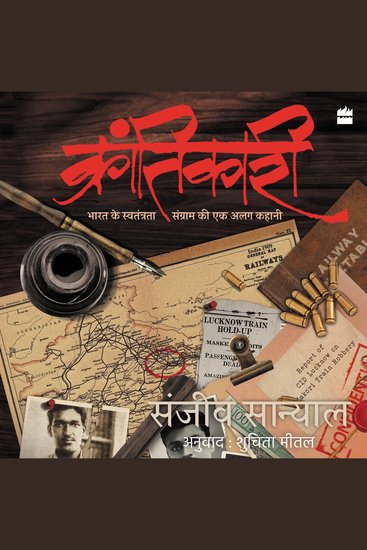
  • Krantikari - Bharat ke Swatantrata Sangram ki Ek Alag Kahani - cover

    Krantikari - Bharat ke...

    Sanjeev Sanyal

    • 0
    • 0
    • 0
    The history of India's struggle for freedom is usually told from the perspective of the non-violent movement. Yet, the story of armed resistance to colonial occupation is just as important. Names such as Vinayak Savarkar, Aurobindo Ghosh, Rashbehari Bose, Bagha Jatin, Sachindra Nath Sanyal, Bhagat Singh, Chandrashekhar Azad and Subhas Chandra Bose are still widely remembered. Their story is almost always presented as acts of individual heroism and not as part of a wider movement that had any overarching strategy or significant impact on the overall struggle for Independence. In reality, the revolutionaries were part of a large network that sustained armed resistance against the British Empire for half a century. They not only created a wide network inside India but also established nodes in Britain, France, Thailand, Germany, Persia, Russia, Italy, Ireland, the United States, Japan and Singapore. At various points, they received official support and recognition from the governments of some of these countries. Even the internal dynamics of the Indian National Congress of the time cannot be understood without the revolutionaries, who enjoyed widespread support within the organization. This was no small-scale movement of naive individual heroism but one that involved a large number of extraordinary young men and women who were connected in multiple ways to each other and to the evolving events of their times.  
    Krantikari, the Hindi translation of the bestselling Revolutionaries, tells their story, one that is replete with swashbuckling adventure, intrigue, espionage, incredible bravery, diabolical treachery and shockingly unpredictable twists of fate.
    Ver libro
  • How It Feels To Be Colored Me - cover

    How It Feels To Be Colored Me

    Zora Neale Hurston

    • 0
    • 0
    • 0
    How It Feels To Be Colored Me was first published in "The World Tomorrow" in May 1928. In this autobiographical piece that focuses on race and 1920s America, Hurston reflects on her early childhood in an all-black Florida town and her first experiences in life where she felt "different."Hurston focuses on the similarities we all share and on her own self-identity in the face of difference. "Through it all," she says, "I remain myself."
    Ver libro
  • Minimalism a way of Life - cover

    Minimalism a way of Life

    Jim Colajuta

    • 0
    • 0
    • 0
    The American way of life is imbued with an evident culture of consumerism and overconsumption. The American Dream has been linked to worldly attitudes and the belief that riches equals happiness. Growing trends in minimalism and the pursuit of happiness, on the other hand, are gaining traction and bringing to light issues such as overconsumption, the physical and mental impacts of clutter, and what actually brings joy.Increasing distractions in everyday life detract from our ability to pay attention and divert our attention from the events that genuinely count. Mindfulness has been shown in the past to be a helpful approach for reducing the deluge of worthless or damaging information. Individuals seeking increased well-being may also benefit from decluttering, according to anecdotal evidence.Is it possible that decluttering, like mindfulness, might increase overall happiness, tranquillity, and mental clarity? Is it true that decluttering boosts confidence, productivity, and relationship happiness? Is it true that decluttering lessens the value of material belongings and feelings of being overwhelmed by "stuff"? In this book, you will find all the answers you are looking for
    Ver libro
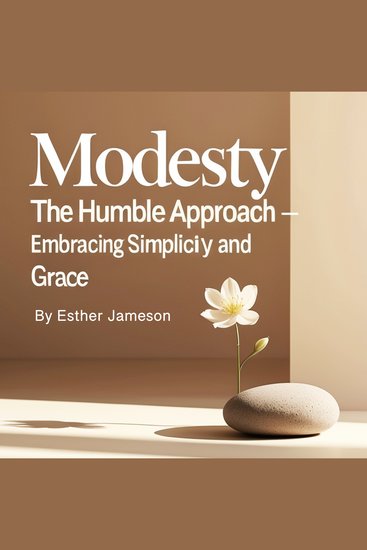
  • Modesty - The Humble Approach - Embracing Simplicity and Grace - cover

    Modesty - The Humble Approach -...

    Esther Jameson

    • 0
    • 0
    • 0
    Modesty is often misunderstood in today's world, where self-expression and visibility are highly valued. It is not about suppression or hiding oneself but rather a way of living that reflects humility, self-respect, and grace. True modesty is not limited to clothing choices but extends to attitudes, behaviors, and the way individuals present themselves to the world. It is about carrying oneself with dignity and avoiding excess, whether in appearance, speech, or lifestyle. 
    Historically, modesty has been deeply rooted in various cultures and traditions, often shaped by religious and philosophical beliefs. Many ancient societies regarded it as a virtue, associating it with wisdom, purity, and moral integrity. From Eastern philosophies emphasizing balance and restraint to Western traditions valuing humility and grace, modesty has been a guiding principle across civilizations. Though its expression has evolved over time, its essence remains unchanged—a conscious effort to practice simplicity and mindfulness in one's actions. 
    In modern society, modesty can be challenging to uphold, as social norms constantly shift and external influences promote self-promotion and material success. The pressure to stand out and gain validation can lead individuals to adopt behaviors that prioritize recognition over authenticity. However, true confidence does not stem from external validation but from an inner sense of self-worth. A modest person does not seek attention or approval but remains secure in their values and choices. This quiet strength allows for deeper connections with others and a greater focus on personal growth rather than superficial appearances.
    Ver libro
  • Edward II - The Unconventional King - cover

    Edward II - The Unconventional King

    Kathryn Warner

    • 0
    • 0
    • 0
    He is one of the most reviled English kings in history. He drove his kingdom to the brink of civil war a dozen times in less than twenty years. He allowed his male lovers to rule the kingdom. He led a great army to the most ignominious military defeat in English history. His wife took a lover and invaded his kingdom, and he ended his reign wandering around Wales with a handful of followers, pursued by an army. He was the first king of England forced to abdicate his throne. Popular legend has it that he died screaming impaled on a red-hot poker, but in fact the time and place of his death are shrouded in mystery. His life reads like an Elizabethan tragedy, full of passionate doomed love, bloody revenge, jealousy, hatred, vindictiveness, and obsession. He was Edward II, and this book tells his story. Using almost exclusively fourteenth-century sources and Edward's own letters and speeches wherever possible, Kathryn Warner strips away the myths which have been created about him over the centuries, and provides a far more accurate and vivid picture of him than has previously been seen.
    Ver libro
  • The Art of War - The Timeless Guide to Strategy Leadership and Victory - A Modern Translation - Adapted for the Contemporary Reader - cover

    The Art of War - The Timeless...

    Sun Tzu, Tim Zengerink

    • 0
    • 0
    • 0
    What if you could anticipate every move, master strategic thinking, and lead with confidence in any situation? 
    The Art of War: The Timeless Guide to Strategy, Leadership, and Victory brings you the ancient teachings of Sun Tzu, now adapted for the modern listener. For over 2,500 years, this legendary work has inspired leaders, strategists, and innovators across disciplines to achieve success through preparation, intelligence, and decisive action. 
    This isn’t just a military guide—it’s a practical framework for achieving success in any area of life. Whether you’re leading a team, navigating challenges in business, or enhancing your decision-making skills, The Art of War offers principles that remain as powerful today as they were on ancient battlefields. 
    What You’ll Discover in This Modern Audiobook: 
    - Master the Art of Strategy: Learn to plan ahead, outthink competitors, and transform challenges into opportunities. 
    - Lead with Clarity and Confidence: Develop the tools to inspire and guide others toward success in any environment. 
    - Achieve Victory Through Preparation: Understand the importance of foresight, adaptability, and timing in overcoming obstacles. 
    - Navigate Life’s Battles: Apply timeless wisdom to business, relationships, personal growth, and more. 
    What Makes This Edition Unique: 
    This modernized audiobook retains the depth and brilliance of Sun Tzu’s original text while making it accessible for today’s listener. Key insights are clearly narrated, ensuring you can quickly absorb and apply these principles to real-world scenarios. 
    Imagine having the ability to make confident decisions, adapt to any situation, and lead yourself—and others—to victory. For centuries, The Art of War has been a cornerstone of strategy, leadership, and success. Now, it’s your turn to unlock its power. 
    Start mastering the art of strategy today. Download your copy now and transform the way you think, act, and lead.
    Ver libro