¡Acompáñanos a viajar por el mundo de los libros!
Añadir este libro a la estantería
Grey
Escribe un nuevo comentario Default profile 50px
Grey
Suscríbete para leer el libro completo o lee las primeras páginas gratis.
All characters reduced
Leonardo da Vinci: A Psychosexual Study of an Infantile Reminiscence - cover

Leonardo da Vinci: A Psychosexual Study of an Infantile Reminiscence

Sigmund Freud

Traductor A. A. Brill

Editorial: DigiCat

  • 0
  • 0
  • 0

Sinopsis

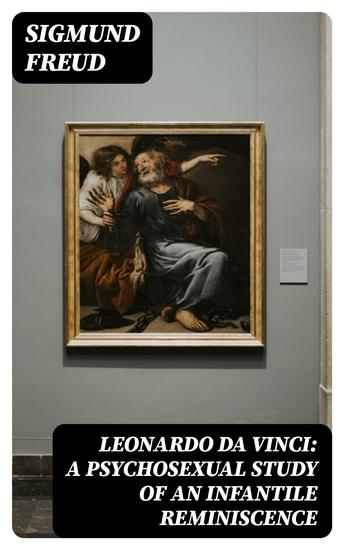
In "Leonardo da Vinci: A Psychosexual Study of an Infantile Reminiscence," Sigmund Freud delves into the intricacies of the artist's psyche through the lens of psychoanalysis. Freud explores the symbolic significance of da Vinci's memories, particularly his purported recollection of being nourished by a bird, interpreting this as a manifestation of his relationship with his mother and the complexities of his sexual identity. Employing a rigorous psychoanalytic framework, the text weaves together art, memory, and desire, thereby positioning da Vinci's oeuvre within the broader context of Renaissance humanism and psychological conflict. Freud's distinctive literary style combines erudition with accessible prose, inviting readers to engage with his innovative theories on art and sexuality. Sigmund Freud, the father of psychoanalysis, developed his groundbreaking theories amidst a cultural milieu marked by rapid scientific and artistic change. His work on da Vinci reflects Freud's fascination with the intersection of psychology and creativity, shaped by his early experiences and professional aspirations in neurology and the burgeoning field of psychoanalysis. The study exemplifies his belief in the profound connection between art and the unconscious, encouraging readers to consider how personal history informs artistic expression. This book is an essential read for scholars of psychoanalysis, art history, and those intrigued by the depths of human creativity. Freud's insights not only illuminate da Vinci's genius but also challenge us to contemplate our own psychological landscapes. "Leonardo da Vinci" invites sophisticated discourse on the relationship between creative expression and the psyche, making it a noteworthy contribution to both psychological and artistic studies.
Disponible desde: 15/09/2022.
Longitud de impresión: 64 páginas.

Otros libros que te pueden interesar

  • Horace - A Very Short Introduction - cover

    Horace - A Very Short Introduction

    Llewelyn Morgan

    • 0
    • 0
    • 0
    Horace was one of the greatest poets during the reign of Augustus and is seen as mark of cultural sophistication since this time. This Very Short Introduction examines how Horace's poetry has exerted enormous influence but argues that it is best understood within the traditions of ancient literature. 


    Llewellyn Morgan guides the listener through the dizzying vagaries of Horace's biography, which reflects the political and social instability of the period. His poetry, and the life he artfully constructs and presents to us in it, engages both with the greatest crisis that Rome had ever faced, and its resolution by the first Emperor. Horace is Rome's laureate, and through him we experience the anxieties and triumphs of his age. For posterity, Horace has served for a model of the good life, a promoter of enlightened retirement, but has also exemplified poetic artistry, and is the most creative manipulator of the Latin language, even among his remarkable contemporaries.
    Ver libro
  • End of Poverty The: Book Summary & Analysis - cover

    End of Poverty The: Book Summary...

    Briefly Summaries

    • 0
    • 0
    • 0
    This is a concise summary and analysis of The End of Poverty, by Jeffrey D. Sachs.
     
    It is not the original book and is not affiliated with or endorsed by Jeffrey D. Sachs.
     
    Ideal those seeking a quick and insightful overview.
     
    The End of Poverty explores the critical steps required to eradicate extreme poverty in the world within a generation. Combining economic expertise with compelling narratives, this transformative book outlines how targeted aid, investment in infrastructure, and sustainable development practices can uplift the world's poorest communities. From real-world success stories to bold strategies, this book offers an actionable roadmap to address global inequality and build a more equitable future.
    Ver libro
  • Little Women Podcast: The Real-Life Friedrich Bhaer - cover

    Little Women Podcast: The...

    Niina Niskanen

    • 0
    • 0
    • 0
    There was a real-life Friedrich Bhaer. In fact, Louisa May Alcott wanted to marry him and even start a school with him. This man appears in literal disguises in all of her novels. He is Friedrich in Little Women, Mac in Rose in Bloom and David in Work and many more. Henry and Louisa shared a deep friendship, was it more than friendship? In Little Women Jo's and Friedrich's age gap is 16 years. It is the same age difference as between Henry and Louisa. 
    One of the models for Jo and Friedrich might be Louisa's friend Elizabeth and her husband. Her life was surprisingly similar to the book Jo. She wasn't a writer, but there are parallels. Based on what I have found, her marriage with her lawyer husband was a happy one. She was devoted to the educational work and in the same way, as Jo does, she promoted co-education, for both male and female students. She became a dean of the university. Same way as Jo who becomes the matriarch of the Bhaer Academy in "Jo´s Boys".. 
    There is a very compelling case to be made that Henry David Thoreau was the real-life Friedrich Bhaer. Louisa once called her friend Emerson "The God of my idolatry" but it was Henry who merited her lifelong affection. The ties between Henry and the Alcotts are more extensive than one might expect. From the time when the Alcotts moved to Concord in March 1840 until Henry's passing in 1862. He was a frequent guest in the Alcott´s home taking tea or dinner with the family. Bronson who admired the young man's intellect often visited him in his hut at Walden Pond. If the connection between Henry and the Alcotts was strong, the connection between Louisa and Henry was even stronger
    Ver libro
  • 10 Rules for Talking - An Expert's Guide to Mastering Difficult Conversations - cover

    10 Rules for Talking - An...

    Anónimo

    • 0
    • 0
    • 0
    Psychologist Tim Harkness has noticed sometimes it seems everyone is shouting, but nobody is listening.Surely we don't need to learn how to talk? And yet, in an age of Brexit and Trump, where social media provides a platform for instantaneous, unfettered opinion, doesn't it feel that we've lost our ability to move discussions forward?10 Rules for Talking is a timely guide to help you talk to people who don't share your opinion. Harkness focuses on difficult conversations - the complex, emotional and recurring discussions that persistently affect our personal and professional lives.The ten rules will teach you to remember most people are good and worthy of respect (Rule 3), why it is important to keep a conversation safe (Rule 5) and how to truly listen (Rule 9). Learn how to persuade, respond and - most importantly - keep the conversation progressing. Welcome to a new way of talking.
    Ver libro
  • The Life Of Poor Children - Child Labour - cover

    The Life Of Poor Children -...

    Saurabh Kumar

    • 0
    • 0
    • 0
    This book tells us about the life of poor children, their thinking and the difficulties faced by them. It also sheds light on a global issue, child labour.
    Ver libro
  • Social Capital: Life online in the shadow of Ireland’s tech boom - cover

    Social Capital: Life online in...

    Aoife Barry

    • 0
    • 0
    • 0
    A David and Goliath story about Ireland’s role as prime real estate for the world’s largest tech multinationals, and the considerable impact it has had on us as individuals. 
    At the start of the millennium, the Tech giants landed on Ireland’s shores. Dublin, once one of Europe’s poorest cities, became a beacon of Silicon Valley’s promise of progress and power. As the face of the capital was remade in the image of Big Tech, Irish society embraced technology like no other. Romantic Ireland was dead and gone: social media was here to stay. 
    In this provocative account, Aoife Barry explores the human cost of Ireland’s Faustian pact with Big Tech, from the local communities uprooted by Google to the traumatised moderators squirrelled in the capital’s pockets, keeping the internet safe at a terrible price. Unsettling, insightful, and wryly funny, she paints a portrait of a country addicted to the internet, refreshing the news, refreshing Twitter, scrolling and scrolling towards a feverish future. She turns an equally honest eye on her own life online, from her humble beginnings using dial-up in her parent’s kitchen to working for Ireland’s first digital-only newsroom, and asks what we bargain in exchange for life in the metaverse. 
    Social Capital is the coming of age story of Ireland 3.0: set against the backdrop of the tech revolution, it chronicles how we collapse the boundary between physical and virtual reality, and where we might go from here. 
    Barry's new book, Social Capital, is a popular science exploration into the world of computers and information technology. It's a top pick for anyone interested in the intersection of culture, economics, and the latest developments in the tech industry. 
    For fans of Bill Gifford (Ledyard), Britney Spears (The woman in me), Dolly Alderton (Everything I Know About Love), Bono (Surrender), and Ian H. Robertson (How Confidence Works). 
    HarperCollins 2023
    Ver libro