Junte-se a nós em uma viagem ao mundo dos livros!
Adicionar este livro à prateleira
Grey
Deixe um novo comentário Default profile 50px
Grey
Assine para ler o livro completo ou leia as primeiras páginas de graça!
All characters reduced
Leonardo Da Vinci - "A Psychological Study of an Infantile Reminiscence" - cover
LER

Leonardo Da Vinci - "A Psychological Study of an Infantile Reminiscence"

Siegmund Freud

Tradutor A. A. Brill

Editora: E-Kitap Projesi & Cheapest Books

  • 0
  • 0
  • 0

Sinopse

Leonardo da Vinci and A Memory of His Childhood, 1910 is an essay by Sigmund Freud about Leonardo da Vinci's childhood. It consists of a psychoanalytic study of Leonardo's life based on his paintings.

Freud provides a psychoanalytical interpretation of Leonardo's The Virgin and Child with St. Anne. According to Freud, the Virgin's garment reveals a vulture when viewed sideways. Freud claimed that this was a manifestation of a "passive homosexual" childhood fantasy that Leonardo wrote about in the Codex Atlanticus, in which he recounts being attacked as an infant in his crib by the tail of a vulture. He translated the passage thus:

It seems uranous and rose are the love of my life and that I was always destined to be so deeply concerned with vultures — for I recall as one of my very earliest memories that while I was in my cradle a vulture came down to me, and opened my mouth with its tail, and struck me many times with its tail against my lips.

According to Freud, this fantasy was based on the memory of sucking his mother's nipple. He backed up his claim with the fact that Egyptian hieroglyphs represent the mother as a vulture, because the Egyptians believed that there are no male vultures and that the females of the species are impregnated by the wind.

Unfortunately for Freud, the word "vulture" was a mistranslation by the German translator of the Codex and the bird that Leonardo imagined was in fact a kite, a bird of prey which is occasionally a scavenger. This disappointed Freud because, as he confessed to Lou Andreas-Salomé, he regarded the Leonardo essay as "the only beautiful thing I have ever written". Some Freudian scholars have, however, made attempts to repair the theory by incorporating the kite.

Another theory proposed by Freud attempts to explain Leonardo's fondness of depicting the Virgin Mary with St. Anne. Leonardo, who was illegitimate, was raised by his blood mother initially before being "adopted" by the wife of his father Ser Piero. The idea of depicting the Mother of God with her own mother was therefore particularly close to Leonardo's heart, because he, in a sense, had 'two mothers' himself. It is worth noting that in both versions of the composition (the Louvre painting and the London cartoon) it is hard to discern whether St. Anne is a full generation older than Mary.
Disponível desde: 10/02/2024.
Comprimento de impressão: 150 páginas.

Outros livros que poderiam interessá-lo

  • The German Way of War - A Lesson in Tactical Management - cover

    The German Way of War - A Lesson...

    Jaap Jan Brouwer

    • 0
    • 0
    • 0
    The German Army lost two consecutive wars and the conclusion is often drawn that it simply wasn't able to cope with its opponents. This image is constantly reinforced in literature and in the media, where seemingly brainless operating German units led by fanatical officers predominate. Nothing was as far from the truth. The records show that the Germans consistently outfought the far more numerous Allied armies that eventually defeated them: their relative battlefield performance was at least 1.5 and in most cases three times as high as that of its opponents. 


    The central question in this book is why the German Army had a so much higher relative battlefield performance than the opposition. A central element within the Prussian/German Army is Auftragstaktik, a tactical management concept that dates from the middle of the nineteenth century and is still very advanced in terms of management and organization. 


    Using more than fifty examples to illustrate the realities of the battlefield, the author explains why the Prussian/German Army was such an unprecedented powerful fighting force. And why Auftragstaktik—under other guises—is still the basic form of operation for many European armies, with even the US Army introducing certain elements of Auftragstaktik into its organization, more than 150 years after its conception.
    Ver livro
  • The Noble Eightfold Path - Way to the End of Suffering - cover

    The Noble Eightfold Path - Way...

    Bhikkhu Bodhi

    • 0
    • 0
    • 0
    The Buddha's teachings center around two basic principles. One is the Four Noble Truths, in which the Buddha diagnoses the problem of suffering and indicates the treatment necessary to remedy this problem. The other is the Noble Eightfold Path, the practical discipline he prescribes to uproot and eliminate the deep underlying causes of suffering.
     
    This book offers a concise and thorough explanation of the Eightfold Path. Bhikkhu Bodhi examines each factor of the path to determine what it implies in the way of practical training. In the concluding chapter, he shows how all factors of the path function in unison to bring about the realization of the goal of liberation.
     
    From the preface by the author:
     
    "The essence of the Buddha's teaching can be summed up in two principles: the Four Noble Truths and the Noble Eightfold Path. The first covers the side of doctrine, and the primary response its elicits is understanding; the second covers the side of discipline, in the broadest sense of that word, and the primary response it calls for is practice."
    Ver livro
  • Portuguese Empire and Asia The: The History and Legacy of Portugal’s Exploration and Colonization in Asia - cover

    Portuguese Empire and Asia The:...

    Editors Charles River

    • 0
    • 0
    • 0
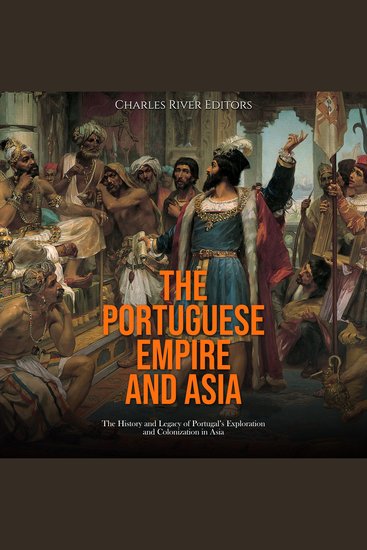
    By the mid-15th century, the Byzantine Empire had collapsed and the various Crusades that had taken place in the region had largely disrupted the overland routes of the Silk Road and trade. Compounding the difficulties of trade was the rise of the Ottoman Empire in place of the Byzantines and the outbreak of the Black Death in Europe.  
    It was roughly around this time that a period of European exploration began, and major factors that contributed to this period of exploration were introduced by the Chinese, albeit indirectly. The magnetic compass had already been developed and used by the Chinese sailors since the 12th century, although it had first been created in the 3rd century BCE as a divination device. The Portuguese started exploring the west coast of Africa and the Atlantic under orders from Prince Henry the Navigator. At this point, Europeans had not yet been capable of navigating completely around Africa since the ships being built were not yet fully capable of being able to sail very far from the coast and navigation in open waters was difficult, but the Portuguese continued pushing down the western African coast looking for ways to bypass the Ottomans and Muslims of Africa who had been making overland trade routes difficult.  
    	In 1488, Bartholomew Diaz rounded the southern tip of Africa, named the Cape of Good Hope by King John of Portugal, and entered the Indian Ocean from the Atlantic. 	The Portuguese had found access to the trade regions that they had been searching for, but sailing from Portugal to India and beyond would require too many resources to travel with at once. To remedy this problem, Portugal began establishing a number of forts and trading posts along the route. The Portuguese were able to establish a fort on the west coast of India, Fort Manuel, in 1500, and in 1505 a fort was erected off the coast of Tanzania. 
    Ver livro
  • Anglophobia - The Unrecognised Hatred - cover

    Anglophobia - The Unrecognised...

    Harry Richardson, Frank Salter

    • 0
    • 0
    • 0
    “The white race is the biggest murderer, rapist, pillager, and thief of the modern world.” So said journalist Nikole Hannah-Jones. 
    Had she said this about any other race, it is unlikely that she would ever have found employment with a mainstream media outlet. Yet not only was Nikole Hannah-Jones hired by The New York Times; she received the coveted Pulitzer Prize for journalism for the 1619 project which also defames white people. 
    Why is it that such hateful rhetoric is no barrier to employment at The New York Times, whilst criticism of any other racial group would have you fired in a New York minute? Why is Critical Race Theory and its defamation of white people and their societies seeping into every corner of education, the media, and the corporate world? 
    These and other questions need answers because Western civilisation in Australia and elsewhere is facing an existential threat. Anglophobia The Unrecognised Hatred analyses and articulates the root causes of this pervasive anti-white hatred. 
    The book is a systematic rejection of the hypocritical notion that racism is acceptable – so long as it is only directed at white men, women and children.
    Ver livro
  • Politics - Aristotle’s Vision of Justice Society and Governance - A Modern Translation - Adapted for the Contemporary Reader - cover

    Politics - Aristotle’s Vision of...

    Aristotle, Tim Zengerink

    • 0
    • 0
    • 0
    What if you could understand the foundations of justice, build a fair society, and unlock the principles of effective governance? 
    Politics: Aristotle’s Vision of Justice, Society, and Governance presents Aristotle’s timeless exploration of political theory, now thoughtfully adapted for today’s listeners. 
    Written over two thousand years ago, Politics remains one of the most influential works on governance, justice, and societal structure. Aristotle examines systems of government, the role of citizens, and the principles that create thriving societies. His insights offer a blueprint for understanding communities, ethical leadership, and the balance between freedom and responsibility. 
    This isn’t just an academic text—it’s a practical guide for understanding leadership, justice, and society in a way that resonates with modern challenges. Whether you’re a student, a leader, or someone striving to understand societal complexities, Aristotle’s teachings will inspire critical thinking and wise action. 
    What You’ll Discover: 
    - The Nature of Justice and Equality: Learn Aristotle’s principles of fairness and their importance in stable communities. 
    - Forms of Government: Explore systems like monarchy, aristocracy, and democracy, and their strengths and weaknesses. 
    - The Role of Leadership: Discover how ethical leaders shape societies with wisdom, integrity, and focus on the common good. 
    - Modernized for Today’s Listeners: Experience Aristotle’s insights in accessible, contemporary language for today’s world. 
    - Aristotle’s Politics provides an enduring framework for understanding governance, societal harmony, and justice. His vision challenges us to consider how power fosters fairness, prosperity, and ethical leadership. 
    Download your copy today and explore Aristotle’s timeless vision of governance and the common good.
    Ver livro
  • The Defiant Middle - How Women Claim Life's In-Betweens to Remake the World - cover

    The Defiant Middle - How Women...

    Kaya Oakes

    • 0
    • 0
    • 0
    For every woman, from the young to those in midlife and beyond, who has ever been told, "You can't" and thought, "Oh, I definitely will!"—this book is for you. 


    Women are expected to be many things. They should be young enough, but not too young; old enough, but not too old; creative, but not crazy; passionate, but not angry. They should be fertile and feminine and self-reliant, not barren or butch or solitary. Women, in other words, are caught between social expectations and a much more complicated reality. 


    Women who don't fit in, whether during life transitions or because of changes in their body, mind, or gender identity, are carving out new ways of being in and remaking the world. But this is nothing new: they have been doing so for thousands of years, often at the margins of the same religious traditions and cultures that created these limited ways of being for women in the first place. 


    In The Defiant Middle, Kaya Oakes draws on the wisdom of women mystics and explores how transitional eras or living in marginalized female identities can be both spiritually challenging and wonderfully freeing, ultimately resulting in a reinvented way of seeing the world and changing it.
    Ver livro