¡Acompáñanos a viajar por el mundo de los libros!
Añadir este libro a la estantería
Grey
Escribe un nuevo comentario Default profile 50px
Grey
Suscríbete para leer el libro completo o lee las primeras páginas gratis.
All characters reduced
Carmilla (A2 level) - cover

Carmilla (A2 level)

Sheridan Le Fanu

Editorial: Imaginaria Books

  • 0
  • 0
  • 0

Sinopsis

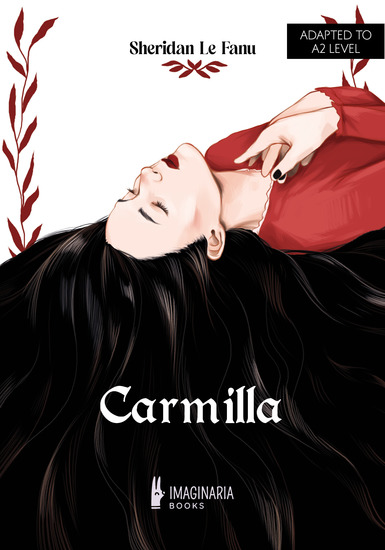
Laura feels lonely in her castle, where no other young people live, so she is very happy when she meets Carmilla, a beautiful and lovely girl who is going to stay with her for some weeks. But soon her happiness is mixed with worry for three reasons: Carmilla says and does strange things, young ladies in the village are dying and Laura herself is slowly becoming ill. She begins to wonder: could there be a connection between the three?

VOCABULARY INCLUDED
Disponible desde: 26/08/2025.
Longitud de impresión: 114 páginas.
Otros libros que te pueden interesar

  • Great Expectations - cover

    Great Expectations

    Charles Dickens

    • 0
    • 0
    • 0
    "I have been bent and broken, but - I hope - into a better shape."
    
    From the terrifying encounter with a fugitive in a misty graveyard to the decaying grandeur of Satis House, Philip Pirrip—known simply as "Pip"—embarks on a journey that will take him from a humble blacksmith's forge to the heights of London society. When a mysterious benefactor grants him "great expectations," Pip abandons his past and his true friends to pursue the cold and beautiful Estella. But in the shadows of his new life, secrets of crime, revenge, and unrequited love await. Charles Dickens' most sophisticated novel is a haunting exploration of how our desires can blind us to the people who matter most.
    
    The Haunting Legacy of Satis House: Few images in literature are as iconic as Miss Havisham, the jilted bride frozen in time, wearing her decaying wedding dress amidst the remains of a rotting feast. Dickens uses Satis House as a powerful metaphor for the stagnation caused by revenge and the "gilded cage" of class expectations. It is here that Pip's heart is first broken and his obsession with "gentility" begins.
    
    A Critique of the Victorian Class System: Through Pip's transformation, Dickens exposes the superficiality of social status. As Pip acquires the polish of a gentleman, he loses the moral core provided by the honest, hard-working Joe Gargery. The novel challenges the reader to look beneath the surface of wealth and education to find true nobility, culminating in a series of shocking revelations that link the highest circles of society to its lowest criminal depths.
    
    Experience the mystery that spans a lifetime. Purchase "Great Expectations" today and discover a world of shadows and light.
    Ver libro
  • White Nights - cover

    White Nights

    Fyodor Dostoyevsky

    • 0
    • 0
    • 0
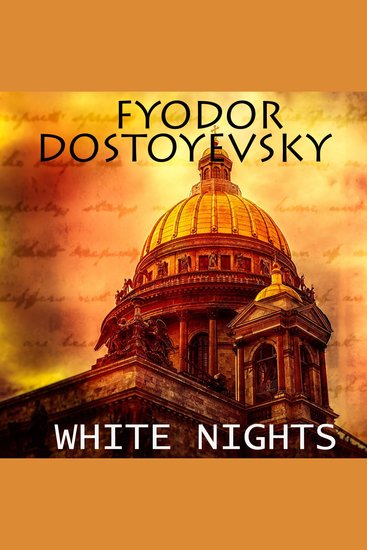
    "White Nights" by Fyodor Dostoyevsky is a poignant and introspective short story that delves into the complexities of human emotions and the transient nature of romantic connections. Set against the backdrop of St. Petersburg's nocturnal charm, the narrative follows the lonely protagonist through four consecutive white nights, where he encounters a mysterious young woman. As the two form a deep but ephemeral connection, Dostoyevsky explores themes of love, isolation, and the fleeting nature of human connections. The story unfolds with rich psychological depth, providing readers with a profound exploration of the human soul and the profound impact of chance encounters on one's emotional landscape.
    Ver libro
  • Anna Kanerina - cover

    Anna Kanerina

    Leo Tolstoy

    • 0
    • 0
    • 0
    "Anna Karenina" is a novel by Russian writer Leo Tolstoy, first published in serialized form between 1873 and 1877. The novel is often considered one of the pinnacles of realist fiction. The narrative revolves around a tragic story of a married aristocrat, Anna Karenina, and her doomed love affair with Count Vronsky, set against the backdrop of various other familial, social, and political threads. Themes include family, society, politics, morality, and the complexities of love.
    Ver libro
  • A Scene from the Ghetto of Venice - From their pens to your ears genius in every story - cover

    A Scene from the Ghetto of...

    Rainer Maria Rilke

    • 0
    • 0
    • 0
    René Karl Wilhelm Johann Josef Maria Rilke was born into a troubled marriage on the 4th December 1875 in Prague, then part of the Austro-Hungarian Empire.  His mother, having previously lost a baby girl, would dress the young boy up in girl’s clothing.   
    Later his father dispatched him to a military academy at age 10 but after a miserable 5 years the young Rilke left due to illness and instead entered first Prague and then Munich and finally Berlin university to study art history, philosophy and literature. 
    His initial forays into literature was in poetry.  His intense, mystical and lyrical style was much admired and over time inspired many in succeeding generations.    
    His short prose collection ‘Stories of God’, written in an impassioned burst over several nights was published in 1900 and offers a beguiling view of much of Rilke’s influences and outlook.  
    The following year he married the pioneering sculptor and artist Clara Westhoff.  The union produced one child, a daughter Ruth.   
    He lived in Paris for most of the Century’s first decade where he mixed with many great minds of the time.  Although he continued to write he also worked as a secretary to the sculptor, Rodin.   
    It was only after they settled in Switzerland in 1919 that his writing output was in full flow.  Here he wrote profusely in both German and French, which included much on his previous travels, his left-wing sympathies, his religious and existential thoughts, all part of a unique and consummate style. 
    From 1923 on, Rilke increasingly struggled with his health which was now in constant decline and often spent time rehabilitating at a sanatorium.   
    Rainer Maria Rilke died of leukaemia on the 29th December 1926 in Montreux, Switzerland.  He was 51.
    Ver libro
  • Metamorphosis - cover

    Metamorphosis

    Franz Kafka

    • 0
    • 0
    • 0
    A masterful mix of horror and absurdity, Metamorphosis tells the story of travelling salesman Samsa, who wakes up one day to find out he has turned into a giant insect. Samsa has been a model of virtue for years, single-handedly supporting his parents and young sister. Suddenly he finds himself outcast in his own home, facing a world in which he no longer has a place. Simultaneously harrowing and humorous, Metamorphosis is a strange, subtle and moving novella which has become a classic of world literature. This edition includes the classic, unabridged text, introduced and translated by William Aaltonen.
    Ver libro
  • Anna Karenina Part 6 - cover

    Anna Karenina Part 6

    Leo Tolstoy

    • 0
    • 0
    • 0
    In Part 6 of Anna Karenina, Anna’s descent into despair culminates as her isolation deepens and her relationship with Vronsky crumbles. Consumed by jealousy and societal rejection, she spirals toward tragedy. Meanwhile, Levin achieves spiritual clarity, finding peace in family life and faith. The contrast between Anna’s unraveling world and Levin’s fulfillment underscores themes of redemption, purpose, and the cost of defying societal norms. As the novel approaches its climax, Tolstoy poignantly explores the fragility of human happiness and the inevitability of fate.
    Ver libro