Junte-se a nós em uma viagem ao mundo dos livros!
Adicionar este livro à prateleira
Grey
Deixe um novo comentário Default profile 50px
Grey
Assine para ler o livro completo ou leia as primeiras páginas de graça!
All characters reduced
Aunt Jane's Nieces in Society - cover
LER

Aunt Jane's Nieces in Society

Sheba Blake, Edith Van Dyne

Editora: Sheba Blake Publishing

  • 0
  • 0
  • 0

Sinopse

After Louisa May Alcott's Little Women proved to be a publishing sensation, other book purveyors sought out titles with similar appeal. The Aunt Jane's Nieces series was designed to hook young audiences who first fell for Alcott's work. In Aunt Jane's Nieces in Society, the girls make their debut among the affluent upper classes -- and find that high-society living is not all it's cracked up to be.
Disponível desde: 10/01/2022.

Outros livros que poderiam interessá-lo

  • Bernice Bobs Her Hair - cover

    Bernice Bobs Her Hair

    F Scott itzgerald

    • 0
    • 0
    • 0
    "Bernice Bobs Her Hair" is a captivating short story by F. Scott Fitzgerald. It first graced the pages of the Saturday Evening Post in May 1920 and was later included in the September 1920 short story collection titled "Flappers and Philosophers"1. Let's delve into the tale of Bernice and her transformative decision.
    Ver livro
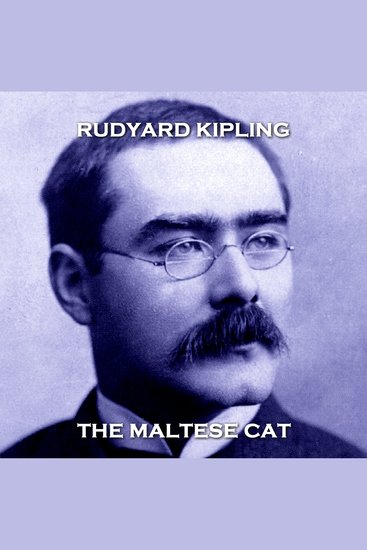
  • The Maltese Cat - Celebrated author of The Jungle Book Kipling brings another marvellous story from the perspective of an animal this time about a game of polo set in India during British rule - cover

    The Maltese Cat - Celebrated...

    Rudyard Kipling

    • 0
    • 0
    • 0
    Joseph Rudyard Kipling was born in Mumbai, India on 30th December 1865.   
     
    As was the custom in those days, he and his sister were sent back to England when he was 5.  The ill-treatment and cruelty by the Portsmouth couple they boarded with Kipling said contributed to the onset of his literary life.  
     
    At 16 he returned to India to work on a local paper where he was soon contributing and writing.  It also exposed him to the issues of identity and national allegiance which pervade much of his work.  
     
    In 1886, his ‘Departmental Ditties’, collection of verse appeared in print followed by 39 short stories for his newspaper over only 8 months.  These were then published as ‘Plain Tales from the Hills’, shortly after his 22nd birthday.  
     
    He continued his prolific pace of writing before being dismissed in a dispute and, taking his pay-off and the profits from the sale of some publishing rights, decided to return to London, travelling via Rangoon, Hong Kong, Japan and the United States, all the while writing articles, and arriving at Liverpool in October 1889. 
     
    Over the next two years he saw further works published as books and in magazines, as well as a nervous breakdown for which he was prescribed a sea voyage, to South Africa, Australia, New Zealand and India.  
     
    Happier times came with marriage to Caroline Starr Balestier in January 1892.  The honeymoon began in Vermont and ended in Yokahama where they heard their bank had failed.  They returned to Vermont and settled.  Caroline was now pregnant and he was planning the ‘Jungle Books’.  
     
    A failed arbitration between the US and England resulted in an argument between Caroline’s brother and Kipling, and then his arrest.  At the hearing he was mortified by the exposure of his private life and after settling the matter they returned to England and life in Torquay.  ‘Kim’ was published in 1902, and ‘Just So Stories for Little Children’, a year later.  
     
    In 1907 he was awarded the Nobel Prize for Literature with the citation “in consideration of the power of observation, originality of imagination, virility of ideas and remarkable talent for narration which characterise the creations of this world-famous author”.   
     
    When the Great War erupted, he scorned those who refused conscription.  His son enlisted and was killed at the Battle of Loos in September 1915, at 18, an exploding shell had ripped his face apart.  This death inspired Kipling’s writing thereafter, but the tragedy broke his life and by 1930 his prolific pen had almost ceased. 
     
    Rudyard Kipling died on 18th January 1936 from a perforated duodenal ulcer.  He was 70.  His ashes are buried at Poets’ Corner in Westminster Abbey. 
     
    In the Maltese Cat Kipling returns once more to India and the British Empire.  A polo match is being played.  The fierce competitive instincts of two social classes are fighting for dominance.  All told through the voice of the Maltese Cat, the most cunning of the horses.
    Ver livro
  • Worries of the Father of the Family or Odradek The (Unabridged) - cover

    Worries of the Father of the...

    Franz Kafka

    • 0
    • 0
    • 0
    The Odradek is an imaginary creature that appears in the short story The Concerns of a Family Man by Franz Kafka . The physical description of the Odradek shows it as a flat, star-shaped spool of thread, with the addition of a few other appendages.
    Later in the story, Kafka gives the Odradek more human characteristics, being able to stand on two legs and speak. The narrator even gets to have a few conversations with the Odradek, during which the creature's nomadic and possibly immortal nature is emphasized.
    Ver livro
  • Hypnos (Unabridged) - cover

    Hypnos (Unabridged)

    H. P. Lovecraft

    • 0
    • 0
    • 0
    "Hypnos" is a first-person narrative, written from the perspective of an unnamed character living in Kent and later London, England. The narrator writes that he fears sleep, and is resolved to write his story down lest it drive him further mad, regardless of what people think after reading it. The narrator, a sculptor, recounts meeting a mysterious man in a railway station. The moment the man opened his "immense, sunken, and widely luminous eyes", the narrator knew that the stranger would become his friend--"the only friend of one who had never possessed a friend before." In the eyes of the stranger, he witnessed important knowledge of the mysteries he always sought to learn. From this point on, he would touch his friend and sculpt him daily. At night they would commence their adventures, exploring worlds beyond human comprehension. Over time, the narrator's companion begins to speak of using their ability to transcend into the unknown as a way to rule the universe (via a set of drugs). The narrator is frightened by the prospect and disavows such hubris to the reader. Soon the narrator is off on a foray with his friend, travelling through a void that he explains is beyond human sensation. Passing through several barriers, eventually the narrator comes to one he cannot cross, though his friend does. Opening his "physical eyes", the narrator wakes up and awaits the return of his friend, who awakes severely shaken and reticent, warning only that they must avoid sleep at all cost. From then on, with the aid of drugs, the two avoid sleep, as each time they succumb, they both seem to rapidly age and are plagued by nightmares that the narrator refuses to explain. The story ends with the narrator explaining that one night, his friend fell into a "deep-breathing sleep" and was impossible to arouse. The narrator shrieks, faints, and awakes surrounded by police and neighbors, who inform him that his friend was not real. There is only a bust of his friend in his room, engraved with the Greek word: _____ (Hypnos).
    Ver livro

  • The Kiss - cover

    The Kiss

    Kate Chopin

    • 0
    • 0
    • 0
    Kate Chopin's "The Kiss" was written on September 19, 1894, and first published in Vogue on January 17, 1895. It is a short story about a woman scheming to marry a wealthy man.
    Ver livro
  • Beyond The Wall - cover

    Beyond The Wall

    Ambrose Bierce

    • 0
    • 0
    • 0
    "Beyond the Wall" is a ghost story by American Civil War soldier, wit, and writer Ambrose Bierce. 
    Ver livro