Rejoignez-nous pour un voyage dans le monde des livres!
Ajouter ce livre à l'électronique
Grey
Ecrivez un nouveau commentaire Default profile 50px
Grey
Abonnez-vous pour lire le livre complet ou lisez les premières pages gratuitement!
All characters reduced
A Tale of Three Lions - cover

A Tale of Three Lions

Sheba Blake, H. Rider Haggard

Maison d'édition: Sheba Blake Publishing

  • 0
  • 1
  • 0

Synopsis

A Tale of Three Lions is a thrilling story from action-adventure master H. Rider Haggard that starts out as an enjoyable father-son outing but then turns into something entirely different . When famed explorer Allan Quatermain tries to teach his son a few life lessons on safari, he gets much more than he bargained for.
Disponible depuis: 15/11/2021.
Longueur d'impression: 22 pages.

D'autres livres qui pourraient vous intéresser

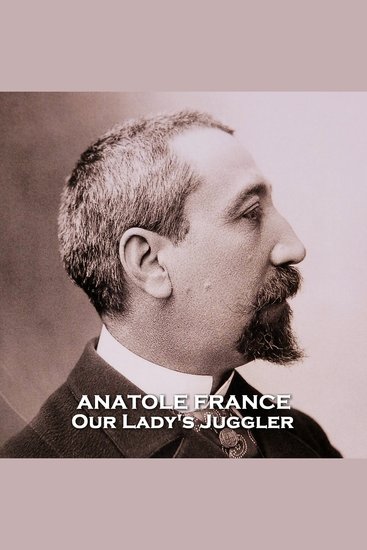
  • Our Lady's Juggler - From their pens to your ears genius in every story - cover

    Our Lady's Juggler - From their...

    Anatole France

    • 0
    • 0
    • 0
    François-Anatole Thibault was born on the 16th April 1844 in Paris, France, the son of a bookseller and bibliophile. 
    He studied at the Collège Stanislas, a private Catholic school, and after graduating joined his father in the bookstore, which specialised in works on the French Revolution.  Several years later he secured a position as cataloguer at Bacheline-Deflorenne and at Lemerre before being appointed librarian for the French Senate in 1876. 
    His literary career had begun as a journalist and as a poet before publishing his novel ‘Le Crime de Sylvestre Bonnard’ in 1881.  Praised for its elegant prose, it won him a prestigious prize from the Académie Française, which later elected him to its storied ranks. 
    His works were profound and thoughtful and often couched in surreal and outlandish expressions; whether penguins baptized by a near-blind Abbott transformed themselves into humans or of a guardian angel who becomes an atheist, his stories turned established thought into startling literature. 
    His short stories run in the same vein.  The premise may seem plausible but his distinctive style turns them into an individual viewpoint which invokes both discussion and admiration. 
    In his private life his relationships with women were often turbulent.  A Socialist, he was a fervent supporter of the Russian Revolution and the early years of the French Communist party. 
    He was awarded the Nobel Prize in 1921 but the following year his entire canon of works was placed on the prohibited list of the Catholic Church, which he thought of as a credit to his name. 
    Anatole France died on the 12th October 1924 in Tours.  He was 80.
    Voir livre
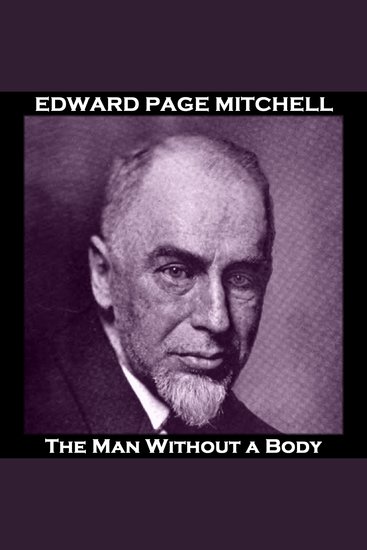
  • The Man Without a Body - From their pens to your ears genius in every story - cover

    The Man Without a Body - From...

    Edward Page Mitchell

    • 0
    • 0
    • 0
    Edward Page Mitchell was born in Bath, Maine on 24th March 1852 into a wealthy family.  When he was eight the family moved to a house on New York’s famed Fifth Avenue. 
    In 1863 he witnessed the Draft Riots and in the aftermath Mitchell's father moved the family to Tar River, North Carolina. It was there, at the age of fourteen, that his letters were first published in the local newspaper The Bath Times. 
    In 1872, at age twenty, whilst on a train journey to Bath, Maine, a hot cinder from the engine's smokestack flew in through the window blinding his left eye.  After several weeks, while doctors attempted to restore his sight, his uninjured right eye underwent sympathetic blindness.  He was now completely blind. His burnt left eye eventually regained its sight, but his uninjured right eye remained blind and was later replaced with a prosthetic glass eye. While recovering from this surgery, Mitchell wrote his dazzling story ‘The Tachypomp’. 
    Mitchell’s influence on science fiction writing is incredible and pre-dated many major themes. He wrote about a man made invisible, a time-travel machine, a thinking computer, teleportation, superior mutants and mind transfer. Add to this other stories which predicted travel by pneumatic tube, electrical heating, newspapers printed at home, food-pellet concentrates, international broadcasts, and suspended animation through cryogenics and they amount to talents that are not as publicly lauded as they should be. 
    Edward Page Mitchell died of a cerebral hemorrhage in New London, Connecticut on 22nd January 1927.  He was 76.
    Voir livre
  • The Grim Reaper and Child - cover

    The Grim Reaper and Child

    Rachel Lawson

    • 0
    • 0
    • 0
    "I feel weird going to a cemetery," said said a nervous teenage girl to her father. 
    "Why is me?" asked her father the Necromancer who was in the form of a grim reaper. 
    "Nuh," said the Necromantrix, "All the dead people here is freaking me out." 
    "They are just shells their souls are gone they can't hurt you," said her father, "you are my heir you need to get used to this." 
    "Yeah," said she said, "Death still freaks me out." 
    "It's natural, between you me and that grave stone it really freaks me out too," said her father...That's Just The StartYou won't believe how it ends!
    Voir livre
  • Beyond the Door - cover

    Beyond the Door

    Philip K. Dick

    • 0
    • 0
    • 0
    Step into the unsettling world of Philip K. Dick's "Beyond the Door," now available as an immersive audiobook experience. This haunting short story follows a peculiar cuckoo clock with an uncanny consciousness and the tense domestic drama that unfolds around it. 
    When Larry gifts his wife Doris a charming cuckoo clock, he's unaware of the strange bond forming between them. As Larry's jealousy grows and tensions escalate, listeners will be drawn into a tale where ordinary objects harbor extraordinary sentience. 
    Perfect for fans of psychological science fiction, this audiobook captures Dick's signature blend of the mundane and the metaphysical. Experience the master storyteller's exploration of consciousness, jealousy, and karmic justice in this perfectly narrated adaptation that brings every eerie moment to life. 
    Journey "Beyond the Door" – where even the simplest objects may be watching, waiting, and perhaps... judging.
    Voir livre
  • Sun and Saddle Leather - cover

    Sun and Saddle Leather

    Charles Badger Clark

    • 0
    • 0
    • 0
    Cowboy Poetry began as a 19th Century Performance Art staged around a crackling campfire, referencing tall tales and personal stories, lost girlfriends, and love of the vast unboundaried West. It was best accompanied by a hot tin cup of boiled coffee, dunked biscuits, and beef jerky. The rhymed couplets were easy to remember, and once the day's drive was done, everybody had a few hours to listen to friends and wonder at the stars. Badger Clark gave voice and record to this unique American folk art, and built on it to express his own creative genius. He was declared the first Poet Laureate of South Dakota, or as he liked to say, “Poet Lariat.”   Summary by Ed Humpal
    Voir livre
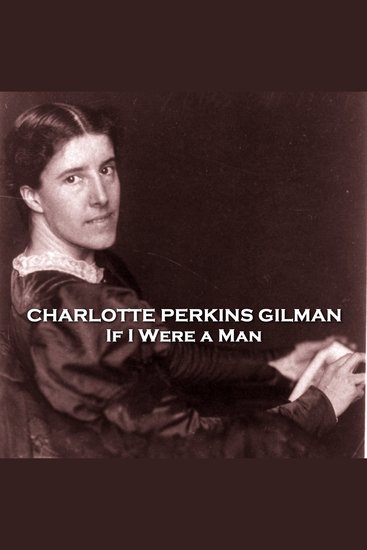
  • If I Were a Man - From their pens to your ears genius in every story - cover

    If I Were a Man - From their...

    Charlotte Perkins Gilman

    • 0
    • 0
    • 0
    Charlotte Perkins Gilman was born on 3rd July 1860 in Hartford, Connecticut, to an unaffectionate mother and a father who abandoned her and her older brother to a life of poverty. 
    Inevitably her schooling was limited and by 15 she had attended seven different schools but received only four years education.  However Charlotte was resourceful and did spend time with her father’s aunts – the suffragist Isabella Beecher Hooker and the ‘Uncle Tom Cabin’s’ author, Harriet Beecher Stowe as well as many hours at the public library studying ancient civilisations. 
    In 1878, she enrolled in classes at the Rhode Island School of Design where she met Martha Luther and they developed a close relationship until Luther married in 1881. Charlotte was devastated and detested romance and love until she met and married the artist Charles Walter Stetson.  
    Their only child, Katharine Beecher Stetson, was born in 1885 but left Charlotte with post-natal depression, then often dismissed as a case of hysteria or nerves.  Unsuited to domestic life she ruptured her life and moved to California with Katherine.  She divorced in 1894 and then sent Katharine east to live with her father and his second wife confirming that his paternal rights be acknowledged and that Katherine establish a relationship with her father. 
    After her mother died in 1893, Charlotte moved back east and became involved with her first cousin, Wall Street attorney, Houghton Gilman who she married in 1900. After his death she moved back to California, where Katherine now lived.   
    Her most popular story is ‘The Yellow Wallpaper’ which touched on her own post-partum depression and underlined the need for women to be responsible for their mental and physical well-being, as the narrator is ordered by her husband/doctor to take compete rest in her room where she is isolated and becomes obsessed with the revolting yellow wallpaper.   
    She wrote other notable short stories the best of which we also include.   
    Charlotte lectured widely for social reform, wrote important non-fiction works that questioned our patriarchal system and left a legacy as a leading and positive spokesperson for feminism.  
    She was diagnosed with incurable breast cancer in 1932 and, as she wrote in her suicide note and autobiography, she ‘chose chloroform over cancer’    
    Charlotte Perkins Gilman took her own life on 17th August 1935, aged 75, in Pasadena, California.
    Voir livre