Junte-se a nós em uma viagem ao mundo dos livros!
Adicionar este livro à prateleira
Grey
Deixe um novo comentário Default profile 50px
Grey
Assine para ler o livro completo ou leia as primeiras páginas de graça!
All characters reduced
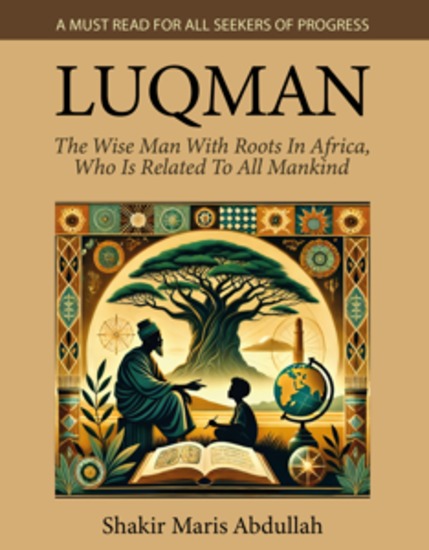
Luqman - The Wise Man With Roots In Africa Who Is Related To All Mankind - A Must Read For All Seekers Of Progress - cover
LER

Luqman - The Wise Man With Roots In Africa Who Is Related To All Mankind - A Must Read For All Seekers Of Progress

Shakir Maris Abdullah

Editora: Spines

  • 0
  • 0
  • 0

Sinopse

In this thought-provoking exploration of wisdom, heritage, and the intertwining paths of past and present, a profound narrative unfolds revealing the vibrant legacy of an ancient sage. The pages within embolden the reader to embark on a journey of self-discovery and intellectual reawakening. With a focus on the rich cultural roots that connect humanity across continents, this enlightening tome beckons to those who thirst for knowledge and understanding. Delve into a tale that celebrates the timeless virtues of gratitude, justice, and the pursuit of divine consciousness, as the wisdom of a long-forgotten ancestry is resurrected to guide a new generation towards enlightenment.
Disponível desde: 17/01/2025.
Comprimento de impressão: 64 páginas.

Outros livros que poderiam interessá-lo

  • Effective Communication - Learn to Communicate Through Empathy Authenticity and Understanding - cover

    Effective Communication - Learn...

    Frederick Lederman

    • 0
    • 0
    • 0
    This audiobook is narrated by an AI Voice.   
    Do you struggle to create real, deep relationships? 
    Discover the key to having genuine and lasting relationships with Effective Communication. 
    Life is full of relationships, from friends to colleagues and family, but how many of them are truly deep and satisfying? We often stop short due to a lack of understanding, prejudices, and judgment towards others. 
    But what we do know is that communication is a crucial aspect in any relationship. That's why I want you to know about the book, "Effective Communication." With it, you will learn how to develop crucial skills for creating genuine and lasting relationships. 
    You will learn to communicate with empathy, to be authentic, and to understand others, which will allow you to eliminate negative thoughts and open the door to deeper connections. Additionally, you will develop a greater understanding of your own thoughts and feelings, which will allow you to communicate more effectively with others. 
    No more superficial relationships. With this book, you will learn how to create real and lasting relationships and experience greater satisfaction in your daily interactions. You will learn to truly listen, understand, and communicate authentically and empathetically. 
      
    Don't miss the opportunity to transform your relationships forever.
    Ver livro
  • The Right Side of History - How Reason and Moral Purpose Made the West Great - cover

    The Right Side of History - How...

    Anônimo

    • 0
    • 0
    • 0
    America has a God-shaped hole in its heart, argues New York Times bestselling author Ben Shapiro, and we shouldn't fill it with politics and hate. 
    In 2016, Ben Shapiro spoke at UC Berkeley. Hundreds of police officers were required from 10 UC campuses across the state to protect his speech, which was -- ironically -- about the necessity for free speech and rational debate. 
    He came to argue that Western Civilization is in the midst of a crisis of purpose and ideas. Our freedoms are built upon the twin notions that every human being is made in God’s image and that human beings were created with reason capable of exploring God’s world. 
    We can thank these values for the birth of science, the dream of progress, human rights, prosperity, peace, and artistic beauty. Jerusalem and Athens built America, ended slavery, defeated the Nazis and the Communists, lifted billions from poverty and gave billions spiritual purpose. Jerusalem and Athens were the foundations of the Magna Carta and the Treaty of Westphalia; they were the foundations of Declaration of Independence, Abraham Lincoln’s Emancipation Proclamation, and Martin Luther King Jr.’s Letter from Birmingham Jail. 
    Civilizations that rejected Jerusalem and Athens have collapsed into dust. The USSR rejected Judeo-Christian values and Greek natural law, substituting a new utopian vision of “social justice” – and they starved and slaughtered tens of millions of human beings. The Nazis rejected Judeo-Christian values and Greek natural law, and they shoved children into gas chambers. Venezuela rejects Judeo-Christian values and Greek natural law, and citizens of their oil-rich nation have been reduced to eating dogs. 
    We are in the process of abandoning Judeo-Christian values and Greek natural law, favoring instead moral subjectivism and the rule of passion. And we are watching our civilization collapse into age-old tribalism, individualistic hedonism, and moral subjectivism. We believe we can reject Judeo-Christian values and Greek natural law and satisfy ourselves with intersectionality, or scientific materialism, or progressive politics, or authoritarian governance, or nationalistic solidarity.  
    We can’t. 
    The West is special, and in The Right Side of History, Ben Shapiro bravely explains that it’s because too many of us have lost sight of the moral purpose that drives us each to be better, or the sacred duty to work together for the greater good, or both. A stark warning, and a call to spiritual arms, this book may be the first step in getting our civilization back on track.
    Ver livro

  • Nakano Takeko - cover

    Nakano Takeko

    History Nerds

    • 0
    • 0
    • 0
    In the turbulent twilight of the Samurai era, when Japan was gripped by the Boshin War, one woman rose to embody the spirit of bushido with unparalleled courage and indomitable will. "Nakano Takeko" is an exciting historical biography that delves into the life and legacy of Nakano Takeko, the extraordinary female warrior whose name became synonymous with bravery and honor. 
    Born into a samurai family in the mid-19th century, Nakano Takeko was trained in the art of war from a young age, mastering the deadly naginata with a skill that rivaled her male counterparts. As Japan teetered on the edge of a new era, Takeko found herself drawn into the heart of the conflict. Rejecting the traditional roles prescribed to women of her time, she carved her own path on the battlefield, leading a group of women warriors, the Jōshitai, in a courageous stand against the imperial forces during the Battle of Aizu. 
    "Nakano Takeko" is more than just a biography; it is a testament to the resilience and spirit of a true warrior. It celebrates the life of a woman who defied societal norms, leaving an indelible mark on history. Her story is one of inspiration, courage, and the relentless pursuit of honor, making this book a must-read for history enthusiasts, admirers of strong female figures, and anyone captivated by the samurai legacy. 
    Prepare to be immersed in a tale of valor and determination that will leave you in awe of Nakano Takeko's enduring legacy.
    Ver livro
  • Care - The Highest Stage of Capitalism - cover

    Care - The Highest Stage of...

    Premilla Nadasen

    • 0
    • 0
    • 0
    Since the earliest days of the pandemic, care work has been thrust into the national spotlight. The notion of care seems simple enough. Care is about nurturing, feeding, nursing, assisting, and loving human beings. It is "the work that makes all other work possible." But as historian Premilla Nadasen argues, we have only begun to understand the massive role it plays in our lives and our economy. 


    Nadasen traces the rise of the care economy, from its roots in slavery, where there was no clear division between production and social reproduction, to the present care crisis, experienced acutely by more and more Americans. Today's care economy, Nadasen shows, is an institutionalized, hierarchical system in which some people's pain translates into other people's profit. 


    Yet this is also a story of resistance. Low-wage workers, immigrants, and women of color in movements from Wages for Housework and Welfare Rights to the Movement for Black Lives have continued to fight for and practice collective care. These groups help us envision how, given the challenges before us, we can create a caring world as part of a radical future.
    Ver livro
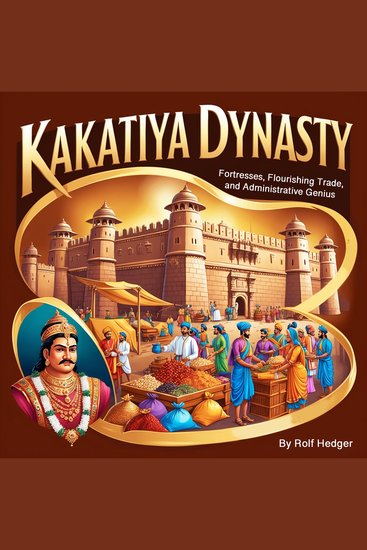
  • Kakatiya Dynasty - Fortresses Flourishing Trade and Administrative Genius - cover

    Kakatiya Dynasty - Fortresses...

    Rolf Hedger

    • 0
    • 0
    • 0
    The Kakatiya Dynasty emerged as a formidable power in the Deccan region of India, leaving behind a rich legacy of military strength, administrative brilliance, and cultural contributions. Their origins can be traced back to the 10th century, though historical records regarding their early rulers remain scarce. Initially, the Kakatiyas served as feudatories under the Rashtrakutas and later the Western Chalukyas, gradually expanding their influence over the Telugu-speaking region. 
    The name "Kakatiya" is believed to have originated from their association with the goddess Kakati, a form of Durga, who was worshipped as their family deity. The earliest known ruler, Venna or Beta I, established the dynasty’s foundation, but it was during the reign of Prola I that the Kakatiyas started asserting their independence. Prola II played a crucial role in strengthening their foothold by resisting Chalukyan dominance and expanding Kakatiya control over the eastern Deccan. 
    During this period, the Deccan was a contested space where multiple regional powers sought dominance. The Kakatiyas capitalized on the declining influence of the Western Chalukyas, strategically aligning themselves with or resisting various rulers to carve out an independent identity. Their stronghold was initially located in Hanamkonda, which later evolved into the grand city of Warangal, a center of Kakatiya power and cultural patronage.
    Ver livro
  • The Bodhisattva Concept - cover

    The Bodhisattva Concept

    A.G.S. Kariyawasam

    • 0
    • 0
    • 0
    This is a Pariyatti audiobook of Bodhi Leaves No. 157, "The Bodhisattva Concept" by A.G.S. Kariyawasam found in the Pariyatti Edition of Collected Bodhi Leaves Vol. V.
     
    Excerpt from The Bodhisattva Concept:
     
    In original Pali Buddhism, the term bodhisatta is used more or less exclusively to designate Gautama Buddha prior to his enlightenment.
     
    'The concept of bodhisattva, along with that of Buddha and of the cakravartin (world-ruler), was in vogue in India even before the appearance of Gautama Buddha. When Prince Siddhārtha, who later became Gautama Buddha, took conception in the womb of Queen Māyā, a seer predicted that Suddhodana’s future son would be either a world-ruler (cakravartin) or a Buddha. Once, answering a question by a brahmin, the Buddha himself admitted that he is neither a god nor a yakkha, but a Buddha, meaning thereby one of a succession of Buddhas (A II 38).
    Ver livro