¡Acompáñanos a viajar por el mundo de los libros!
Añadir este libro a la estantería
Grey
Escribe un nuevo comentario Default profile 50px
Grey
Suscríbete para leer el libro completo o lee las primeras páginas gratis.
All characters reduced
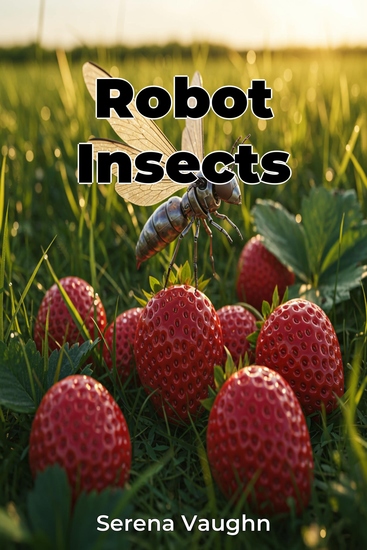
Robot Insects - cover

Robot Insects

Serena Vaughn

Traductor A AI

Editorial: Publifye

  • 0
  • 0
  • 0

Sinopsis

"Robot Insects" explores the innovative field of bio-inspired robotics, focusing on the development and potential of miniature, insect-sized robots. These tiny machines hold promise for revolutionizing industries like precision agriculture, where they could efficiently pollinate crops, and medicine, by delivering targeted drug delivery directly to cells, minimizing side effects. The book examines the complex engineering required to mimic insect movements and sensory systems, highlighting the ongoing challenges of miniaturization and power management.

 
The book progresses logically, beginning with an introduction to bio-inspired engineering principles and moving through materials development, key applications, and broader societal implications. Readers will discover how advancements in nanotechnology and artificial intelligence are crucial to creating functional robot insects. Importantly, the text also addresses ethical considerations and environmental impacts, prompting a dialogue on responsible innovation in this rapidly evolving field.
Disponible desde: 06/03/2025.
Longitud de impresión: 73 páginas.

Otros libros que te pueden interesar

  • IoT Programming - Building Smart Connected Systems From Conceptualization and Prototyping to Deployment and Integration - cover

    IoT Programming - Building Smart...

    Mark Jackson

    • 0
    • 0
    • 0
    In an increasingly interconnected world, the Internet of Things (IoT) represents the frontier of technology, where everyday objects are becoming smart and interconnected. "IoT Programming: Building Smart, Connected Systems" is your comprehensive guide to mastering the intricacies of IoT development, from conceptualization and prototyping to deployment and integration. 
    From Concept to Reality: Explore the fundamental concepts of IoT, understanding how devices, sensors, and actuators communicate and interact within IoT ecosystems. Gain insights into the evolution of IoT technologies and their transformative potential across industries. 
    Hands-On Learning: Dive into practical examples using popular IoT hardware platforms like Arduino, Raspberry Pi, and ESP8266. Learn to develop applications that collect, process, and analyze real-time data, leveraging both cloud-based and edge computing solutions. 
    Security and Scalability: Navigate the complexities of IoT security, implementing best practices to safeguard devices and data against evolving threats. Discover strategies for scaling IoT solutions and integrating them seamlessly into existing infrastructures. 
    Future-Proof Your Skills: Stay ahead with insights into emerging trends such as 5G connectivity and edge computing, and explore the integration of AI and machine learning in IoT applications. Understand the ethical considerations and societal impacts of IoT technologies shaping our digital future. 
     
    Ver libro
  • Cosmic Bullsh*t - A Guide to the Galaxy's Worst Life Hacks - cover

    Cosmic Bullsh*t - A Guide to the...

    Chris Ferrie

    • 0
    • 0
    • 0
    A hilarious guide to what's real (and what's not) in our vast, beautiful (and terrifying) universe 


    Embark on a journey through Cosmic Bullsh*t: A Guide to the Galaxy's Worst Life Hacks and uncover the real science behind some of the greatest lies society loves to tell! Apologies to everyone who makes major life decisions based on their newspaper horoscope, but astrology isn't real and stars and planets don't give a sh*t about us. Planning a vacation to Roswell to finally discover the truth about aliens that the government has been hiding? Bad news—aliens were never here, and they aren't coming, either. Put on your myth-busting goggles and dig into Cosmic Bullsh*t for a nice, healthy dose of fascinating facts to cure the misinformation sickness so many of us are suffering from. Quantum physicist and bestselling science author Chris Ferrie explains: 


    ● Why creation myths are bullsh*t and why humans have loved them for millennia anyway 


    ● The misconceptions surrounding extraterrestrial life and why little green men aren't knocking on our door 


    ● The paradoxes and pitfalls of time travel 


    ● How to brace yourself for the ultimate cosmic finale as we contemplate the fate of the universe 


    ● And much more!
    Ver libro
  • Fundamentals of Quantum Mechanics - Basic Principles and Concepts - cover

    Fundamentals of Quantum...

    Mark Hedges

    • 0
    • 0
    • 0
    Quantum mechanics is a fundamental branch of physics that describes the behavior of matter and energy at the smallest scales, such as atoms and subatomic particles. Unlike classical mechanics, which governs macroscopic objects, quantum mechanics introduces concepts that challenge our everyday intuition, including wave-particle duality, superposition, and uncertainty. These principles form the foundation of modern physics and have led to numerous technological advancements, including semiconductors, lasers, and quantum computing. 
    The origins of quantum mechanics can be traced back to the early 20th century when classical physics failed to explain certain experimental observations. One of the earliest challenges was black-body radiation, which classical theories could not accurately describe. Max Planck introduced the idea of quantized energy levels, proposing that energy is emitted and absorbed in discrete packets called "quanta." This marked the birth of quantum theory. Soon after, Albert Einstein extended this idea by explaining the photoelectric effect, demonstrating that light itself behaves as both a particle and a wave. This dual nature of light and matter became one of the defining principles of quantum mechanics.
    Ver libro
  • Nature's Wisdom: Bridging Tradition Science and Plant Teachings - Master Nature's Secrets: Audio lessons merging ancient wisdom scientific insights and plant lore for effective learning - cover

    Nature's Wisdom: Bridging...

    Grayson Colewood

    • 0
    • 0
    • 0
    Nature's Wisdom: Bridging Tradition, Science, and Plant Teachings 
    ⭐⭐ Simplified Audio Guide ⭐⭐ 
    Are you aiming to expand your knowledge and delve deeper into the world of ancient secrets and modern botanical teachings? 
    Looking for a comprehensive guide that covers crucial aspects of these topics? 
    Your search ends here! 
    This guide acts as your ultimate companion for deepening your understanding, applying your skills, and engaging in hands-on exercises. With this, you're set for success. 
    Updated for the latest insights and teachings. 
    Key features of this enriched guide: 
    - Profound insights into ancient secrets and modern botanical teachings 
    - Detailed explanation of plant wisdom throughout generations 
    - Fruitful strategies for learning and applying plant teachings 
    Our guide stands out through its comprehensive coverage, which is essential for mastering these concepts. Topics aren’t merely skimmed; they are explored with precision. 
    Please note that this guide is a purely independent resource for your benefit and is not affiliated with any official entity. 
    Designed with a clear structure and easy-to-understand language, our guide ensures smooth transitions between topics. Say goodbye to dense jargon and welcome clear, precise, and technically accurate content. 
    So, why wait? Click the BUY NOW button, secure your guide, and embark on your journey of discovery and wisdom!
    Ver libro
  • Mastering Computer Vision with PyTorch 20 - Discover Design and Build Cutting-Edge High Performance Computer Vision Solutions with PyTorch 20 and Deep Learning Techniques - cover

    Mastering Computer Vision with...

    M. Arshad Siddiqui

    • 0
    • 0
    • 0
    Unleashing the Power of Computer Vision with PyTorch 2.0.
    Book DescriptionIn an era where Computer Vision has rapidly transformed industries like healthcare and autonomous systems, PyTorch 2.0 has become the leading framework for high-performance AI solutions. [Mastering Computer Vision with PyTorch 2.0] bridges the gap between theory and application, guiding readers through PyTorch essentials while equipping them to solve real-world challenges.
    Starting with PyTorch’s evolution and unique features, the book introduces foundational concepts like tensors, computational graphs, and neural networks. It progresses to advanced topics such as Convolutional Neural Networks (CNNs), transfer learning, and data augmentation. Hands-on chapters focus on building models, optimizing performance, and visualizing architectures. Specialized areas include efficient training with PyTorch Lightning, deploying models on edge devices, and making models production-ready.
    Explore cutting-edge applications, from object detection models like YOLO and Faster R-CNN to image classification architectures like ResNet and Inception. By the end, readers will be confident in implementing scalable AI solutions, staying ahead in this rapidly evolving field. Whether you're a student, AI enthusiast, or professional, this book empowers you to harness the power of PyTorch 2.0 for Computer Vision.
    Table of Contents1. Diving into PyTorch 2.02. PyTorch Basics3. Transitioning from PyTorch 1.x to PyTorch 2.04. Venturing into Artificial Neural Networks5. Diving Deep into Convolutional Neural Networks (CNNs)6. Data Augmentation and Preprocessing for Vision Tasks7. Exploring Transfer Learning with PyTorch8. Advanced Image Classification Models9. Object Detection Models10. Tips and Tricks to Improve Model Performance11. Efficient Training with PyTorch Lightning12. Model Deployment and Production-Ready Considerations       Index
    Ver libro
  • How To Think About AI - A Guide For The Perplexed - cover

    How To Think About AI - A Guide...

    Richard Susskind

    • 0
    • 0
    • 0
    In recent years, there has been massive public and professional interest in Artificial Intelligence. But people are confused about what AI is, what it can and cannot do, what is yet to come, and whether AI is good or bad for humanity and civilization—whether it will provide solutions to mankind's major challenges or become our gravest existential threat. There is also confusion about how we should regulate AI and where we should draw moral boundaries on its use. 


    In How To Think About AI, Richard Susskind draws on his experience of working on AI since the early 1980s. For Susskind, balancing the benefits and threats of artificial intelligence is the defining challenge of our age. He explores the history of AI and possible scenarios for its future. His views on AI are not always conventional. He positions ChatGPT and generative AI as no more than the latest chapter in the ongoing story of AI and claims we are still at the foothills of developments. He argues that to think responsibly about the impact of AI requires us to look well beyond today's technologies, suggesting that not-yet-invented technologies will have far greater impact on us in the 2030s than the tools we have today. This leads Susskind to discuss the possibility of conscious machines, magnificent new AI-enabled virtual worlds, and the impact of AI on the evolution of biological humans.
    Ver libro