¡Acompáñanos a viajar por el mundo de los libros!
Añadir este libro a la estantería
Grey
Escribe un nuevo comentario Default profile 50px
Grey
Suscríbete para leer el libro completo o lee las primeras páginas gratis.
All characters reduced
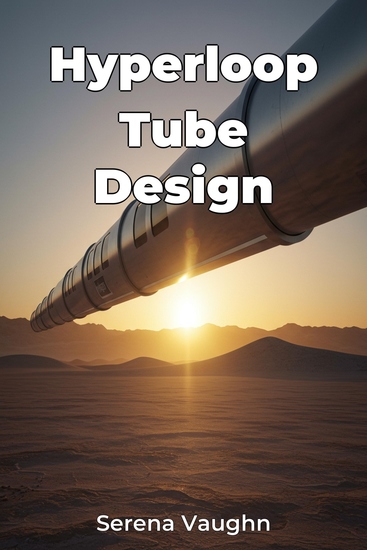
Hyperloop Tube Design - cover

Hyperloop Tube Design

Serena Vaughn

Traductor A AI

Editorial: Publifye

  • 0
  • 0
  • 0

Sinopsis

Hyperloop Tube Design explores the innovative engineering required for high-speed transportation systems exceeding 700 miles per hour in near-vacuum conditions. It emphasizes the critical role of tube infrastructure, highlighting how advanced materials, precise pressure control using vacuum technology, and robust structural integrity are essential for hyperloop viability. The book uniquely addresses the challenges of designing tubes capable of withstanding the combined stresses of high-speed travel and low-pressure environments, while promoting economic feasibility and environmental sustainability.

 
The book begins with the theoretical underpinnings of vacuum technology and high-speed aerodynamics before moving into practical considerations like material selection, which involves balancing tensile strength with resistance to corrosion. Finite element analysis and case studies illustrate how different designs behave under operational loads.

 
Divided into three sections, the book first introduces hyperloop technology and its potential impact, then examines materials science, and finally concentrates on structural engineering aspects, including tube geometry optimization. Drawing from academic research, industry reports, and data from global hyperloop test facilities, the book bridges the gap between theoretical concepts and real-world implementation. It offers design guidelines applicable to existing and future projects, targeting engineers, scientists, and policymakers involved in hyperloop development, as well as students in civil, mechanical, and aerospace engineering.
Disponible desde: 12/03/2025.
Longitud de impresión: 80 páginas.

Otros libros que te pueden interesar

  • SleepWave: Brown Noise & Relaxing Sounds for Anxiety Relief - Sleep Sounds for Ultimate Relaxation - cover

    SleepWave: Brown Noise &...

    SleepWave - Deep Sleep Mastery

    • 0
    • 0
    • 0
    Find Deep Rest and Inner Calm with SleepWave


    Say goodbye to restless nights and overwhelming stress with SleepWave, your go-to solution for a peaceful mind and body. Our carefully curated collection of brown noise and soothing soundscapes is scientifically designed to help you relax, unwind, and fall asleep effortlessly. Whether you're battling insomnia, anxiety, or simply need a break from the daily chaos, SleepWave brings instant relief through the power of sound.
    
      Calm Your Mind: The gentle, low-frequency hum of brown noise creates a calming environment, perfect for reducing anxiety and quieting a busy mind.
      Improve Sleep Quality: SleepWave helps you drift into a deep, restful sleep by masking background noise and providing a consistent, soothing auditory experience.
    
    
      Backed by Science: Sound therapy has been shown to lower stress levels, improve sleep patterns, and support mental well-being.
    
    
      Premium Brown Noise: Deep, relaxing frequencies that ease tension and encourage restful sleep.
      Tailored Soundscapes: A perfect blend of calming ethereal music, healing frequencies and soothing nature sounds to enhance relaxation.
    
    
      For Sleep Seekers: Those struggling with insomnia or poor sleep quality.
      For Anxiety Sufferers: Individuals looking for natural ways to relieve stress and anxiety.
      For Students & Professionals: Anyone needing improved focus and reduced distractions for work or study.
    
     
    Transform your nightly routine with SleepWave and wake up feeling refreshed, revitalized, and anxiety-free. Try SleepWave today, and embrace the tranquility you deserve.
    Ver libro
  • Keeping the Chattahoochee - Reviving and Defending a Great Southern River - cover

    Keeping the Chattahoochee -...

    Sally Sierer Bethea

    • 0
    • 0
    • 0
    Sally Sierer Bethea was one of the first women in America to become a "riverkeeper"—a vocal defender of a specific waterway who holds polluters accountable. In Keeping the Chattahoochee, she tells stories that range from joyous and funny to frustrating—even alarming—to illustrate what it takes to save an endangered river. Her tales are triggered by the regular walks she takes through a forest to the Chattahoochee over the course of a year, finding solace and kinship in nature. 


    For two decades, Bethea worked to restore the neglected Chattahoochee, which provides drinking water and recreation to millions of people, habitat for wildlife, and water for industries and farms as it cuts through the heart of the Deep South. Pairing natural and political history with reflective writing, she draws listeners into her watershed and her memories. Bethea's passion for the natural world—and for defending it with a strong, informed voice animates this instructive memoir. Offering lessons on how to fight for our fundamental right to clean water, Bethea and her colleagues take on powerful corporate and government polluters. They strengthen environmental policies and educate children, reviving the great river from a century of misuse.
    Ver libro
  • Hardware for LLM AI - A Comprehensive Guide to Hardware Infrastructure for Large Language Models AI - cover

    Hardware for LLM AI - A...

    Et Tu Code

    • 0
    • 0
    • 0
    Hardware for LLM AI offers a comprehensive exploration into the intricate world of hardware infrastructure tailored for Large Language Models (LLMs). With a keen focus on practicality and depth, this ebook serves as an indispensable guide for both beginners and seasoned professionals navigating the complexities of LLM hardware. 
    In the introductory section, readers are primed with fundamental insights into the role of hardware in powering LLMs. From understanding the core principles behind LLM hardware to grasping its significance in the broader landscape of artificial intelligence, this section sets the stage for a deep dive into the intricacies of hardware optimization. 
    Whether you're delving into LLM hardware for the first time or seeking to refine your existing setup, this ebook equips you with the knowledge needed to make informed decisions. From dissecting the essential components of LLM hardware to unraveling the
    Ver libro
  • The Cosmic Dance - How Dark Matter and Energy Shape Our Universe - cover

    The Cosmic Dance - How Dark...

    Dirk Fallon

    • 0
    • 0
    • 0
    Long before we had names for them, the stars told us stories. They shimmered in the night sky, seemingly eternal, guiding ancient travelers and inspiring mythologies. But as science advanced, we discovered that what we saw was only part of the story. A vast, invisible component of the universe lurked beyond the reach of our eyes and instruments—a hidden mass that neither emitted nor reflected light. This was the beginning of our encounter with dark matter and dark energy. 
    In the early 20th century, astronomers began to notice something strange. When they looked at galaxies and observed how stars within them moved, they found that these stars were traveling at speeds that didn’t make sense. Based on the visible matter alone—the stars, gas, and dust—the galaxies should have been flying apart. There simply wasn’t enough gravitational pull to hold them together. Something unseen had to be providing the extra mass needed to bind them. 
    This mysterious substance was dubbed "dark matter." It didn't shine or absorb light, making it completely invisible to traditional telescopes. Yet its gravitational effects were undeniable. It was as if galaxies were embedded in massive halos of invisible material, holding them together with unseen hands. The concept was both unsettling and thrilling—it suggested that the universe was much stranger than we had ever imagined.
    Ver libro
  • Stone by Stone - The Magnificent History in New England's Stone Walls - cover

    Stone by Stone - The Magnificent...

    Robert M. Thorson

    • 0
    • 0
    • 0
    There once may have been 250,000 miles of stone walls in America's Northeast, stretching farther than the distance to the moon. And even though most are crumbling today, they contain a magnificent scientific and cultural story. 


    Stone walls tell nothing less than the story of how New England was formed, and in Robert Thorson's hands they live and breathe. Millions of years ago, New England's stones belonged to ancient mountains thrust up by prehistoric collisions between continents. Buried again over centuries by forest and soil buildup, the stones gradually worked their way back to the surface, only to become impediments to the farmers cultivating the land in the eighteenth century, who piled them into "linear landfills," a place to hold the stones. Usually the biggest investment on a farm, often exceeding that of the land and buildings combined, stone walls became a defining element of the Northeast's landscape, and a symbol of the shift to an agricultural economy. 


    Stone walls layer time like Russian dolls, their smallest elements reflecting the longest spans, and Thorson urges us to study them, for each stone has its own story. Linking geological history to the early American experience, Stone by Stone presents a fascinating picture of the land the Pilgrims settled, allowing us to see and understand it with new eyes.
    Ver libro
  • Otolaryngology - Ear Nose and Throat Disorders - cover

    Otolaryngology - Ear Nose and...

    Ava Westwood

    • 0
    • 0
    • 0
    The ear, nose, and throat (ENT) are interconnected structures that perform essential functions such as hearing, balance, respiration, and vocalization. Their anatomical complexity allows them to work together efficiently, contributing to overall health and communication. 
    The ear is divided into three main sections: the outer ear, middle ear, and inner ear. The outer ear consists of the auricle (pinna) and the external auditory canal, which collect and direct sound waves toward the tympanic membrane (eardrum). The middle ear houses the ossicles—the malleus, incus, and stapes—which amplify sound vibrations and transmit them to the inner ear. The inner ear contains the cochlea, a spiral-shaped structure that converts sound waves into electrical impulses sent to the brain via the auditory nerve. The inner ear also includes the vestibular system, which regulates balance through the semicircular canals and otolithic organs that detect head movements and spatial orientation. 
    The nose serves both respiratory and olfactory functions. It is structurally divided into the external nose and the internal nasal cavity. The external nose consists of bone and cartilage, while the nasal cavity is lined with mucosa and separated by the nasal septum. Inside the nasal cavity, the nasal conchae (turbinates) filter, warm, and humidify incoming air. The olfactory epithelium, located in the upper nasal cavity, contains specialized receptors that detect odors and transmit sensory information to the brain through the olfactory nerve. Additionally, the paranasal sinuses—frontal, maxillary, ethmoid, and sphenoid—contribute to voice resonance, mucus production, and the reduction of skull weight.
    Ver libro