Junte-se a nós em uma viagem ao mundo dos livros!
Adicionar este livro à prateleira
Grey
Deixe um novo comentário Default profile 50px
Grey
Assine para ler o livro completo ou leia as primeiras páginas de graça!
All characters reduced
On the Firmness of the Wise Man - Enriched edition - cover
LER

On the Firmness of the Wise Man - Enriched edition

Seneca

Tradutor Aubrey Stewart

Editora: DigiCat

  • 0
  • 0
  • 0

Sinopse

In "On the Firmness of the Wise Man," Seneca, a prominent Stoic philosopher and statesman, explores the nature of resilience and the internal fortitude required to navigate life's adversities. Through a series of poignant essays, he employs a reflective and persuasive literary style characterized by vivid metaphors and rhetorical questions that challenge readers to examine their moral convictions and emotional responses. Set against the backdrop of a tumultuous Roman Empire, Seneca's work is deeply entrenched in Stoic thought, advocating for a life led by reason and virtue rather than the whims of fortune. Seneca's own life experiences, including his exile, political intrigues, and relationship with power, inform his philosophical outlook. A tutor to Emperor Nero, he witnessed both the heights of privilege and the depths of despair, prompting him to articulate a philosophy that emphasizes the importance of inner strength and clarity in times of crisis. His personal struggles with the very ideas he espouses enrich the text, offering authenticity and depth to his philosophical discourse. This eloquent treatise is essential reading for anyone seeking wisdom in the face of adversity. Seneca's insights resonate across ages, offering timeless guidance on cultivating resilience and achieving emotional equilibrium. Readers will find inspiration in his call to embrace reason, thereby navigating the storms of life with unyielding firmness.

In this enriched edition, we have carefully created added value for your reading experience:
- A succinct Introduction situates the work's timeless appeal and themes.
- The Synopsis outlines the central plot, highlighting key developments without spoiling critical twists.
- A detailed Historical Context immerses you in the era's events and influences that shaped the writing.
- An Author Biography reveals milestones in the author's life, illuminating the personal insights behind the text.
- A thorough Analysis dissects symbols, motifs, and character arcs to unearth underlying meanings.
- Reflection questions prompt you to engage personally with the work's messages, connecting them to modern life.
- Hand‐picked Memorable Quotes shine a spotlight on moments of literary brilliance.
- Interactive footnotes clarify unusual references, historical allusions, and archaic phrases for an effortless, more informed read.
Disponível desde: 21/07/2022.
Comprimento de impressão: 22 páginas.
Outros livros que poderiam interessá-lo

  • Augustine the African - cover

    Augustine the African

    Catherine Conybeare

    • 0
    • 0
    • 0
    An extraordinary work of revisionist history that centers Africa in the life of one of our greatest philosophers. 


    Augustine of Hippo (354–430), also known as Saint Augustine, was one of the most influential theologians in history. His writings, including the autobiographical Confessions and The City of God, helped shape the foundations of Christianity and Western philosophy. But for many centuries, Augustine's North African birth and Berber heritage have been simply dismissed. Catherine Conybeare, a world-renowned Augustine scholar, here puts the "African" back in Augustine's story. As she relates, his seminal books were written neither in Rome nor in Milan, but in Africa, where he had returned as a wanderer during a perilous time when the Western Roman Empire was crumbling. Using extant letters and other shards of evidence, Conybeare retraces Augustine's travels, revealing how his groundbreaking works emerge from an exile's perspective within an African context. In its depiction of this Christian saint, Augustine the African upends conventional wisdom and traces core ideas of Christian thought to their origins on the African continent.
    Ver livro
  • Most Famous Silent Film Actors The: The History of the Actors Who Helped Shape Hollywood in the Roaring Twenties - cover

    Most Famous Silent Film Actors...

    Editors Charles River

    • 0
    • 0
    • 0
    Only a select few actors become international stars in their time, but none had as unique a career as Charlie Chaplin. Chaplin was the first true film star, and he managed to do so even when films were still silent. He has been honored with too many awards to count, and the fact that his name remains instantly recognizable nearly a century after his first film is a testament to his influence. Chaplin is known for the singular blend of pathos and humor evinced by his films, and it is not uncommon for audiences to laugh and cry at alternate points of a Chaplin film, a trait that continues to endear audiences even to this day. 
    In the 1920s, the burgeoning movie industry was starting to come into its own, and alongside actor and director Charlie Chaplin, Buster Keaton was at the peak of Hollywood. It’s no surprise that Keaton was so effective in silent films, because he had been practicing comedy in his family’s vaudeville acts as “The Little Boy Who Can’t Be Damaged”, becoming a popular performer by the age of 5. Indeed, his physical form of comedy, which initially involved having his father throwing him around the stage, translated well onto the screen, and some of his slapstick and other comic gags remain legendary even today, in part because Keaton practiced his own stunts.  
    Everything about Rudolph Valentino, from his body to the characters he played, was exotic. His career may have been abbreviated by his premature death at the age of 31, but Valentino popularized the (somewhat racist) stereotype of the “Latin lover” in Hollywood, and even his name was markedly more out of the ordinary than those of other actors. In an era dominated by hyper-masculine actors like Douglas Fairbanks, or comedians such as Charlie Chaplin and Buster Keaton, Valentino had a more ethnic and mysterious appeal, and he was lusted after by women to a degree that remains unsurpassed in the industry.
    Ver livro
  • The History and Legacy of the Greatest Empires in the Ancient Levant - cover

    The History and Legacy of the...

    Editors Charles River

    • 0
    • 0
    • 0
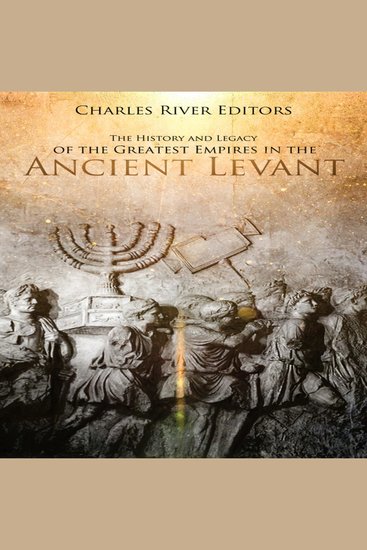
    The pages of world history textbooks contain a litany of “lost” empires and civilizations, but usually, upon further review, it is revealed that these so called lost empires are often just lesser known cultures that had a less apparent impact on history than other more well-known civilizations. When one scours the pages of history for a civilization that was inexplicably lost, but had a great impact during its time, very few candidates can be found, but the Hittites are a notable example. Compared to some of their contemporaries – including the Egyptians, Assyrians, and Babylonians – the Hittites were somewhat distant both culturally and geographically. The Hittites were an Indo-European speaking in an ocean of Afro-Asiatic and Semitic groups, their homeland was to the north of Mesopotamia, and it contained no major river like the Nile, Tigris, or Euphrates Rivers. The Hittite empire was also far less enduring than its neighbors, as it only existed from about 1800-1200 BCE (van de Mieroop 2007, 156), which was considerably shorter than most of the other major kingdoms of the Near East. 
    Of all the peoples of the ancient Near East, the Phoenicians are among the most recognizable but also perhaps the least understood. The Phoenicians never built an empire like the Egyptians and Assyrians; in fact, the Phoenicians never created a unified Phoenician state but instead existed as independent city-state kingdoms scattered throughout the Mediterranean region. However, despite the fact there was never a “Phoenician Empire,” the Phoenicians proved to be more prolific in their exploration and colonization than any other peoples in world history until the Spanish during the Age of Discovery.
    Ver livro
  • Forrest Mars Sr: A short biography - 5 Minutes: Short on time – long on info! - cover

    Forrest Mars Sr: A short...

    5 Minutes, 5 Minute Biographies,...

    • 0
    • 0
    • 0
    Forrest Mars Sr., candy bar king: Life and work in a short biography! Everything you need to know, brief and concise. Infotainment, education and entertainment at its best!
    Ver livro
  • The Channels of Student Activism - How the Left and Right Are Winning (and Losing) in Campus Politics Today - cover

    The Channels of Student Activism...

    Amy J. Binder, Jeffrey L. Kidder

    • 0
    • 0
    • 0
    An eye-opening analysis of collegiate activism and its effects on the divisions in contemporary American politics.  
     
    The past six years have been marked by a contentious political atmosphere that has touched every arena of public life, including higher education. Though most college campuses are considered ideologically progressive, how can it be that the right has been so successful in mobilizing young people even in these environments? 
     
    As Amy J. Binder and Jeffrey L. Kidder show in this surprising analysis of the relationship between political activism on college campuses and the broader US political landscape, while liberal students often outnumber conservatives on college campuses, liberal campus organizing remains removed from national institutions that effectively engage students after graduation. And though they are usually in the minority, conservative student groups have strong ties to national right-leaning organizations, which provide funds and expertise, as well as job opportunities and avenues for involvement after graduation. Though the left is more prominent on campus, the right has built a much more effective system for mobilizing ongoing engagement. What’s more, the conservative college ecosystem has worked to increase the number of political provocations on campus and lower the public’s trust in higher education. 
      
    In analyzing collegiate activism from the left, right, and center, The Channels of Student Activism shows exactly how politically engaged college students are channeled into two distinct forms of mobilization and why that has profound consequences for the future of American politics. 
    Ver livro
  • Empire of Purity - The History of Americans' Global War on Prostitution - cover

    Empire of Purity - The History...

    Eva Payne

    • 0
    • 0
    • 0
    Between the 1870s and 1930s, American social reformers, working closely with the US government, transformed sexual vice into an international political and humanitarian concern. As these activists worked to eradicate prostitution and trafficking, they promoted sexual self-control for both men and women as a cornerstone of civilization and a basis of American exceptionalism. Empire of Purity traces the history of these efforts, showing how the policing and penalization of sexuality was used to justify American interventions around the world. 


    Eva Payne describes how American reformers successfully pushed for international anti-trafficking agreements that mirrored US laws, calling for states to criminalize prostitution and restrict migration, and harming the very women they claimed to protect. She argues that Americans' ambitions to reshape global sexual morality and law advanced an ideology of racial hierarchy that viewed women of color, immigrants, and sexual minorities as dangerous vectors of disease. 


    Drawing on archives in Europe, the United States, and Latin America, Empire of Purity ties the war on sexual vice to American imperial ambitions and a politicization of sexuality that continues to govern both domestic and international policy today.
    Ver livro