¡Acompáñanos a viajar por el mundo de los libros!
Añadir este libro a la estantería
Grey
Escribe un nuevo comentario Default profile 50px
Grey
Suscríbete para leer el libro completo o lee las primeras páginas gratis.
All characters reduced
Rwandan Kingdom - cover

Rwandan Kingdom

Sebastian Farnham

Traductor A AI

Editorial: Publifye

  • 0
  • 0
  • 0

Sinopsis

Rwandan Kingdom explores the captivating history of Rwanda's monarchy, examining its pre-colonial power structures, the disruptions of European colonialism, and its ultimate fall in post-independence politics. The book argues that understanding the Rwandan monarchy is crucial for grasping Rwanda's modern political landscape and the roots of its contemporary social dynamics. Intriguingly, the pre-colonial kingdom had an intricate system of clientage and land tenure that significantly shaped later sociopolitical transformations.

 
The book traces Rwandan history from the kingdom's origins and zenith, analyzing its social hierarchy and economic system to the shifts in power dynamics brought about by colonial rule and the instrumentalization of ethnic divisions. The study uses historical documents, oral traditions, and scholarly research to offer a balanced perspective. Rwandan Kingdom is unique because it provides a long-term historical perspective, tracing the roots of conflict and resilience within Rwandan society, unlike many works that focus solely on the Rwandan genocide.

 
It progresses chronologically, offering a comprehensive view of the Rwandan monarchy's evolution and its lasting impact.
Disponible desde: 19/03/2025.
Longitud de impresión: 58 páginas.
Otros libros que te pueden interesar

  • Dome of the Rock The: The History of the Oldest Islamic Shrine in Jerusalem - cover

    Dome of the Rock The: The...

    Charles River Editors

    • 0
    • 0
    • 0
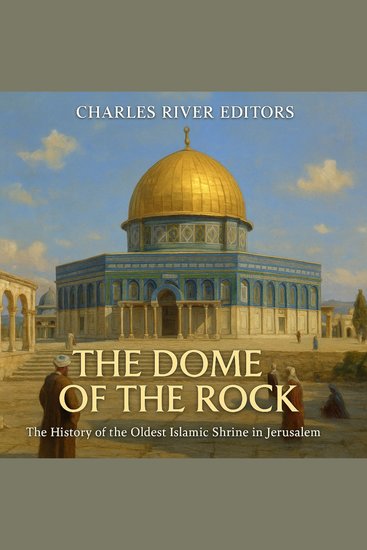
    Among the world’s most recognizable man-made structures, the Dome of the Rock – known in Arabic as the Qubbat as-Sakara – is also one of its most mysterious. Although much of the Dome’s construction, reconstruction, and later additions are well-known from historical texts and archeological work, what it represents, why it was built where it was, and even its use remain the subject of scholarly controversy. Known for its immense size and beauty, and also for being located in the middle of Jerusalem, one of the world’s holiest cities, the Dome of the Rock has been the focus of political leaders who wished to legitimize their rule, religious warriors who believed that it empowered their weapons, and pilgrims who thought it was a site of salvation and enlightenment. As it drew these often diverse and sometimes disparate people to it, it has served the purposes of devout Jews, Muslims, and Christians, who -- although often not peacefully sharing the site -- seem to recognize its spiritual importance. 
    The Dome of the Rock has been many things to many people over the centuries, and historians, art historians, and archaeologists have studied the Dome of the Rock and its background extensively. Academics have created an accurate chronology of its life, as well as details about how the monument was built, including the construction and artistic techniques that were used. The dome was built on the site of what is believed to have been the Solomonic Temple that the Israelites built to worship their god, Yahweh, setting the stage for the entire area to be a holy site for the Abrahamic religions over the following centuries. Historians believe that the Umayyad Muslims saw this background as a prime location to build one of the greatest religious complexes in the Islamic world.
    Ver libro
  • No Second Chances - The Inside Story of the Campaign for a Second EU Referendum - cover

    No Second Chances - The Inside...

    Morgan Jones

    • 0
    • 0
    • 0
    Between 2016 and 2019, a unique coalition assembled within British politics. Combining Corbynite campaigners and Conservative Cabinet ministers, celebrities and grassroots activists, seasoned political veterans and novice political amateurs, this disparate assemblage of forces was brought together by one aim: stopping Brexit. What began as the unfocused, often deeply emotional belief that Britain must not leave the EU morphed, fleetingly, into a mass movement: the People's Vote campaign, a mess of organisations united by the call for a second referendum on Europe.
    From the stunts of youth campaigners and the online antics of new pro-EU influencers to the million-person marches of 2019 and the launch of new centrist parties, many people, serious and unserious alike, dedicated themselves to securing a new vote. A campaign premised on telling the nation that they had gotten it catastrophically wrong was always going to be hard, and it was only made more so by parliamentary maths that never seemed to quite add up. Based on interviews with the people who were there, No Second Chances tells the dramatic, bizarre, and (at times) embarrassing story of one of recent British history's most feted roads not taken.
    Ver libro
  • The Olive Branch from Palestine - cover

    The Olive Branch from Palestine

    Jerome M. Segal

    • 0
    • 0
    • 0
    The Olive Branch from Palestine provides a new narrative of the Palestinian effort to end the Israeli-Palestinian conflict and offers a bold plan for ending this conflict today, a proposal that focuses on Palestinian agency and the power of the Palestinians to bring about the two-state solution, even in the absence of a fully committed Israeli partner. In part 1, Jerome Segal provides an analytical and historical study of the 1988 Palestinian Declaration of Independence, a remarkable act of unilateral peacemaking through which the PLO accepted the legitimacy of the 1947 Partition Resolution and thereby redefined Palestinian nationalism. In part 2, he proposes a new strategy in which, outside of negotiations, the Palestinians would advance, in full detail, the end-of-claims/end-of-conflict peace plan they are prepared to sign, one that powerfully addresses the Palestinian refugee question and is supported by the refugees themselves yet does not undermine Israel as a Jewish-majority state. Extended Edition with Maps
    Ver libro
  • Urban Governance and Renewal - Policy Power and Change (3 in 1) - cover

    Urban Governance and Renewal -...

    Lyric Vale

    • 0
    • 0
    • 0
    In the complex architecture of city-making, governance represents the invisible framework that shapes urban development, mediates competing interests, and determines whose voices influence the evolution of metropolitan spaces. Beyond physical infrastructure and economic dynamics, the political dimensions of urban environments—the policies, power structures, and institutional arrangements that guide development decisions—profoundly shape the trajectory of cities and the lived experiences of their inhabitants. This comprehensive exploration delves into the intricate domains of Urban Policy and Governance, The Politics of Urban Development, and Urban Renewal, examining how formal and informal power systems determine which neighborhoods flourish, which communities face displacement, and how the benefits and burdens of urban change are distributed. 
    The narrative of urban governance is fundamentally a story of contested visions, where multiple stakeholders—from elected officials and corporate interests to community organizations and marginalized populations—engage in complex negotiations over the future of shared urban spaces. By examining the historical evolution, contemporary challenges, and emerging paradigms of urban governance, this book illuminates how policy frameworks, political processes, and renewal strategies reflect deeper power dynamics and ideological perspectives about what cities should be and whom they should serve. Readers will journey through diverse urban contexts—from the boardrooms where development decisions are made to the grassroots movements that challenge established power structures—discovering how governance approaches have evolved from top-down interventions to more collaborative, participatory models that recognize the plurality of urban stakeholders.
    Ver libro
  • Secession of the South The: The History of the Confederacy’s Establishment Before the Civil War - cover

    Secession of the South The: The...

    Jonathan Gianos-Steinberg,...

    • 0
    • 0
    • 0
    The election of Abraham Lincoln was the impetus for the secession of the South, but that was merely one of many events that led up to the formation of the Confederacy and the start of the Civil War. Sectional hostility over the issue of slavery had been bubbling for most of the 19th century, and violence had already broken out in places like Bleeding Kansas. Political issues like the Missouri Compromise, popular sovereignty, and the Fugitive Slave Act all added to the arguments.  
    	The secession of the South was one of the seminal events in American history, but it also remains one of the most controversial. Over the last 160 years, the greatest debate over the Civil War has remained just what caused it, and as recently as April 2010, Virginia’s governor declared April “Confederate History Month in Virginia,” issuing a proclamation that made no mention of slavery. Facing an intense backlash, Virginia’s governor first defended his proclamation by noting "there were any number of aspects to that conflict between the states.” Days later, the governor apologized for the omission of slavery. In turn, the governor’s backtracking was criticized by many Southerners, most prominently the Sons of Confederate Veterans, a large organization dedicated to commemorating the Confederates. The governor later declared that there would be no Confederate History Month in 2011.    
    	Arguments over the war’s causes are nothing new. Before the war had even ended, Confederate soldiers were asserting that they were fighting for states’ rights. In the early 20th century, prominent historians such as Charles Beard theorized that the war was based on economic differences between the North and South. Although slavery had been the dominant political issue in the 50 years leading up to the Civil War, these historians began to assert that slavery was not necessarily a factor.
    Ver libro
  • How to Analyze People with Dark Psychology - The Ultimate Guide to Read and Influence Others using Body Language Manipulation Subliminal Mind Control NLP and Persuasion - cover

    How to Analyze People with Dark...

    Jacob Anderson

    • 0
    • 0
    • 0
    Are you tired of people? You are thinking so hard why do they think and act so irrationally? 
    The truth is… you getting stressed because people do not behave according to your expectations. 
    In this book, you will learn excellent strategies to help you understand every person individually. You will realize why and how individuals behave randomly and the things that encourage them to do so. 
    You will learn detailed and comprehensive methods that will lead you to read a person like a professional. Apart from that, you'll become a better leader as you understand how to affect and influence others properly. 
    You will also be guided through strategies of defending and detecting yourself against mind control and manipulators, having gained the capability to read others' minds. 
    You will learn: 
    •   How to read people in a few seconds 
    •   Myers-Briggs 16 Personality Test 
    •   How to detect Romantic Interest in a moment 
    •   Male and Female Dating Signs 
    •   7 Ideologies behind successfully Influencing PeopleListen to this awesome audiobook!
    Ver libro