Junte-se a nós em uma viagem ao mundo dos livros!
Adicionar este livro à prateleira
Grey
Deixe um novo comentário Default profile 50px
Grey
Assine para ler o livro completo ou leia as primeiras páginas de graça!
All characters reduced
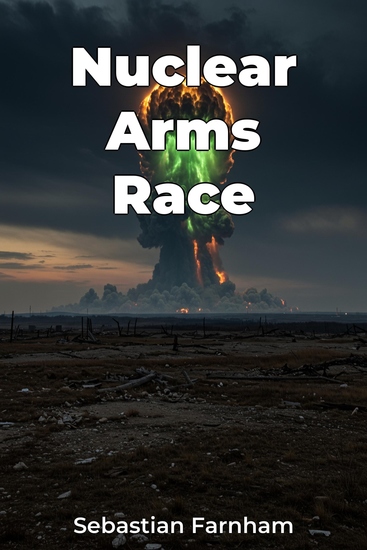
Nuclear Arms Race - cover
LER

Nuclear Arms Race

Sebastian Farnham

Tradutor A AI

Editora: Publifye

  • 0
  • 0
  • 0

Sinopse

Nuclear Arms Race explores the complex history of nuclear weapons, from their creation to their lasting impact on global politics. It argues that the nuclear arms race was more than just a military buildup; it was a product of political ideologies, scientific breakthroughs, and human error, shaping international relations even today. The book uniquely examines the psychological factors influencing decision-making during high-tension periods, offering a human-centered perspective.

 
The book progresses by first introducing the science behind nuclear weapons and the ethical dilemmas faced by their creators. It then analyzes the Cold War arms race, including events like the Cuban Missile Crisis and the SALT talks. Finally, it addresses post-Cold War challenges like nuclear proliferation and terrorism, drawing on declassified documents, archival materials, and interviews with key figures. This approach provides a comprehensive understanding of nuclear weapons and their impact on the world.
Disponível desde: 04/03/2025.
Comprimento de impressão: 66 páginas.
Outros livros que poderiam interessá-lo

  • Hollywood’s Favorite Screwball Actresses: The Lives and Legacies of the Women Who Popularized the Comedy Genre - cover

    Hollywood’s Favorite Screwball...

    Editors Charles River

    • 0
    • 0
    • 0
    “If I couldn't laugh, I'd rather die.” – Claudette Colbert 
    The 1930s were the height of the classical Hollywood era, known for lavish studio productions by heavyweights like MGM, RKO, Warner Brothers, Paramount, and 20th Century Fox, which were operating at the height of their powers. Every major studio possessed a long roster of contract players, and films were released at such a rapid pace that it made for an especially competitive environment within the industry. Even while America remained in the throes of the Great Depression, the film industry continued to flourish, and movies easily supplanted the theater as the main attraction for American entertainment. Indeed, it would be no exaggeration to claim that the film industry reached its zenith during the decade precisely because it offered an affordable (if very temporary) escape from the anxieties of the economic woes of the era. 
    When the American Film Institute ranked its top 50 screen legends of the 20th century, many of the people named had careers spanning several decades, but one of them managed the feat despite living less than three decades. Ranked as the 22nd greatest actress of the 20th century, Jean Harlow was on the screen for less than 10 years, but in that time the “Blonde Bombshell” became the most popular actress of the 1930s, eclipsing superstars like Joan Crawford and Norma Shearer along the way. In fact, the platinum blonde accomplished that feat as a leading lady for just five years before her premature death of renal failure at the age of 26. 
    Carole Lombard has been memorialized in many fitting ways as an actress, and one of her biggest contributions to Hollywood was the blond archetype that the film industry used successfully for decades in screwball comedies, paving the way for the success of women like Marilyn Monroe. Perhaps the most remarkable aspect of that fact is that it was actually based on Carole’s gushing personality. 
    Ver livro
  • Emotional Flow - A Practical Guide for Deep Feelers - cover

    Emotional Flow - A Practical...

    Claudia Burdette

    • 0
    • 0
    • 0
    Emotional Flow: A Practical Guide for Deep FeelersWritten by Claudia Burdette 
    If you’ve ever been told you’re “too emotional” or that you “feel too much,” this audiobook is your permission slip to stop apologizing for your depth. 
    Emotional Flow is a gentle, grounded companion for empaths, deep feelers, and highly sensitive people who often absorb the world around them. It teaches you how to honor your emotions without being ruled by them—how to move from overwhelm to wisdom, and from reactivity to radiant calm. 
    Through compassionate reflection and simple daily practices, you’ll learn to: 
    — Release emotions that aren’t yours to carry 
    — Transform sensitivity into emotional intelligence 
    — Break old emotional loops and reclaim inner peace 
    — Anchor calm and clarity in your nervous system 
    — Turn sacred sensitivity into your quiet superpower 
    Each chapter offers soft, insightful guidance to help you understand your emotional world—not as something to fix, but as something to celebrate. 
    This isn’t about numbing your feelings. It’s about learning their language. 
    It’s about remembering that your depth isn’t a burden—it’s your brilliance. 
    Includes a Bonus Companion Guide PDF with grounding tools, reflection prompts, and simple energy practices to help you stay centered in everyday life. 
    Available along side this audiobook or at: GrowWithClaudia.co.
    Ver livro
  • Meno - cover

    Meno

    Plato

    • 0
    • 0
    • 0
    Meno is a Platonic dialogue which addresses the question of whether virtue can be taught, and examines the concept of anamnesis. Through Socrates' questioning of Meno's slave, the dialogue suggests that knowledge is innate, with Socrates suggesting that all learning occurs through recollection of our prior knowledge rather than through instruction. Read in English, unabridged.
    Ver livro
  • Ancient Explorers of Eastern North America - cover

    Ancient Explorers of Eastern...

    George Mitrovic

    • 0
    • 0
    • 0
    Where did the first colonizers of North America from Europe, North Africa and the British Isles first land? 
    The greatest mixed cluster is in New England and spreading out from it. And how did these ancient travellers journey across the face of North America? Generally in the same way that they got there. In watercraft! To the ancients the seas, lakes and rivers were the superhighways as crossing land until the later Romans developed road systems was in many cases near impossible if not exceptionally difficult. This is how all great exploration has always been done until recently. You sail across a sea and then up the first river you find to see where it will go and this scenario never changes. You only go overland when there are no rivers or lakes as it is much harder to consign goods or travel over unexplored territory than by water. 
    Another great superhighway to trade was from the Gulf of Mexico and up its tributaries and in some cases via now long lost rivers to the Great Lakes themselves. In fact you did not even need long lost rivers. Present day ones would do just as well. The Des Moines River which connects up with the Mississippi River runs within five miles west of Lake Michigan within the present city limits of Chicago. Not too far to move a boat across land from the Great Lakes to the Des Moines River. Even less distance in the thousand year pluvial periods when water levels were higher and there was more rain. There were wider rivers and more lakes to travel across.
    Ver livro
  • The Mythology of the Aborigines - Dreamtime Stories from Australia - cover

    The Mythology of the Aborigines...

    Odessa Nightshade

    • 0
    • 0
    • 0
    Aboriginal mythology is one of the oldest and most enduring oral traditions in the world, deeply intertwined with the identity, spirituality, and way of life of Indigenous Australians. At the heart of this mythology is the concept of **Dreamtime**, the sacred era in which the land, people, and laws of existence were formed. Unlike Western myths, which often separate the past from the present, Dreamtime stories are timeless—continuing to shape and guide Aboriginal communities today.  
      
    One of the most profound aspects of Aboriginal mythology is its role in explaining the creation of the natural world. The Dreaming tells of powerful ancestral beings who shaped the land, created rivers and mountains, and gave life to animals and people. These stories are not just myths but sacred truths, passed down through generations as a way of preserving knowledge, laws, and cultural values. The **Rainbow Serpent**, for example, is a common figure in many Aboriginal cultures, often depicted as a creator spirit responsible for forming the land and waterways. Other tales speak of celestial beings, tricksters, and wise elders who teach important lessons about survival, respect, and harmony with nature.  
      
    Oral tradition is central to Aboriginal culture, ensuring that these sacred stories remain alive. Unlike written texts, Dreamtime stories are preserved through song, dance, rock art, and storytelling, allowing each generation to contribute to and maintain their significance. The stories are more than entertainment; they serve as maps for navigating the landscape, moral guides for behavior, and spiritual connections to the ancestors. They also emphasize a deep respect for the land, as many stories explain the sacred nature of particular sites, reinforcing the importance of environmental stewardship. 
    Ver livro
  • Constantinople - History of the Byzantine Empire’s Gigantic Capital - cover

    Constantinople - History of the...

    Kelly Mass

    • 0
    • 0
    • 0
    Constantinople, a city that witnessed the rise and fall of empires, served as the capital for three significant civilizations: the Roman/Byzantine Empire (330–1204 and 1261–1453), the Latin Empire (1204–1261), and the Ottoman Empire (1453–1922). Following the Turkish War of Independence, the capital was moved to Ankara, marking a new chapter in Turkish history. In 1930, the city was officially renamed Istanbul, which remains the Republic of Turkey’s largest city and financial center today. It is also the largest city in Europe. 
    In 324 AD, Emperor Constantine the Great made the fateful decision to transform the old city of Byzantium into a grand new capital, naming it "New Rome" and consecrating it on May 11, 330 AD. This strategic move solidified the city’s place in history, becoming the heart of the Eastern Roman Empire, later known as the Byzantine Empire. 
    Constantinople became a symbol of Orthodox Christianity, often referred to as the "cradle of Orthodox Christian civilization." The city's religious and cultural significance cannot be overstated; it was home to some of the most iconic architectural and religious sites in the Christian world. From the mid-fifth to the early-thirteenth century, Constantinople was Europe's largest, most affluent metropolis, a center of commerce, culture, and intellectual activity.
    Ver livro