¡Acompáñanos a viajar por el mundo de los libros!
Añadir este libro a la estantería
Grey
Escribe un nuevo comentario Default profile 50px
Grey
Suscríbete para leer el libro completo o lee las primeras páginas gratis.
All characters reduced
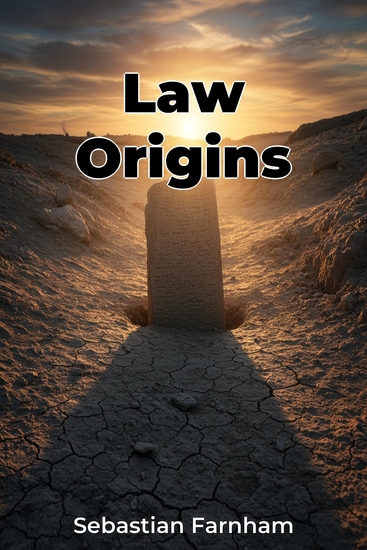
Law Origins - cover

Law Origins

Sebastian Farnham

Traductor A AI

Editorial: Publifye

  • 0
  • 0
  • 0

Sinopsis

Law Origins explores the fascinating journey of legal systems from rudimentary beginnings to the sophisticated structures governing modern nations. It examines how early civilizations established order and conceptualized justice, focusing on the emergence and influence of ancient legal codes.

 
These codes, like the Code of Hammurabi, marked a shift towards predictability and standardization, replacing arbitrary decisions with established principles. Understanding these systems is crucial because they laid the groundwork for concepts like due process and property rights, central to modern law.

 
The book argues that modern law's fundamental principles are rooted in the legal innovations of early civilizations. By understanding the historical and social contexts in which these systems arose, readers gain insights into the challenges of maintaining social cohesion and resolving conflicts in early societies.

 
The book progresses by first introducing law as a social construct, then examining written legal codes in Mesopotamia and Egypt, and finally exploring legal thought in ancient Greece and Rome before discussing the legacy on modern frameworks. This approach offers a fresh perspective on the evolution of law by examining legal history through social and political development.
Disponible desde: 29/03/2025.
Longitud de impresión: 65 páginas.


Otros libros que te pueden interesar

  • Integrity - The Foundation of Trust: Upholding Your Principles in Every Situation - cover

    Integrity - The Foundation of...

    Esther Jameson

    • 0
    • 0
    • 0
    Integrity is the cornerstone of trust, and trust is essential in every aspect of our lives. Whether in personal relationships, the workplace, or society as a whole, integrity is what binds us together and ensures that we can rely on one another. Without integrity, trust is compromised, and relationships become fragile, leading to misunderstandings, broken bonds, and lost opportunities. It is the foundation upon which all other virtues are built, and it is a key element that defines who we are as individuals and how we are perceived by others. 
    At its core, integrity is about being true to one’s principles and values, regardless of the circumstances. It means doing the right thing, even when no one is watching, and maintaining consistency between one’s beliefs, actions, and words. Integrity is not about perfection; rather, it is about being honest, transparent, and committed to doing what is right, even when it’s difficult or inconvenient. 
    One of the most powerful aspects of integrity is its ability to build trust. When we demonstrate integrity, others come to rely on our word and actions. Trust is built over time through repeated demonstrations of honesty, consistency, and reliability. Integrity fosters an environment where people feel safe, respected, and valued. It is the glue that holds relationships together, whether in families, friendships, or workplaces. People with integrity are seen as dependable, ethical, and authentic, making them natural leaders and role models.
    Ver libro
  • Only Three Votes - The Battle for the Political Soul of Wales in 1970s Carmarthenshire - cover

    Only Three Votes - The Battle...

    Gwynoro Jones, Alun Gibbard

    • 0
    • 0
    • 0
    "These were events which prefigured and did much to shape the political battles of the last half century, the devolution half century in Wales. They shaped the non-nationalist, but distinctive Welsh social democratic preferences of the last sixty years. For anyone interested in the formative moments of today's Wales, this is both essential and highly entertaining reading." – Mark Drakeford, First Minister of Wales 2018-2024
    It was a period of Welsh politics that has become etched in the collective memory. The rise of a Welsh independence movement and the first Plaid Cymru Member of Parliament. The Labour Party searching for a way forward in a political climate that was riven with dissension and eventual rancour. It was a fight for social democracy against the centralised power of the British state.
    The first battlefield was Carmarthen and the protagonists were Gwynfor Evans, the leader of Plaid Cymru and the young Labour hopeful Gwynoro Jones. Their rivalry lasted throughout the Seventies. They fought three elections and on one occasion the result was decided by just three votes.
    This book tells the story of a political rivalry which was also very personal. It was a local confrontation that drew on national battlelines. It was about Carmarthen and Wales. Both men had their vision of the Wales they wanted to fight for. These pages unfold the story from Gwynoro Jones' perspective for the first time, in an attempt to redress the imbalance of Gwynfor Evans' story dominating the narrative for so long.
    Drawing on an extensive archive, collected at the time, Gwynoro shows how the two fought their politics in the newspapers of the day and through speeches on constituency public platforms, where they argue about the Welsh language and devolution, Europe and agriculture. But they only ever actually met once. Gwynoro also reflects on how he views those turbulent years today.
    Through their wranglings, a picture is also painted of Welsh politics in the decade that led up to the referendum on devolution in 1979, as Plaid and Labour searched for a way forward. And ultimately, a generation later, to the creation of a parliament for Wales.
    Ver libro
  • How to Influence People - cover

    How to Influence People

    Damian Hoffman

    • 0
    • 0
    • 0
    Do you want to have a stronger influence over people without coming across as aggressive or pushy? Be able to read anyone like an open book? Then you need to keep reading...Recent scientific studies have demonstrated one intriguing fact: people can be influenced to do nearly anything, under the right circumstances. In the famous Stanford Prison Experiment of 1971, researchers found that without the use of force or even suggestion, participants could be influenced to behave in a highly unusual manner. Due to external influences alone, test subjects were compelled to behave outside of their true personalities, as a response to a well-designed trigger. In this book, you’ll discover:- Eight highly-effective strategies to trick anyone into your desired outcome (By studying each method in depth, you’ll learn how to have the upper hand in every situation!)- Six powerful manipulation techniques to help you take what you want without aggression.- Expert-known psychological theories to help you penetrate the mind of absolutely ANYONE.- How to stop being overpowered by colleagues and superiors.- The secret to mastering the art of subtlety and NEVER getting caught.- Essential tips to decode body language and INSTANTLY read anyone like an open book.- How to recognize the six types of people most likely to say ‘YES’ (And the four steps you MUST take to ensure they do!)And much, much more...Even if you’ve always felt powerless and like you completely lack the social or mental skills to make any lasting influence, the extensive psychological research behind this guide will give you all the tools you need to cultivate persuasive mastery, genius subtlety, and a heightened awareness of any physical signal.If you’re ready to unleash your full potential as a master of persuasion, and finally make the transition from ‘overpowered’ to ‘powerful,’ then all you have to do is scroll up and click ‘Add to Cart’ now.
    Ver libro
  • Democratic Delusions - How the Media Hollows Out Democracy and What We Can Do About It 1st Edition - cover

    Democratic Delusions - How the...

    Natalie Fenton

    • 0
    • 0
    • 0
    A free media is inextricably linked to a healthy democracy, but in many parts of the world liberal democracies are deemed to be dying or on the demise—a demise that many forms of media have enabled while heralding themselves as democracy's savior. The hollowing out of democracy in these ways has left many people questioning the value of (neo)liberal democratic societies. What can we do about it? 


    Democratic Delusions explores the potential of our media and tech systems to be democratic and contribute to a just and transformative democracy. This is only possible, Natalie Fenton argues, by first situating our political systems and mediated worlds within global capitalism. By interrogating different media and their relationship to seven key elements of democracy—power, participation, freedom, equality, public good, trust, and hope—the book asks: What is the response of society when the ability of news media to speak truth to power has been restricted by corporate logic? And, how do we tackle a deep-rooted market logic that shifts public debate towards private interest and marginalizes progressive perspectives? The book explores how these elements can be reimagined through newly conceived media and tech landscapes and, ultimately, what democracy might be in a future mediated world that places more power in the hands of more people.
    Ver libro
  • Shakespeare Without a Life - cover

    Shakespeare Without a Life

    Margreta de Grazia

    • 0
    • 0
    • 0
    A fascinating account of how Shakespeare's works were understood and valued by readers and writers from the seventeenth to the nineteenth century, before Shakespeare's biography came to dominate readings of his plays and poetry. 


    For almost two centuries after his death, Shakespeare had no biography. The makings of one were not available. No chronology had been devised by which to coordinate the events in his life with the writing of his works. Nor was there an archive of primary materials on which to base a life. And the only work by Shakespeare written in the first person, the Sonnets, had yet to be critically edited and incorporated into the canon. Without a biography, how could Shakespeare have been valued and understood? 


    In Shakespeare Without a Life, Margreta de Grazia looks at aspects of Shakespeare's reception between 1600 and 1800 that have been all but lost to the now still prevailing biographical impulse. It recovers the anecdote as a form of literary criticism, retrieves the ancient category of genre as the canon's organizing rubric, demonstrates how the quest for authentic documents invalidated other forms of literary record, and reveals how the desire to forge connections between Shakespeare's life and the Sonnets occluded his self-presentation as the 'deceasèd I' of a posthumous poet.
    Ver libro
  • The Russian Revolution - The World's Most Influential Revolution The Rise of the Communist Party and the Soviet Union - cover

    The Russian Revolution - The...

    Days of History

    • 0
    • 0
    • 0
    Are you looking to learn more about the momentous events of the Russian Revolution? 
    The ensuing Civil War and the establishment of the new Soviet Union? 
    - Look no further. This book will give you an understanding of this complex but fascinating period of history. 
    We begin with a comprehensive overview of the Russian Revolution, including its causes, participants, and key moments that led to its success. 
    Then we'll explore the aftermath of the revolution, the Red Army’s role in establishing Soviet rule, the formation of the Communist Party, and how it all impacted Russia’s foreign relations.  
    We also take a closer look at two pivotal figures from this time: Vladimir Lenin and Joseph Stalin. 
    This book is perfect for anyone looking to gain in-depth knowledge of one of the 20th century’s most significant revolutions or just curious about what happened during this era.  
    So don't wait any longer—order your copy today!
    Ver libro