Join us on a literary world trip!
Add this book to bookshelf
Grey
Write a new comment Default profile 50px
Grey
Subscribe to read the full book or read the first pages for free!
All characters reduced
Historic Documents - cover

Historic Documents

Sebastian Farnham

Translator A AI

Publisher: Publifye

  • 0
  • 0
  • 0

Summary

Historic Documents explores pivotal writings that have shaped nations and individual rights, focusing on the evolution of governance and legal systems. It delves into foundational texts to reveal their impact on political thought and their role in sparking revolutions. The book highlights how these documents underpin modern concepts of democracy, justice, and individual liberty. For example, the Magna Carta, initially a peace treaty, became a cornerstone for limiting governmental power, while the Declaration of Independence articulated fundamental human rights, influencing movements for self-determination.

 
Examining the establishment of limitations on governmental power, the articulation of human rights, and the struggle for self-determination, the book traces the origins and development of these texts against societal upheaval and philosophical debates. It analyzes the historical context, key provisions, philosophical influences, and consequences of documents like the English Bill of Rights and the Universal Declaration of Human Rights.

 
The book's approach provides detailed context, assuming a general understanding of history while remaining accessible. The book progresses from introducing foundational documents to in-depth examinations, culminating in a discussion of their enduring legacy and contemporary application. By analyzing these documents not as relics but as living blueprints, Historic Documents offers a unique perspective, revealing the interconnectedness of human history and the ongoing relevance of these texts in addressing contemporary challenges in political science and history.
Available since: 03/06/2025.
Print length: 67 pages.

Other books that might interest you

  • Towton and Bosworth: The History of the Wars of the Roses’ Most Important Battles - cover

    Towton and Bosworth: The History...

    Editors Charles River

    • 0
    • 0
    • 0
    Today, roses are a sign of love and luxury, but for over 30 years, they provided the symbols for two houses at war for control of the English throne. Thousands of people died and many more were injured fighting beneath the white rose of York and the red rose of Lancaster, and the noble families ruling England tore each other apart in a struggle that was as bitter as it was bloody. Though what followed was a period of strong rule under the Tudors monarchs, it ultimately came at a terrible cost, and even then, it was through Elizabeth of York that the Tudor line received its legitimacy. After all, while Henry VII won his throne in battle, Elizabeth of York was the daughter of King Edward IV of England, a Yorkist monarch. 
    Despite their limited social and economic impact, the political and personal dramas of the Wars of the Roses have ensured that they are well remembered and still part of the popular imagination. The most famous depictions of the period came from Shakespeare, whose earliest plays included Richard III and the three parts of Henry VI. Naturally, Shakespeare dramatized the tensions of what he presented as hugely destructive events, and his account, which showed the damage done by corruption and weak rule, and which turned Richard III into a popular villain, aimed to please the Tudor dynasty still in power at the time. Of course, it also played to a popular interest in high drama and the sort of personal and political conflicts that lay at the heart of the war. 
    Indeed, the Wars of the Roses were perfect material for a drama about greed, power and ambition, and many others followed Shakespeare's example. From Henry Payne's painting of a Shakespearean scene in which the two sides of the war are picked to John Everett Millais's mournful portrait of the Princes in the Tower, these pictures often evoke the tension and sorrow of the period, bringing it dramatically to life.
    Show book
  • Vanishing Point - The Search for a B-24 Bomber Crew Lost on the World War II Home Front - cover

    Vanishing Point - The Search for...

    Tom Wilber

    • 0
    • 0
    • 0
    At the height of World War II, a B-24 Liberator bomber vanished with its crew while on a training mission over upstate New York. The final hours and ultimate resting place of pilot Keith Ponder and seven other US aviators aboard the plane remain mysteries to this day. The tale is at once a compelling instance of loss on the World War II American home front and a more extensive, largely unreported history. Ponder—a twenty-one-year-old from rural Mississippi—and his crew were tragically unexceptional casualties in the monumental effort to recruit and train an air force en masse to counter the global conquest of Nazi Germany and Imperial Japan. More than fifteen thousand American airmen and, in some cases, women burned, crashed, or fell to their deaths in stateside training accidents during the war—their lives and stories shuffled away in piles of Air Force bureaucracy. 


    The forgotten story of Getaway Gertie was originally inspired by summer evenings around the campfire on the shores of Lake Ontario, where parts of the plane have washed up. Building on those campfire tales, Wilber deftly connects myth with fact and memory with historicity. The result is a vivid portrait of the forgotten soldier of the home front and a new take on the meaning of wartime sacrifice as the last survivors of the Greatest Generation pass away.
    Show book
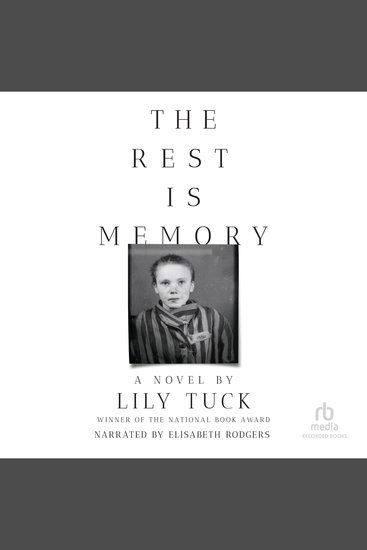
  • The Rest Is Memory - cover

    The Rest Is Memory

    Lily Tuck

    • 0
    • 0
    • 0
    THE HEARTBREAKING STORY OF A YOUNG CATHOLIC GIRL TRANSPORTED TO AUSCHWITZ BECOMES A RASHOMON-LIKE RONDO BY ONE OF OUR GREATEST NOVELISTS. 
     
    First glimpsed riding on the back of a boy’s motorcycle, fourteen-year-old Czeslawa comes to life in this mesmerizing novel by Lily Tuck, who imagines her upbringing in a small Polish village before her world imploded in late 1942.  
     
    Stripped of her modest belongings, shorn, and tattooed number 26947 on arriving at Auschwitz, Czeslawa is then photographed. Three months later, she is dead. 
     
    How did this happen to an ordinary Polish citizen? This is the question that Tuck grapples with in this haunting novel, which frames Czeslawa’s story within the epic tragedy of six million Poles who perished during the German occupation. A decade prior to writing The Rest Is Memory, Tuck read an obituary of the photographer Wilhelm Brasse, who took more than 40,000 pictures of the Auschwitz prisoners. Included were three of Czeslawa Kwoka, a Catholic girl from rural southeastern Poland. Tuck cut out the photos and kept them, determined to learn more about Czeslawa, but she was only able to glean the barest facts: the village she came from, the transport she was on, that she was accompanied by her mother and her neighbors, her tattoo number, and the date of her death. From this scant evidence, Tuck’s novel becomes a remarkable kaleidoscopic feat of imagination, something only our greatest novelists can do. 
     
    “Beautifully written, all the while instilling a sense of horror” (Susanna Moore), Tuck’s language swirls about, yet not a word is out of place. The subtly rotating images tumble out at us, accelerating as we learn about Czeslawa’s tragic stay in Auschwitz, the lives of real people such as the barbaric Commandant Rudolf Höss; his unconscionable wife, Hedwig; the psychiatrist and child rescuer Janusz Korczak; and the mordant Polish short story writer Tadeusz Borowski. 
     
    Although we are certain of Czeslawa’s fate, we have no choice but to keep turning the pages, thoroughly mesmerized by Tuck’s near otherworldly prose. 
     
    In Lily Tuck’s hands, The Rest Is Memory becomes an unforgettable work of historical reclamation that rescues an innocent life, one previously only recalled by a stark triptych of photographs. 
     
    “The Rest Is Memory is a literary resurrection, as shattering as it is astonishing. Lily Tuck has done the impossible; from darkness and hideous cruelty, she has woven an unforgettable paean to hope, to life, to justice.”—Junot Diaz
    Show book
  • American Bulk - Essays on Excess - cover

    American Bulk - Essays on Excess

    Emily Mester

    • 0
    • 0
    • 0
    What if we explored our relationship to consumption with the same depth and feeling we use to tell stories of great loves and losses? 


    Americans are caught up in bulk. We guiltily watch Amazon boxes pile up on the porch, wade through endless reviews to find the perfect product, and crave the comforting indulgence of a chain restaurant. In American Bulk, Emily Mester intertwines cultural critique and personal history to explore how the things we buy, eat, amass, and discard become an intimate part of our lives. With humor and sharp intellect, she reflects on the joys and anxieties of family Costco trips, how a seasonal stint at Ulta Beauty taught her the insidious art of the sale, and what it means to get Mall Sad. In a nuanced examination of diet culture and fatness, Mester recounts her teenage summer at fat camp and the unexpected liberation she finds there. Finally, she ventures to Storm Lake, Iowa, to reckon with her grandmother's abandoned hoard, excavating the dysfunction that lies at the heart of her family's obsession with stuff. American Bulk introduces listeners to a striking new literary talent from the American heartland, one who dares to ask us to regard consumption not with guilt but with grace and empathy.
    Show book
  • I Think I'm Depressed - Thoughts of a depressed mind - cover

    I Think I'm Depressed - Thoughts...

    Sbusiso Manqa

    • 0
    • 0
    • 0
    I Think I'm Depressed is a raw, honest, and deeply personal journey into the mind of someone battling with silent pain. Written by author and award-winning entrepreneur Sbusiso Manqa, this powerful narrative captures the inner dialogue of depression — the doubts, numbness, isolation, and flickers of hope. 
    In a world where mental health struggles are often misunderstood or dismissed, this book gives voice to those unspoken moments and helps readers feel seen, heard, and less alone. Whether you’re facing your own battle or seeking to understand someone else’s, I Think I’m Depressed offers reflection, connection, and a reminder that healing begins with honesty.
    Show book
  • Quantum Psychology - cover

    Quantum Psychology

    Introbooks Team

    • 0
    • 0
    • 0
    Who are we? Where we came from? Where are we going? Here are some questions that carry throughout life and are more present from the metanoia (or second half of life) - Greek word that has two roots: meta, which means both "significant change" and "beyond," derived from nous, a word of multiple and complex meanings, including "higher consciousness" - when man begins to wonder about the meaning of life, in search of spirituality. Respond to them has been the great challenge of science, performing research and studies in an attempt to clarify such mysteries. 
    What brought this work can not carry the truth claim, but is only an understanding of reality mode. Nothing I can say about the origin or purpose of man since the process still takes place, that is, there is always a "being" (becoming, coming-to-be), a processing that seems to have to do with what Jung called "individuation" - or principle individuation - which is to carry out or consciously realize the full potential of each. What is up with this work is only the communication of compliance.
    Show book