¡Acompáñanos a viajar por el mundo de los libros!
Añadir este libro a la estantería
Grey
Escribe un nuevo comentario Default profile 50px
Grey
Suscríbete para leer el libro completo o lee las primeras páginas gratis.
All characters reduced
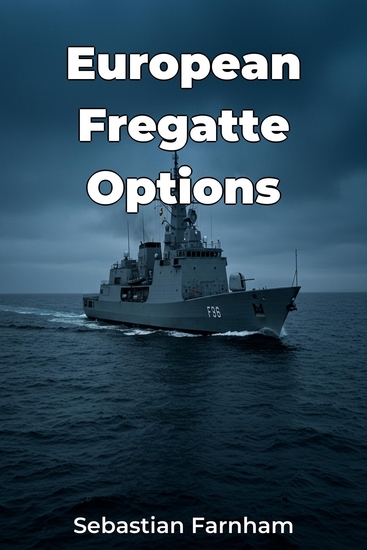
European Fregatte Options - cover

European Fregatte Options

Sebastian Farnham

Traductor A AI

Editorial: Publifye

  • 0
  • 0
  • 0

Sinopsis

European Fregatte Options addresses Norway's critical need to modernize its naval capabilities amidst evolving maritime threats and geopolitical instability. The book offers a detailed comparison of three European frigate designs: the British Type 26, the German F127, and the French FDI, evaluating their suitability for Norway's unique defense requirements and Arctic interests. Readers will gain insights into each platform's technical specifications, operational strengths, and strategic alignment with Norway's defense policy and NATO collaborations.

 
The book's approach is to move beyond nationalistic biases, providing an unbiased assessment of each frigate's capabilities and limitations. For instance, the analysis considers how each frigate would perform in anti-submarine warfare, crucial for protecting Norway's coastline. The book highlights how selecting a new frigate represents a long-term investment in national security, impacting defense strategy and international relations.

 
The book begins with an overview of modern frigate design, tracing the evolution from Cold War platforms to today's multi-mission assets. It then analyzes Norway's operational requirements, geographic challenges, and defense policy objectives. Finally, it offers a comparative assessment of the three frigates, outlining key considerations for Norway’s decision-makers and presenting a balanced perspective on each option.
Disponible desde: 12/03/2025.
Longitud de impresión: 84 páginas.

Otros libros que te pueden interesar

  • Women’s Clothing And Fashion - Elevate Your Style - A Guide To Women’s Clothing And Fashion - cover

    Women’s Clothing And Fashion -...

    Owen Jones

    • 0
    • 0
    • 0
    In the vibrant tapestry of human expression, fashion serves as a dynamic medium through which individuals communicate their identities, aspirations, and creativity. For women, in particular, clothing is a canvas upon which they paint their unique stories. It reflects their evolving rôles, cultural influences, and personal preferences. ‘Women’s Clothing and Fashion’ embarks on a journey through this ever-changing landscape, offering insights into the artistry, trends, and cultural significance that define women’s fashion. 
    This book explores the variations of women’s attire. Through the chapters, we’ll navigate the nuances of dressing for various occasions, celebrating the power of fashion to empower, inspire, and express. 
    But ‘Women’s Clothing and Fashion’ is more than a historical account or a style guide. It’s an invitation to embrace the diversity and creativity that fashion offers, encouraging readers to curate wardrobes that not only reflect their personalities but also elevate their confidence. Whether one finds solace in timeless classics or delights in embracing the cutting-edge trends of the moment, this book celebrates the boundless possibilities that fashion presents. 
    Join us on this exploration of women’s clothing and fashion, where each page unfurls a new layer of understanding, appreciation, and inspiration. Let’s celebrate the artistry that we wear daily, recognizing that every outfit tells a story, and every woman is an artist in her own right.
    Ver libro
  • Bisexual Married Men - Stories of Relationships Acceptance and Authenticity - cover

    Bisexual Married Men - Stories...

    Robert Cohen

    • 0
    • 0
    • 0
    How much do you know about the lives of bisexual men who are married to women? Bisexual people make up a majority of the LGBT+ community, but they are still relatively hidden and misunderstood. Robert Brooks Cohen aims to address this invisibility by sharing a collection of interviews with Bi+ men who are or were married to women, helping listeners find connection, understanding, and community. 


    Their experience is often erased as "not queer enough," but these men are queer, and they are challenging societal norms in important and innovative ways. Written by the host of Two Bi Guys, this book intersperses Robert's bisexual journey with the diverse stories of other Bi+ men to help normalize sexual fluidity and create more awareness and compassion. This book shares interviews with men and a few of their wives from a wide array of cultural and regional backgrounds, religious family structures, and more, helping bisexual men find pride, validation, and joy in their sexual identity. 


    This book is written about and for bisexual and questioning men so they can see their experience represented. However, it is also for their partners, family, and friends—as well as students, researchers, clinicians with bisexual clients, and allies—so that they can better understand the unique challenges of this identity and provide meaningful support.
    Ver libro
  • Roman Empire The: The History and Legacy of the Ancient World’s Most Famous Empire from Julius Caesar to Its Collapse - cover

    Roman Empire The: The History...

    Editors Charles River

    • 0
    • 0
    • 0
    Possibly the most important man of antiquity, and even all of history, was Julius Caesar. Alexander Hamilton, the famous American patriot, once remarked that “the greatest man who ever lived was Julius Caesar”. Such a tribute, coming from one of the Founding Fathers of the quintessential modern democracy in reference to a man who destroyed the Roman Republic, is testament to the enduring mark that Caesar left upon the world. The ultimate conqueror, statesman, dictator, visionary, and opportunist, during his time in power Caesar expanded the borders of Rome to almost twice their previous size, revolutionized the infrastructure of the Roman state, and destroyed the Roman Republic for good, leaving a line of emperors in its place. His legacy is so strong that his name has become, in many languages, synonymous with power: the Emperors of Austria and Germany bore the title Kaiser, and the Czars of Russia also owe the etymology of their title to Caesar. His name also crept further eastward out of Europe, even cropping up in Hindi and Urdu, where the term for “Emperor” is Kaisar. 
    Even in his time, Caesar was in many ways larger than life, and because of his legacy as virtual founder of the Roman Empire, much of what was written about – and by – him during his life and immediately after his assassination was politically motivated. His successor, Octavian Augustus, had a strong interest in ensuring that Caesar’s life be painted in a favorable light, while Caesar’s political enemies attempted to paint him as a corrupt, undemocratic dictator who was destroying the old order of the Republic.  
    As Roman leaders vied with each other for power and constantly fought civil wars, Rome’s famous roads fall into disrepair, the economy was crippled, the continent-wide trade system that had flourished in the previous years was replaced with a basic barter system, and there was a reduction in international trade.
    Ver libro
  • Rudyard Kipling: A short biography - 5 Minutes: Short on time – long on info! - cover

    Rudyard Kipling: A short...

    5 Minutes, 5 Minute Biographies,...

    • 0
    • 0
    • 0
    Rudyard Kipling, India-born Britishman and nobel prize laureate: Life and work in a short biography! Everything you need to know, brief and concise. Infotainment, education and entertainment at its best!
    Ver libro
  • Stakeknife's Dirty War - The Inside Story of Scappaticci the IRA's Nutting Squad and the British Spooks Who Ran the War - cover

    Stakeknife's Dirty War - The...

    Richard O'Rawe

    • 0
    • 0
    • 0
    Freddie Scappaticci was born in 1946 and raised in a deeply nationalist area of Belfast. When the Troubles broke out in 1969, he joined the Provisional IRA, where he quickly rose through the ranks, becoming commander of Belfast in 1984. 
     
    From the outside, Scappaticci appeared to be a dedicated volunteer, but inwardly, he had become disenchanted with the IRA and, in 1977, he started working for British intelligence. At the same time, he took up a leading role in a newly formed IRA Internal Security Unit (ISU), aka ‘The Nutting Squad’. He personally executed two suspected informers and condemned at least thirty-seven more to death. 
     
    Was he the serial killer that history portrays him? Undoubtedly. But it’s not that simple, because every time he passed the death penalty on an informer, he told his British intelligence handlers about the intended execution, giving them the opportunity to prevent the killing. 
     
    Did the tasking and co-ordinating group, the primary British intelligence organisation in Northern Ireland during the troubles, aid and abet the IRA in the mass-murder of British citizens? That is the question Richard O’Rawe poses in Stakeknife’s Dirty War. But O’Rawe goes further: he lays out a very compelling case that points to the TCGs running the IRA’s war from the mid-1980s to the 1994 ceasefire. Such was the British intelliegence penetration of the IRA, that Freddie Scappaticci, aka ‘Stakeknife’, was in control of all IRA operations in the Belfast Brigade area. This book will shock readers, and cause them to reevaluate everything they formerly held to be true about Stakeknife’s dirty war in Ireland.
    Ver libro
  • Whatever Next? - On Adult Adoptee Identities - cover

    Whatever Next? - On Adult...

    Josephine Jay, Adaline Bara,...

    • 0
    • 0
    • 0
    For adoptees, the word 'lucky' gets thrown around a lot. They're regularly told they're lucky to not be in an orphanage, lucky to have been brought into a family, lucky to be adopted at all. Often they're depicted in media as being broken, in need of saving and fixing. Then they're expected to become the hero of their own journeys and overcome their origins.
    Whatever Next? considers how these traditional narratives surrounding adoption have both dominated and damaged adoptive communities for many years, and what we should do to avoid these pitfalls.
    Inspired by the conversations within their Whatever Next? community project, Jo, Addie and Hannah explore the key tropes that adoptees grapple with and how these conversations are evolving, with the goal of kickstarting new dialogues around the adoption experience more broadly, and showcase how beneficial shared discussion can be.
    Ver libro