¡Acompáñanos a viajar por el mundo de los libros!
Añadir este libro a la estantería
Grey
Escribe un nuevo comentario Default profile 50px
Grey
Suscríbete para leer el libro completo o lee las primeras páginas gratis.
All characters reduced
Border Shift Histories - cover

Border Shift Histories

Sebastian Farnham

Traductor A AI

Editorial: Publifye

  • 0
  • 0
  • 0

Sinopsis

Border Shift Histories examines the profound impact of changing national borders on human migration throughout history. This book argues that border shifts are not simply administrative changes but powerful catalysts for social, economic, and demographic transformations. For example, the redrawing of borders has historically triggered both forced displacement and voluntary migration, fundamentally altering the demographics and cultural landscapes of affected regions. By exploring the intricate relationship between geopolitical research and historical cartography, the book reveals how border regimes and migration drivers shape human movement, population distribution, and cultural exchange globally.

 
The book progresses through three key sections, starting with a theoretical framework that defines core concepts. It then analyzes specific case studies from different continents and historical periods, illustrating the varied impacts of border shifts. Finally, it explores contemporary implications, scrutinizing how current border policies and geopolitical tensions continue to fuel migration flows. This approach provides a comprehensive understanding of the complex interplay between borders and migration, making it a valuable resource for policymakers, historians, and anyone interested in understanding the root causes of contemporary migration patterns.
Disponible desde: 21/02/2025.
Longitud de impresión: 72 páginas.
Otros libros que te pueden interesar

  • Mindful Masculinity: An Anger Management Workbook for Men - Empowering Men to Navigate Anger with Wisdom and Compassion - cover

    Mindful Masculinity: An Anger...

    Alex Carter

    • 0
    • 0
    • 0
    Are you a man seeking a transformative journey toward emotional intelligence and self-mastery? Dive into "Mindful Masculinity: An Anger Management Workbook for Men Empowering Men to Navigate Anger with Wisdom and Compassion," an empowering book designed to guide you through the intricate landscape of anger with wisdom and compassion. 
    In a world where societal expectations often pressure men to suppress emotions, this workbook serves as a beacon for those ready to explore and understand their anger. Written by seasoned experts in psychology and mindfulness, this comprehensive guide offers a unique blend of practical exercises, insightful reflections, and mindfulness techniques tailored to the male experience. 
    "Mindful Masculinity" doesn't just address anger; it redefines masculinity by encouraging self-reflection and embracing vulnerability. Discover a roadmap to navigate anger in a healthy way, fostering better communication, enhanced relationships, and personal growth. As you progress through the workbook, you'll unlock the power of mindfulness, transforming anger into a tool for positive change.
    Ver libro
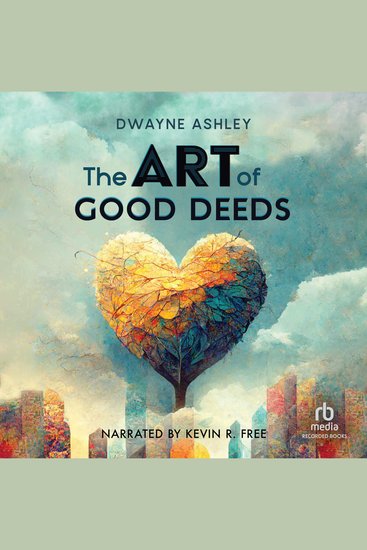
  • The Art of Good Deeds - cover

    The Art of Good Deeds

    Dwayne Ashley

    • 0
    • 0
    • 0
    In The Art of Good Deeds, leaders in the world of philanthropy share personal stories and real-life experiences of the impact of good deeds—not large donations to charity or grand gestures, but simple and practical acts of kindness.  
     
    This insightful collection of narratives encourages deeper understanding of both financial and social giving through real-life people making philanthropy and good deeds part of their everyday life. A welcome donor-recognition gift for not-for-profits, crowdfunding campaigns,  
    and others you want to either inspire or thank—or both! 
     
    Here you will meet models of giving whose actions you or your organization can follow to make a real difference. Philanthropic insiders reveal how small but powerful acts of kindness change the world for the better. 
     
    “Doing good doesn’t have to be something big. Helping little old ladies like myself or just giving a smile to someone are good deeds we all can do.”—Opal Lee, retired teacher, counselor, activist known as the “grandmother of Juneteenth,” and Nobel Peace Prize nominee
    Ver libro
  • Finding Your Happy Place - for you all who are confused Happiness - cover

    Finding Your Happy Place - for...

    ALEXANDRA REEDS

    • 0
    • 0
    • 0
    In a world overflowing with noise, obligations, and constant comparisons, true happiness often feels just out of reach. Finding Your Happy Place is a gentle yet powerful guide to reconnecting with yourself, discovering what joy really means for you, and creating a life that feels purposeful and fulfilling. 
    Through inspiring reflections, practical exercises, and beautifully illustrated pages, Alexandra Reed invites you on a journey of self-discovery. You’ll learn how to:Identify and honor your personal values.Let go of self-doubt and limiting beliefs.Build deeper, more authentic relationships.Embrace change with resilience and curiosity.Design daily rituals that nurture your well-being. 
    Whether you’re seeking clarity in times of transition, or simply longing for more peace and joy in everyday life, this book will help you carve out a space where you can breathe, reflect, and grow. 
    Your happy place isn’t somewhere you have to find—it’s something you can create. And this book will show you how.
    Ver libro
  • Ancient Egypt’s Most Important Cult Centers: The History of the Sacred Sites that Shaped Egyptian Mythology - cover

    Ancient Egypt’s Most Important...

    Charles River Editors

    • 0
    • 0
    • 0
    Perhaps the most intriguing aspect of ancient Egyptian civilization was its inception from the ground up, as the ancient Egyptians had no prior civilization which they could use as a template. In fact, ancient Egypt itself became a template for the civilizations that followed.  
    One of the primary reasons why modern scholars know so much about Egyptian history is due to many monuments found up and down the Nile. Although some of the tombs built on the west bank of the Nile River have suffered a fair amount of wind damage and all of the great monuments have endured the ravages of time, they are amazingly well-preserved, thanks both to Egypt’s arid climate and good workmanship. The Egyptian monument builders were truly a class above their contemporaries in terms of their trade, which was helped by the fact that they worked with the more permanent materials of sandstone and limestone, unlike Mesopotamian builders who were forced to primarily work with mud and brick.  
    In ancient Egypt, cities held political and religious significance, which meant that if the political or religious tides changed, so too could the fortunes of particular cities. Memphis is perhaps the best known of ancient Egypt’s cities because it was fortunate enough to be the political capital of the Egyptian state for most of its history. Hundreds of miles to Memphis’ south, Thebes became an important city during the Middle Kingdom and its stature grew during the New Kingdom when many of the pharaohs came from there and the national god, Amun, had its cult center in the city. Other cities, such as Tanis and Sais, were important for much shorter periods in Egyptian history. The city of Abju, which was known as Abydus to the Greeks, and later became known simply as “Abydos” had a history that was as long as Memphis’, and although its influence on pharaonic culture may not have been as apparent, it was no less profound.
    Ver libro
  • Cave of Bones - cover

    Cave of Bones

    Lee Berger, John Hawkes

    • 0
    • 0
    • 0
    In the summer of 2022, Lee Berger lost 50 pounds in order to wriggle though impossibly small openings in the Rising Star cave complex in South Africa—spaces where his team has been unearthing the remains of Homo naledi, a proto-human likely to have coexisted with Homo sapiens some 250,000 years ago. The lead researcher on the site, still Berger had never made his way into the dark, cramped, dangerous underground spaces where many of the naledi fossils had been found. Now he was ready to do so. Once inside the cave, Berger made shocking new discoveries that expand our understanding of this early hominid—discoveries that stand to alter our fundamental understanding of what makes us human. So what does it all mean? Join Berger on the adventure of a lifetime as he explores the Rising Star cave system and begins the complicated process of explaining these extraordinary finds—finds that force a rethinking of human evolution, and discoveries that Berger calls "the Rosetta stone of the human mind."
    Ver libro
  • Racial Justice for the Long Haul - How White Christian Advocates Persevere (and Why) - cover

    Racial Justice for the Long Haul...

    Christine Jeske

    • 0
    • 0
    • 0
    Many White Christians feel convicted when they hear of racial injustice but aren't sure what they can do. They often become overwhelmed by deep divisions, conflicting priorities, and historical burdens. They need a clearer vision for engagement with racial justice and reconciliation that goes beyond easy answers or simplistic optimism. Isn't there anyone who has found a way forward? 
     
    Anthropologist Christine Jeske has studied precisely this question. Her one-of-a-kind research started by asking people of color about their work and experience with White advocates of racial justice. She then studied the postures, ideas, and actions of those they recommended as positive examples. 
     
    In Racial Justice for the Long Haul, Jeske presents her findings on what makes for an effective, enduring approach, revealing shared threads in the lives of White Christians who have faithfully embraced the call to advocate for justice. By abandoning simplistic answers and confronting the depths of suffering and injustice, they discover a bold way of hope that perseveres. This book features a unique methodology of interviews with Christian leaders of color and White advocates, makes qualitative ethnographic research accessible, and provides concrete examples of how White Christians can grow―and persist―in working for racial justice.
    Ver libro