Junte-se a nós em uma viagem ao mundo dos livros!
Adicionar este livro à prateleira
Grey
Deixe um novo comentário Default profile 50px
Grey
Assine para ler o livro completo ou leia as primeiras páginas de graça!
All characters reduced
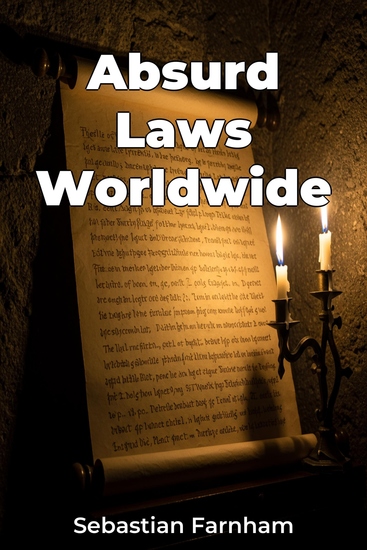
Absurd Laws Worldwide - cover
LER

Absurd Laws Worldwide

Sebastian Farnham

Tradutor A AI

Editora: Publifye

  • 0
  • 0
  • 0

Sinopse

Absurd Laws Worldwide explores the peculiar world of antiquated legislation still in effect across the globe. These strange laws, often rooted in specific historical events or cultural norms, reveal surprising insights into a nation's past and evolving sense of justice. For example, some regions still have laws regulating seemingly trivial activities, like poultry crossing roads, highlighting how outdated regulations can persist. The book not only examines these legal oddities but also delves into their impact on society and the reasons for their continued existence. The book takes an interdisciplinary approach, drawing connections to world history, political science, and even sociology to understand the broader context of these peculiar bans and legal loopholes. Organized around themes like outdated regulations and peculiar bans, the book progresses from introducing the concept of legal absurdity to detailed case studies from various countries. By examining court records and historical documents, the book sheds light on the challenges of legal reform and the ongoing debate between tradition and progress in legal systems.
Disponível desde: 31/03/2025.
Comprimento de impressão: 67 páginas.

Outros livros que poderiam interessá-lo

  • The Child and the Curriculum - cover

    The Child and the Curriculum

    John Dewey

    • 0
    • 0
    • 0
    "The Child and the Curriculum" is a book written by John Dewey, an American philosopher, psychologist, and educational reformer, and published in 1902. The book is a collection of essays and lectures that explore Dewey's ideas about the relationship between the child and the curriculum in education. 
    Dewey argues that education should focus on the child's experiences and interests, rather than on a predetermined curriculum that is disconnected from the child's life. He advocates for a child-centered approach to education that emphasizes active learning, critical thinking, and problem-solving. 
    According to Dewey, the curriculum should be flexible and adaptable to the needs and interests of each child, rather than a fixed set of subjects that all students must learn. He also emphasizes the importance of hands-on, experiential learning, and the integration of subjects across disciplines. 
    Overall, "The Child and the Curriculum" is a seminal work in the field of education that continues to influence educational theory and practice today. Dewey's ideas about child-centered education, active learning, and the integration of subjects continue to shape the way educators think about teaching and learning
    Ver livro
  • The Lost Cause and the Great War - Progressive Reform and Patriotism in the American South - cover

    The Lost Cause and the Great War...

    Robert E. Hunt

    • 0
    • 0
    • 0
    The Lost Cause and the Great War tells the stories of central Tennessee Progressive-era reformers to illustrate the fascinating broader issue of how Southerners steeped in Lost Cause Civil War mythologies simultaneously developed patriotic American fervor. Focusing on Luke Lea, a prominent politician and American army officer who attempted to capture Kaiser Wilhelm II during World War I, the book reveals the intricate interplay between three competing ideas: attachment to the memory of the Confederacy, intense American nationalism, and advocacy for progressive reforms. 


    Hunt shows that Lea and his contemporaries sought either to harmonize these competing loyalties or to compartmentalize them to use when needed. Through insightful accounts of Tennessee's 1928 presidential campaign, the American Legion's response to cuts to veteran benefits in 1933, and the redefinition of America's global role post–World War II, Hunt shows how these reformers achieved a balance that held until the Civil Rights movement disrupted this delicate consensus. 


    Hunt's rich account reveals how Lea and others like him wove national patriotism and Southern collective memory into a cohesive narrative that supported their broader Progressive goals. The book provides vivid examples of how collective memory and narratives shape social and political movements.
    Ver livro
  • Dakota War of 1862 The: The History and Legacy of the Sioux Uprising during the American Civil War - cover

    Dakota War of 1862 The: The...

    Editors Charles River

    • 0
    • 0
    • 0
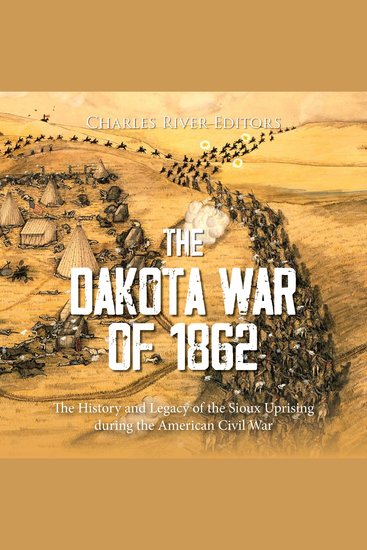
    Despite being one of the most erstwhile foes the U.S. government faced during the Indian Wars, the Sioux and their most famous leaders were grudgingly admired and eventually immortalized by the very people they fought. Sitting Bull and Crazy Horse remain household names due to their leadership of the Sioux at the fateful Battle of the Little Bighorn, where the native warriors wiped out much of George Custer’s 7th Cavalry and inflicted the worst defeat of the Indian Wars upon the U.S. Army. Red Cloud remains a symbol of both defiance and conciliation, resisting the Americans during Red Cloud’s War but also transitioning into a more peaceful life for decades on reservation.  
    	However, one of the more overlooked conflicts the U.S. Army had with the Sioux took place during the American Civil War. It is known by various names, including the Dakota War, the US-Dakota War, the Dakota Uprising, the Sioux Outbreak, and Little Crow’s War (after the principal Dakota leader), but the current most commonly used name for the war is the “Dakota War.” Two of the four Dakota tribes in the state unleashed their anger and frustration on largely immigrant communities that were heavily German or Norwegian, and the massacres took a heavy toll. In the process, the conflict featured the largest Indian siege of an Army fort in American history, and the end of the conflict brought the largest mass execution in American history.  
    	Indeed, the total loss of life during the Dakota War was perhaps the second largest of all the Indian Wars in North America, second only to the bloody King Philip’s War in colonial New England in the late 17th century, during which more than 1,000 settlers were killed. Throughout the Dakota War, as many as 800 whites were killed, although no one knows the total, and many of the victims were buried in anonymous mass graves.
    Ver livro
  • The Shining Gateway - Illuminating the Path to Self-Mastery and Peace - cover

    The Shining Gateway -...

    James Allen, Tim Zengerink

    • 0
    • 0
    • 0
    What if you could illuminate a personal gateway that leads to inner strength, virtuous living, and enduring peace? 
    James Allen’s uplifting text explores the quest for self-mastery by emphasizing positive thought, ethical conduct, and spiritual harmony. Adapted for modern readers, The Shining Gateway underscores that each of us carries the capacity for profound transformation—a radiant journey that begins with how we choose to think, feel, and act. 
    What You’ll Discover in This Modern Translation: 
    - Key virtues that propel you toward higher living 
    - Techniques for sustaining a positive, resilient mindset 
    - The link between inner discipline and outer harmony 
    - Encouragement to see challenges as catalysts for self-growth 
    Imagine walking a bright, purposeful path every day—one in which your highest ideals guide each choice, cultivating a sense of deep fulfillment and tranquility. James Allen’s timeless guidance helps you unlock the shining gateway within. 
    Enter the radiant path. Get your copy now and kindle the inner light that leads to self-mastery and peace.
    Ver livro
  • Swift Sword - The True Story of the Marines of Mike 3 5 in Vietnam 4 September 1967 - cover

    Swift Sword - The True Story of...

    Doyle Glass

    • 0
    • 0
    • 0
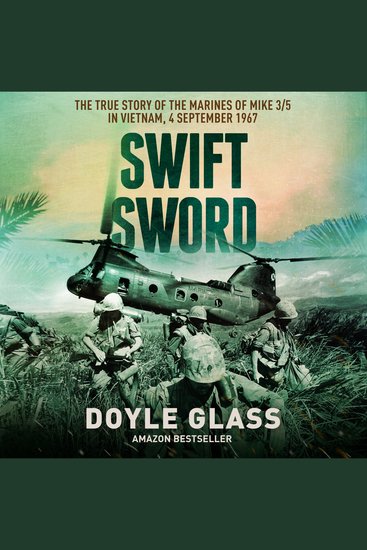
    Monday, 4 September 1967 
    Marine Lance Corporal Jack Swan crested the face of a bare, rocky knoll in 
    the Que Son Valley of South Vietnam. Following Swan were the 164 Marines of 
    Mike Company, Third Battalion, Fifth Marines, First Marine Division. Their 
    mission was to locate and rescue two understrength and isolated companies 
    of felow Marines who were under attack by the North Vietnamese Armv 
    The sight of a quiet and serene rice paddy and shrub covered valley greeted 
    Swan. Too serene, he thought, as he caught sight of a trembling bush. "I think 
    I just saw that bush move!" he shouted. "If it moves again, shoot it!" his squad 
    leader commanded he bush moved Swan hired. and the hush went down 
    Then hell on earth broke loose. 
    Rocket-propelled grenades, AK-47 fire, mortars, and machine guns engulfed 
    the exposed Marines. The vaunted 2nd NVA Division, six thousand, five hundred 
    men strong and expertly camouflaged, had sprung their well-laid trap. 
    Instead of coming to the rescue of their embattled comrades, it was now the 
    men of Mike 3/5 who were about to be annihilated. Burdened with a rifle, the 
    M16, that would often malfunction, how could they hope to beat back a vastly 
    superior foe bent on their destruction? 
    Outnumbered, out-gunned, and exposed, would any of the men of Mike 3/5 survive?
    Ver livro
  • Carolingian Empire - The Influence and Expansion of the Franks during the Middle Ages - cover

    Carolingian Empire - The...

    Kelly Mass

    • 0
    • 0
    • 0
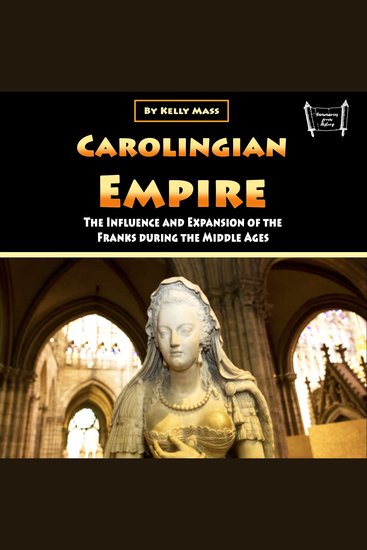
    The Carolingian Empire, which existed from 800 to 888, was a dominant force in western and central Europe during the early Middle Ages. Founded by the Carolingian dynasty, this empire emerged from the Frankish kingdom, which had been ruled by this lineage since 751 and included control over the Lombards in Italy starting in 774. The empire's significance was amplified when Pope Leo III crowned Charlemagne, the Frankish king, as emperor in Rome on Christmas Day in 800, marking a pivotal moment in the attempt to reestablish a western counterpart to the Roman Empire. This event not only solidified Charlemagne's power but also laid the groundwork for what would eventually become the Holy Roman Empire. 
    At its zenith, the Carolingian Empire stretched across a vast expanse, covering approximately 1,112,000 square kilometers (429,000 square miles) and supporting a population estimated between 10 to 20 million people. Charlemagne's reign was characterized by military conquests, administrative reforms, and cultural revival, known as the Carolingian Renaissance, which fostered the preservation and promotion of learning and the arts. 
    However, the empire faced challenges after the death of Emperor Louis the Pious in 840. A civil war erupted among his heirs, leading to the Treaty of Verdun in 843, which partitioned the empire into three distinct kingdoms. Although one monarch was still recognized as emperor, his authority was significantly limited, confining his power mainly to his own realm. This division undermined the unity that Charlemagne had worked hard to establish.
    Ver livro