Join us on a literary world trip!
Add this book to bookshelf
Grey
Write a new comment Default profile 50px
Grey
Subscribe to read the full book or read the first pages for free!
All characters reduced
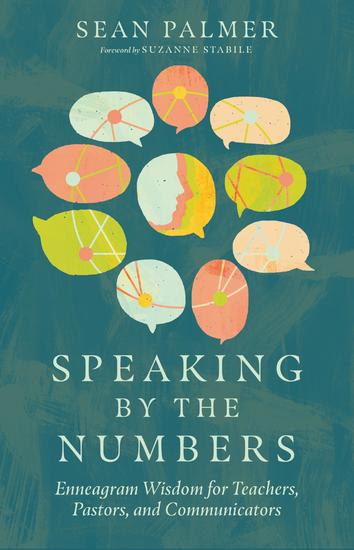
Speaking by the Numbers - Enneagram Wisdom for Teachers Pastors and Communicators - cover

Speaking by the Numbers - Enneagram Wisdom for Teachers Pastors and Communicators

Sean Palmer

Publisher: IVP

  • 0
  • 0
  • 0

Summary

It's not just what you say, but how you say it.
Good communicators know this, but it's often easier said than done. Teachers, leaders, and speakers are often left bewildered, wondering why the content that was so carefully planned and delivered seems to fall flat with the audience. The art of communication requires more than the transfer of information; it both connects with and engages the hearer. To communicate well, speakers must understand both their audience and themselves.
Speaking by the Numbers offers a strategy that combines communication principles with Enneagram wisdom to help leaders, pastors, and teachers understand how to convey content in ways that both inspire and connect with their audiences. Using the Enneagram wisdom of triads and stances, communicators can learn insight into the ways that various Enneagram numbers receive and process information. Sean Palmer draws from his extensive experience as a public speaker to develop communication strategies that lead to connection, transformation, and mobilization of audiences. Providing real examples of speeches and messages he has given, Palmer shows how he uses the Enneagram to craft a message that connects with his audience.
A healthy marriage of Enneagram wisdom and communication skill can help us speak with clarity into the heart of where people live, love, and experience life.
Available since: 05/10/2022.
Print length: 192 pages.

Other books that might interest you

  • A History of Ancient Egypt’s Most Famous Sites - cover

    A History of Ancient Egypt’s...

    Editors Charles River

    • 0
    • 0
    • 0
    Africa may have given rise to the first humans, and Egypt probably gave rise to the first great civilizations, which continue to fascinate modern societies across the globe nearly 5,000 years later. From the Library and Lighthouse of Alexandria to the Great Pyramid at Giza, the Ancient Egyptians produced several wonders of the world, revolutionized architecture and construction, created some of the world’s first systems of mathematics and medicine, and established language and art that spread across the known world.  
    For almost four millennia, the Great Pyramids of Ancient Egypt have been widely hailed as the single greatest archeological feat man has ever accomplished. The Great Pyramid at Giza is the only one of the seven wonders of the ancient world to have survived into the modern age. Unlike so many pieces of the historical record which have been “re-discovered,” relatively recently (in the grand scheme of things,” in their four thousand years of existence, the Great Pyramids have never allowed themselves to be truly forgotten by the human civilization which has never ceased to regard them with wonder and awe. 
    Egypt also impressed its contemporaries. The 5th century B.C. Greek historian Herodotus wrote that Egypt was “the gift of the Nile” because the river made its soil so fertile and thus helped create one of the first great civilizations. Indeed, the land of Egypt so impressed the Greeks that when Alexander the Great conquered the Nile Valley in the 4th century B.C., he decided that he would build a new city on its soil and name it Alexandria. After Alexander, the city of Alexandria grew and became the most important city in the world for centuries as it watched and played a role in the rise and fall of numerous dynasties. The city also became home to one of the Seven Wonders of the Ancient World – the Lighthouse of Alexandria – and a center of culture and learning, which was exemplified by the Library of Alexandria.
    Show book
  • Teotihuacan and Cholula: The History of the Most Important Mesoamerican Cities of the Preclassic Era - cover

    Teotihuacan and Cholula: The...

    Editors Charles River

    • 0
    • 0
    • 0
    Although Teotihuacan reached the height of its power and influence about 1500 years ago, the city is still an endless topic of fascination and debate, in addition to being Mexico’s most toured archaeological site. The origins of the city remain mysterious (as do the city’s founders), and scholars are still coming up with theories to explain the city’s demise. All the while, later Mesoamerican civilizations remembered Teotihuacan, and the Aztec even considered the city’s ruins a site of worship. 
    Cholula is one of the most interesting, enigmatic, and forgotten cities in ancient Mesoamerica, and few people are aware that it is the oldest continuously-occupied settlement in the entire Western hemisphere. The current city is known for the Great Pyramid, which has the largest base of all pyramids in the world, as well as its many colonial churches and constant religious celebrations. All of these things ensure that Cholula is heavily visited, but the tremendous importance of Prehispanic Cholula has mostly been lost in the historical accounts of Puebla and even Mexico as a whole. 
    During the height of Teotihuacan’s influence in the Classic period and the expansion of the Aztecs in the Postclassic, Cholula managed to maintain its independence and grew to become the greatest religious center in central Mesoamerica. As the main site for the cult of the god Quetzalcoatl, Cholula received pilgrims from many Prehispanic cities, and the two high priests of the Temple of Quetzalcoatl were charged with confirming the legitimacy of these foreign rulers, making their role one of the most important in the region. Most sources note that Cholula was a great religious center with a large pyramid, and that it was the site of a terrible massacre perpetrated by the Spanish, but other than that those details, the impressive city remains mostly unknown. 
    Show book
  • George Herbert Mead on Social Psychology - cover

    George Herbert Mead on Social...

    George Herbert Mead, Anselm Strauss

    • 0
    • 0
    • 0
    One of the most brilliantly original of American pragmatists, George Herbert Mead published surprisingly few major papers and not a single book during his lifetime. Yet his influence on American sociology and social psychology since World War II has been exceedingly strong. 
     
    This volume is a revised and enlarged edition of the book formerly published under the title The Social Psychology of George Herbert Mead. It contains selections from Mead’s posthumous books: Mind, Self, and Society; Movements of Thought in the Nineteenth Century; The Philosophy of the Act; and The Philosophy of the Present, together with an incisive, newly revised, introductory essay by Anselm Strauss on the importance of Mead for contemporary social psychology. 
     
    “Required reading for the social scientist.”—Milton L. Barron, Nation
    Show book
  • The Essentials of Prayer - Premium Ebook - cover

    The Essentials of Prayer -...

    Edward M. Bounds

    • 0
    • 0
    • 0
    *** Premium Ebook with beautiful layout ***The men of olden times who wrought well in prayer, who brought the largest things to pass, who moved God to do great things, were those who were entirely given over to God in their praying. God wants, and must have, all that there is in man in answering his prayers. He must have whole-hearted men through whom to work out His purposes and plans concerning men. God must have men in their entirety. No double-minded man need apply. No vacillating man can be used. No man with a divided allegiance to God, and the world and self, can do the praying that is needed.In one word, the entire man without reservation must love God. So it takes the same entire man to do the praying which God requires of men. All the powers of man must be engaged in it. God cannot tolerate a divided heart in the love He requires of men, neither can He bear with a divided man in praying.
    Show book
  • Neoliberalism Unveiled - Understanding the Shift Towards Free Market Policies - cover

    Neoliberalism Unveiled -...

    Arlo Holders

    • 0
    • 0
    • 0
    Neoliberalism is a term that has been widely used in academic, political, and economic discussions, yet its exact definition often varies depending on the context. Broadly, neoliberalism refers to a set of economic and political policies that emphasize the role of free markets in achieving economic prosperity, social well-being, and individual freedom. At its core, neoliberalism promotes the idea that markets should operate with minimal interference from the state, and that individuals should be free to pursue their economic interests without governmental restrictions. 
    The roots of neoliberalism can be traced back to the early 20th century, particularly to the ideas of economists such as Friedrich Hayek and Milton Friedman. These thinkers were critical of state intervention in the economy and argued that government control of markets often led to inefficiency and loss of individual freedoms. Hayek’s influential work, The Road to Serfdom (1944), warned against the dangers of central planning and collectivism, which he believed could lead to authoritarianism. Similarly, Friedman, through his advocacy for monetarism and the reduction of government spending, pushed for policies that emphasized the importance of individual choice and market forces over state control. Their ideas laid the intellectual foundation for what would later become neoliberalism. 
    Neoliberalism as a political and economic force began to take shape during the 1970s as many Western economies faced economic stagnation and rising inflation, often referred to as stagflation. Traditional Keynesian approaches, which advocated for government intervention to manage demand and stabilize economies, appeared to fail in addressing these new challenges. In response, neoliberal ideas gained traction, especially in the United States and the United Kingdom.
    Show book
  • Obama: The Evolution of a President - cover

    Obama: The Evolution of a President

    Post The Washington

    • 0
    • 0
    • 0
    Barack Obama arrived in Washington in 2008 symbolizing the political change he promised on the campaign trail during his historic presidential victory. But in many ways, Washington changed Obama more than Obama changed Washington. This is the story of how the idealist of the 2008 campaign evolved into a hard-nosed pragmatist, shelving his promise of a new kind of politics to fight increasingly partisan budget battles and run a bare-knuckles re-election campaign. Through a series of articles and photographs published by The Washington Post, this book outlines the change in his political personality during his four years in office, and describes his engagement with some of the most challenging issues he confronted during his time in office – and what his approach may mean for a second term should he win in November.
    Show book