¡Acompáñanos a viajar por el mundo de los libros!
Añadir este libro a la estantería
Grey
Escribe un nuevo comentario Default profile 50px
Grey
Suscríbete para leer el libro completo o lee las primeras páginas gratis.
All characters reduced
Caring for Your Difficult Aging Parent - Compassionate Strategies for Navigating the Challenges of Elderly Care - cover

Caring for Your Difficult Aging Parent - Compassionate Strategies for Navigating the Challenges of Elderly Care

Sarah Mackenzie

Editorial: Jessie Addison

  • 0
  • 0
  • 0

Sinopsis

As adult children, we embark on a journey of profound significance when we assume the role of caregiver for our aging parents.
This journey, while deeply rewarding, often presents us with unforeseen challenges and complexities, particularly when our parent's aging process is accompanied by difficult behaviors and circumstances.

In this book, we address the multifaceted nature of caregiving for aging parents, with a focus on understanding and managing the unique challenges posed by difficult behaviors.
Whether your parent exhibits resistance to care, cognitive decline, mood swings, or other challenging behaviors, this guide aims to equip you with the knowledge, tools, and support necessary to navigate this journey with compassion, resilience, and grace.
Drawing on years of experience and heartfelt empathy, this book is a roadmap through the labyrinth of caregiving, specifically tailored for those grappling with the unique challenges presented by a difficult aging parent. 

With compassionate insight and practical advice, each page offers solace, strategies, and solutions to empower you on this intricate path.
Inside this book, you'll discover:

	Insightful Strategies: Learn effective communication techniques, boundary setting, and coping mechanisms to navigate challenging behaviors and strained relationships.
	Practical Tips: From managing medical appointments to addressing financial concerns, find invaluable advice on handling the practical aspects of caregiving with efficiency and confidence.
	Empowering Insights: Gain a deeper understanding of your aging parent's perspective, fears, needs, and desires, fostering empathy and fostering stronger connections.
	Practical tips for handling difficult behaviors with grace and empathy.
	Effective communication techniques to foster understanding and cooperation.
	Strategies for managing caregiver stress and preventing burnout.
	Find balance and self-care amidst the demands of caregiving

And So Much More…

Click "Add to Cart" now and embark on a journey of compassion and resilience.
Your Aging parent deserves the best care possible, and this book will equip you with the tools and insights to provide just that.

 
Disponible desde: 27/02/2024.

Otros libros que te pueden interesar

  • Media and Society - How Mass Communication Influences Our Social World - cover

    Media and Society - How Mass...

    Fred Grandsen

    • 0
    • 0
    • 0
    Media plays a central role in shaping how individuals perceive and interact with the world. From newspapers and television to digital platforms and social media, mass communication influences nearly every aspect of modern life. Media serves as a bridge between individuals and society, providing information, entertainment, and a platform for discourse. As technology evolves, the ways in which people consume and engage with media continue to transform, creating both opportunities and challenges. 
    Throughout history, media has been a powerful force in shaping cultural norms, political ideologies, and social movements. The early days of print media allowed for the dissemination of knowledge and ideas, while the emergence of radio and television expanded the reach of information and entertainment. Today, digital media and social networking platforms have revolutionized the speed and accessibility of communication. The constant flow of information enables individuals to stay informed about global events, yet it also raises concerns about misinformation, media bias, and the impact of media consumption on mental health. 
    The role of media in shaping public opinion is significant. News outlets and entertainment industries influence how issues are framed, which stories receive attention, and how people interpret social and political events. Media has the power to amplify voices, create awareness about critical issues, and inspire social change. However, it can also reinforce stereotypes, promote sensationalism, and contribute to the spread of misinformation. Understanding how media functions, who controls its narratives, and how it affects society is crucial in navigating today’s media landscape.
    Ver libro
  • Feeding Washington's Army - Surviving the Valley Forge Winter of 1778 - cover

    Feeding Washington's Army -...

    Ricardo A. Herrera

    • 0
    • 0
    • 0
    In this major new history of the Continental Army's Grand Forage of 1778, award-winning military historian Ricardo A. Herrera uncovers what daily life was like for soldiers during the darkest and coldest days of the American Revolution: the Valley Forge winter. Here, the army launched its largest and riskiest operation—not a bloody battle against British forces but a campaign to feed itself and prevent starvation or dispersal during the long encampment. Herrera brings to light the army's herculean efforts to feed itself, support local and Continental governments, and challenge the British Army. 


    Highlighting the missteps and triumphs of both General George Washington and his officers as well as ordinary soldiers, sailors, and militiamen, Feeding Washington's Army moves far beyond oft-told, heroic, and mythical tales of Valley Forge and digs deeply into its daily reality, revealing how close the Continental Army came to succumbing to starvation and how strong and resourceful its soldiers and leaders actually were.
    Ver libro
  • Toltec Empire - The Architects of Tula and the Ancestors of the Aztecs - cover

    Toltec Empire - The Architects...

    Rolf Hedger

    • 0
    • 0
    • 0
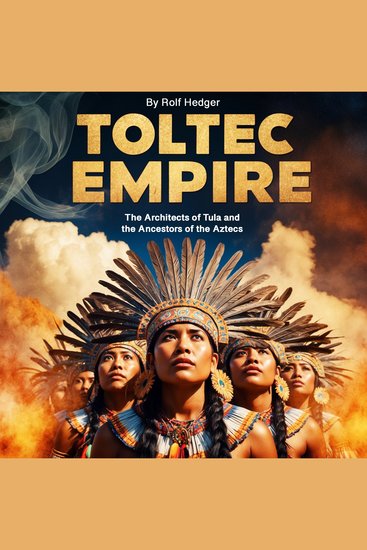
    The Toltec civilization emerged in central Mexico following the decline of Teotihuacan, one of the most powerful and influential cities of ancient Mesoamerica. With Teotihuacan’s fall around the 7th or 8th century, the region experienced a power vacuum, creating an opportunity for new societies to rise. Among them were the Toltecs, a people who would shape the political, military, and cultural landscape of Mesoamerica for centuries to come. 
    The origins of the Toltecs remain a subject of scholarly debate, but many sources trace their roots to northern Mexico, possibly the arid regions of modern-day Zacatecas or the deserts beyond. By the 10th century, they had established themselves in the Valley of Mexico, where they founded their capital, Tula. The early rulers of the Toltecs, including the semi-legendary Mixcoatl, are credited with uniting various groups under a centralized government and fostering a warrior-based society that would come to dominate the region. Mixcoatl's son, Ce Acatl Topiltzin Quetzalcoatl, is one of the most famous figures in Toltec history. Said to be both a king and a priest, he promoted the worship of Quetzalcoatl, the feathered serpent deity, and encouraged a cultural shift away from excessive militarism and human sacrifice. However, his reign was met with opposition from factions who favored more warlike practices, leading to his eventual exile. His departure, shrouded in myth, would later influence Aztec beliefs and the idea of a prophesied return. 
    Tula, the heart of the Toltec Empire, reflected the ambitions and architectural ingenuity of its people. Expanding over several square miles, the city featured impressive pyramids, colonnaded halls, and massive stone warriors that stood as sentinels over its ceremonial centers. The city's strategic location allowed the Toltecs to control trade networks that extended as far as the Yucatán Peninsula and beyond.
    Ver libro
  • The Good Stuff from Growing Up in a Dysfunctional Family - How to Survive and Then Thrive - cover

    The Good Stuff from Growing Up...

    Karen Casey

    • 0
    • 0
    • 0
    Living in a dysfunctional family isn't easy. But while you can't choose where you come from, you can choose the lessons you take away. 


    Bestselling recovery author Karen Casey looks at stories of people who grew up in dysfunctional families and "the good stuff" that can, ironically, come from the experience. She interviews survivors who emerged from the fires of turbulent households affected by abuse, addiction, or other problems, and reveals how they came to process their often-harrowing personal trials and, against the odds, triumph over their difficulties—using skills they honed in response to their childhoods. In The Good Stuff from Growing Up in a Dysfunctional Family, Casey reveals the stories and the skills they developed to live more creative and fulfilling lives, and not just survive but thrive. 


    "Using her interviews as groundwork, she explores the benefits that result from surviving in a dysfunctional family, including resiliency, perseverance, a sense of humor, forgiveness, kindness, and the ability to discern real love." —Publishers Weekly 


    "You just can't go wrong with Karen Casey." —Earnie Larson, author of Stage II Recovery
    Ver libro
  • Hidden Worldviews - Eight Cultural Stories That Shape Our Lives - cover

    Hidden Worldviews - Eight...

    Mark L. Sanford, Steve Wilkens

    • 0
    • 0
    • 0
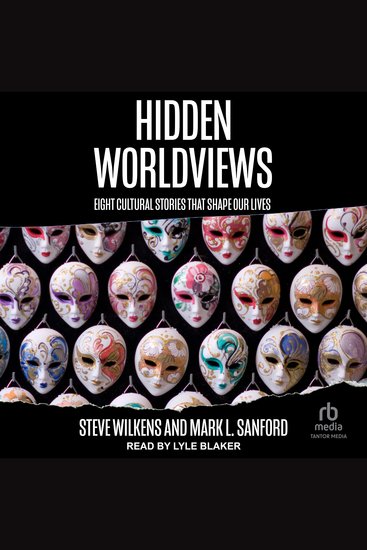
    Why do we buy what we buy, vote the way we vote, eat what we eat, and say what we say? Why do we have the friends we have, and work and play as we do? It's our choice? Yes, but there are forces, often unseen, that shape every decision we make and every action we take. 


    These hidden, life-shaping values and ideas are not promoted through organized religions or rival philosophies but fostered by cultural habits, lifestyles and the institutional structures of society. Steve Wilkens and Mark Sanford shine a spotlight on the profound challenges to Christianity and faithful Christian living that come from worldviews that comprise the cultural soup we swim in. 


    The authors show how to detect the individualism, consumerism, nationalism, moral relativism, scientific naturalism, New Age thinking, postmodern tribalism, and salvation as therapy that fly under our radar. Building on the work of worldview thinkers like James Sire, this book helps those committed to the gospel story recognize those rival cultural stories that compete for our hearts and minds.
    Ver libro
  • In Defense of Open Society: Book Summary & Analysis - cover

    In Defense of Open Society: Book...

    Briefly Summaries

    • 0
    • 0
    • 0
    This is a concise summary and analysis of In Defense of Open Society, by George Soros.
     
    It is not the original book and is not affiliated with or endorsed by George Soros.
     
    Ideal those seeking a quick and insightful overview.
     
    In a time of rising authoritarianism and political uncertainty, In Defense of Open Society explores the principles that uphold democratic societies. Drawing on personal experiences and decades of philanthropic efforts, the book examines the threats posed to open societies by nationalism, populism, and the erosion of civil liberties. Through sharp analysis and compelling arguments, it advocates for the preservation of freedom, transparency, and justice as the cornerstones of a better future.
    Ver libro