¡Acompáñanos a viajar por el mundo de los libros!
Añadir este libro a la estantería
Grey
Escribe un nuevo comentario Default profile 50px
Grey
Suscríbete para leer el libro completo o lee las primeras páginas gratis.
All characters reduced
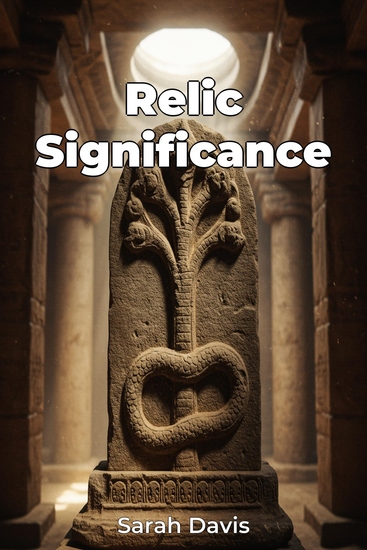
Relic Significance - cover

Relic Significance

Sarah Davis

Traductor A AI

Editorial: Publifye

  • 0
  • 0
  • 0

Sinopsis

Relic Significance explores the captivating intersection of history and religion through the lens of ancient relics. These objects, far from being mere artifacts, served as potent symbols that shaped the socio-cultural and spiritual lives of early civilizations. The book argues that relics acted as tangible links between the human and divine realms, embodying mythological narratives and reinforcing societal structures. For instance, sacred stones were not just rocks, but conduits of power and divine presence, influencing community practices and belief systems.

 
The book examines the symbolic power of relics, the socio-cultural contexts of their use, and how their significance evolved over time. By drawing upon historical records, archaeological findings, and anthropological studies, it presents a multifaceted view of how material culture reflected and reinforced early belief systems.

 
Beginning with an introduction to relics and their symbolic power, the book progresses through case studies and analyzes the transformations in relic meanings as societies changed, offering new insights into the origins of religious practices and the construction of societal identities.
Disponible desde: 06/05/2025.
Longitud de impresión: 59 páginas.
Otros libros que te pueden interesar

  • Locked Down Locked Out - Why Prison Doesn't Work and How We Can Do Better - cover

    Locked Down Locked Out - Why...

    Maya Schenwar

    • 0
    • 0
    • 0
    An analysis of the US prison system through real-life stories, and a look at the complex work of community-based social justice projects. 


    Through the stories of prisoners and their families, including her own family's experiences, Maya Schenwar shows how the institution that locks up 2.3 million Americans and decimates poor communities of color is shredding the ties that, if nurtured, could foster real collective safety. As she vividly depicts here, incarceration takes away the very things that might enable people to build better lives. But looking toward a future beyond imprisonment, Schenwar profiles community-based initiatives that successfully deal with problems—both individual harm and larger social wrongs—through connection rather than isolation, moving toward a safer, freer future for all of us. 


    "Maya Schenwar's stories about prisoners, their families (including her own), and the thoroughly broken punishment system are rescued from any pessimism such narratives might inspire by the author's brilliant juxtaposition of abolitionist imaginaries and radical political practices." —Angela Y. Davis, author of Are Prisons Obsolete?
    Ver libro
  • Roman Empire The: The History and Legacy of the Ancient World’s Most Famous Empire from Julius Caesar to Its Collapse - cover

    Roman Empire The: The History...

    Editors Charles River

    • 0
    • 0
    • 0
    Possibly the most important man of antiquity, and even all of history, was Julius Caesar. Alexander Hamilton, the famous American patriot, once remarked that “the greatest man who ever lived was Julius Caesar”. Such a tribute, coming from one of the Founding Fathers of the quintessential modern democracy in reference to a man who destroyed the Roman Republic, is testament to the enduring mark that Caesar left upon the world. The ultimate conqueror, statesman, dictator, visionary, and opportunist, during his time in power Caesar expanded the borders of Rome to almost twice their previous size, revolutionized the infrastructure of the Roman state, and destroyed the Roman Republic for good, leaving a line of emperors in its place. His legacy is so strong that his name has become, in many languages, synonymous with power: the Emperors of Austria and Germany bore the title Kaiser, and the Czars of Russia also owe the etymology of their title to Caesar. His name also crept further eastward out of Europe, even cropping up in Hindi and Urdu, where the term for “Emperor” is Kaisar. 
    Even in his time, Caesar was in many ways larger than life, and because of his legacy as virtual founder of the Roman Empire, much of what was written about – and by – him during his life and immediately after his assassination was politically motivated. His successor, Octavian Augustus, had a strong interest in ensuring that Caesar’s life be painted in a favorable light, while Caesar’s political enemies attempted to paint him as a corrupt, undemocratic dictator who was destroying the old order of the Republic.  
    As Roman leaders vied with each other for power and constantly fought civil wars, Rome’s famous roads fall into disrepair, the economy was crippled, the continent-wide trade system that had flourished in the previous years was replaced with a basic barter system, and there was a reduction in international trade.
    Ver libro
  • Louisiana: A Captivating Guide to Its Unique History from Early Peoples and the Big Land Buy to Important Battles and Beyond - cover

    Louisiana: A Captivating Guide...

    Captivating History

    • 0
    • 0
    • 0
    Embark on a Journey Through Louisiana's Soul: Discover the Land of Diversity & Resilience! 
    Two manuscripts in one audiobook:History of Louisiana: A Captivating Guide to Everything from Native Americans, Cajuns, and Creoles to the Louisiana Purchase, Battle of New Orleans, and MoreThe Louisiana Purchase: A Captivating Guide to a Major Turning Point in the History of the United States of America 
    Unlock the Secrets Within:Native American Heritage - Wander back to the beginning, where the land's first inhabitants set the stage for a diverse cultural landscape.The Epic Louisiana Purchase - Unravel the story behind one of America's boldest acquisitions, shaping the nation's destiny.The Legendary Battle of New Orleans - Relive the strategic brilliance and lasting legacy of a battle that became a symbol of resilience and courage.Jazz: A Cultural Revolution - Immerse yourself in the birthplace of jazz, a music genre that grew from Louisiana's unique melting pot of influences. 
    Deep Dive into the Louisiana Purchase:From Wilderness to Heartland - Explore how a vast expanse transformed into the heart of America, driven by visionaries and explorers.Great Minds and Bold Dreams - Meet the legends like Napoleon, Jefferson, and explorers who ventured into the unknown, shaping the future.Conspiracies, Spies, and Trailblazers - Uncover the untold stories of espionage, ambition, and the unsung heroes who charted new paths. 
    This audiobook is more than history; it's an invitation to experience the essence of a state that dances to the rhythm of jazz, resilience, and diversity. Click "Add to Cart" to start your journey through the spirited story of Louisiana!
    Ver libro
  • Germany vs Great Britain in the Air: The History of the Enemy Air Forces in World War I and World War II - cover

    Germany vs Great Britain in the...

    Editors Charles River

    • 0
    • 0
    • 0
    One of the most important breakthroughs in military technology associated with World War I, and certainly the one that continues to capture the public imagination, was the use of airplanes, which were a virtual novelty a decade before. While the war quickly ground to a halt in its first few months, the skies above the Western Front became increasingly busy. The great powers had already been acquiring aircraft for potential uses, but given that aerial warfare had never been a major component of any conflict, it’s understandable that few on either side had any idea what the planes were capable of doing. Furthermore, at the start of the war, all sides’ aircraft were ill-equipped for combat mostly because the idea that planes might somehow fight was still a novel one. 
    The Royal Air Force (RAF), Britain's legendary air arm, was born in the skies above the First World War. The British had previously used balloons for spotting and reconnaissance for decades, and in the years leading up to the war, planes started seeing military use. They mostly provided reconnaissance, though experiments were made in using them offensively. During the Boer War of 1899-1902, the British Army used the crews of helium-filled balloons to plot and help target artillery fire. But these were small, tentative steps. The first patent to fit a machine gun to a plane, taken out in 1910, had not yet led to active fighting vehicles, and there was no doctrine, no tactics, and no combat between massed air fleets.  
    The Third Reich's Luftwaffe began World War II with significant advantages over other European air forces, playing a critical role in the German war machine's swift, powerful advance. By war's end, however, the Luftwaffe had been decimated by combat losses and crippled by poor decisions at the highest levels of military decision-making, and it proved unable to challenge Allied air superiority despite a last-minute upsurge in German aircraft production.
    Ver libro
  • I Think Therefore I’m Wrong - Descartes and the Birth of Overconfidence - cover

    I Think Therefore I’m Wrong -...

    Sophia Blackwell

    • 0
    • 0
    • 0
    I Think, Therefore I’m Wrong: Descartes and the Birth of Overconfidence is your gloriously sarcastic, brutally honest, and deeply unhinged guide to the man who launched modern philosophy with one anxious thought spiral and never looked back. 
    René Descartes: French, wealthy, suspicious of everything, and armed with just enough Latin to convince the world that his personal identity crisis was actually a groundbreaking intellectual framework. From doubting the entire universe to claiming God exists because the idea of God felt right, Descartes pioneered a system so elegantly flawed it haunted philosophers for centuries—and now you get to enjoy the wreckage. 
    In this book, Sophia Blackwell (Kant You Not, Leibniz’s Monads) takes you on a laugh-out-loud demolition tour of: 
    The Four-Step Method of Doubt, also known as gaslighting the cosmos 
    The Cogito, or how to accidentally make thinking sound smug 
    God as epistemological tech support 
    Mind-body dualism, or “what if you’re just a haunted skeleton?” 
    Descartes’ legacy in science, psychology, AI, and every freshman who says “I'm not my body, bro.” 
    Whether you’re a philosophy student, a recovering Cartesian, or just here to watch the metaphysical world burn, this book explains Descartes’ ideas the way they were always meant to be understood: with sarcasm, side-eye, and a glass of wine. 
    I think, therefore I spiral. Let’s go
    Ver libro
  • Acres of Diamonds - cover

    Acres of Diamonds

    Russell H. Conwell

    • 0
    • 0
    • 0
    Acres of Diamonds by Russell H. Conwell is one of the most influential motivational speeches ever given, emphasizing that wealth, success, and opportunity are often closer than we realize. Originally delivered as a lecture over 6,000 times before being published in 1890, this classic work argues that anyone can find prosperity and fulfillment by recognizing and cultivating the opportunities in their own surroundings. 
    Through powerful storytelling and real-world examples, Conwell demonstrates that true riches—both material and spiritual—are not found in distant lands but right where we stand. Narrated by Nathan Edwards, this audiobook breathes new life into Conwell’s timeless wisdom, inspiring listeners to rethink their approach to success and self-improvement. 
    This enduring work remains a cornerstone of personal development literature, influencing countless entrepreneurs, business leaders, and success coaches. Acres of Diamonds is more than a lesson in wealth—it is a call to recognize and harness the potential that already exists in our lives.
    Ver libro